

Key Takeaways
Start here
Choosing the Right Spot
Next
Understanding Your Soil
Then
Deciding What to Grow First
After that
Watering Basics That Actually Work
Finally
Planning Your Garden Layout
Choosing the Right Spot
The single most important decision in starting a vegetable garden is where you put it. Most food-producing plants need at least 6 hours of direct sunlight per day - 8 hours is better for heat-loving crops like tomatoes and peppers. Before you dig anything, spend a day observing your yard and noting which areas receive unobstructed sun from morning through afternoon.
Beyond sunlight, consider these factors:
- Proximity to water: Choose a spot within easy reach of a hose or spigot. Carrying watering cans across the yard turns a pleasant task into a chore.
- Drainage: Avoid low spots where water pools after rain. Standing water suffocates roots and invites disease.
- Tree root competition: Large trees don't just block light - their roots compete aggressively for water and nutrients.
- Wind exposure: Constant wind dries soil quickly and can damage tall plants. A light windbreak from a fence or hedge helps without blocking sun.
If your yard has limited sunny ground, you have options. Our guide on growing food in small spaces covers realistic alternatives when ground space is tight.
Use Free Local Resources
Your county's cooperative extension service is one of the most underused resources for home gardeners. Extension offices provide region-specific planting calendars, soil testing, pest identification, and free or low-cost educational guides. Search for your state's land-grant university extension program to find local resources.
Understanding Your Soil
Experienced gardeners often say you should feed the soil, not the plant - and they're right. Healthy soil teeming with organic matter and microorganisms delivers nutrients steadily, holds moisture efficiently, and supports strong root systems. Poor soil produces poor plants, no matter how carefully you tend them.
Start with a basic soil test before amending anything. Testing reveals your soil's pH (the acidity-to-alkalinity scale) and nutrient profile. Most vegetables prefer a pH between 6.0 and 7.0. Many county cooperative extension offices offer inexpensive testing, and the results tell you exactly what to add rather than guessing.
Common improvements for backyard soil include:
- Compost: The most universally useful amendment. It improves both sandy and clay soils, adds nutrients, and supports beneficial soil life. Our home composting guide explains how to make your own.
- Aged manure: Adds nitrogen and organic matter; must be well-composted before use to avoid burning plants.
- Lime or sulfur: Adjusts pH up or down respectively, based on your soil test results.
For a deeper look at what different amendments actually do, see our soil amendments reference.
You also need to decide between in-ground planting and raised beds. Each has real trade-offs in cost, effort, and soil control. Our article comparing raised beds vs. in-ground planting walks through both side by side.
Deciding What to Grow First
Choosing forgiving crops in your first season matters more than choosing your favorites. A discouraging first harvest - or none at all - is the top reason beginners give up. Prioritize vegetables that germinate reliably, tolerate minor watering inconsistencies, and produce results quickly enough to keep you engaged.
Bolt
When a plant shifts energy from leaf or fruit production into flowering and seed-setting, usually triggered by heat or long days. Bolted lettuce, for example, becomes bitter and unusable.
Direct sow
Planting seeds directly into outdoor garden soil rather than starting them indoors in trays first. Many vegetables - like beans, carrots, and radishes - prefer this method.
Last frost date
The average date after which freezing temperatures are unlikely in your area. Used as a planting benchmark - warm-season crops go in after this date; cool-season crops often go in before it.
Soil pH
A measure of how acidic or alkaline your soil is, on a scale from 0 to 14. Most vegetables grow best in slightly acidic to neutral soil, roughly pH 6.0 to 7.0.
Transplant
A young plant started from seed indoors or in a greenhouse and then moved to its permanent outdoor location. Tomatoes and peppers are typically sold and planted as transplants.
Succession planting
Staggering plantings of the same crop every few weeks, or replanting a finished crop's space with something new, to spread out harvests and keep the garden productive all season.
Reliable first-season crops by category:
- Salad greens (lettuce, spinach, arugula)
- Fast-growing, cool-season plants that can be harvested within 30-45 days. Ideal for early spring or fall planting. They bolt (go to seed) in summer heat, so timing matters.
- Bush beans
- Direct-sow into warm soil, require little fertilizing, and produce steadily over several weeks. Pole beans yield more but need support structures.
- Zucchini and summer squash
- Famously productive - sometimes overly so. One or two plants are plenty for most households. They need space and consistent moisture.
- Cherry tomatoes
- More forgiving than large slicing varieties, and they produce earlier. They still need staking and at least 8 hours of sun.
- Radishes
- Ready in as few as 25 days. Great for filling gaps and giving beginners a quick early win.
Avoid starting with crops that have long learning curves or complex needs - corn, melons, and brassicas like broccoli often disappoint beginners before they've built their soil and timing instincts.
Watering Basics That Actually Work
Overwatering and underwatering are both common beginner mistakes, and they often look similar: wilted, struggling plants. The goal is consistent soil moisture - not soggy, not bone dry - at root depth.
As a general rule, vegetable gardens need roughly 1 inch of water per week, including rainfall. The key is how you deliver it:
- Water deeply and less frequently. Two or three thorough sessions per week encourage roots to grow downward in search of moisture, making plants more drought-tolerant than daily light sprinkling would.
- Check below the surface. Stick your finger 2 inches into the soil. If it feels dry at that depth, water. If it still feels moist, wait.
- Water at the base, not the leaves. Wet foliage encourages fungal diseases. Soaker hoses or drip irrigation deliver water where it belongs - at the root zone.
- Water in the morning. Morning watering lets foliage dry through the day, reducing disease risk, and loses less moisture to midday evaporation than evening watering.
Mulching around plants with straw, shredded leaves, or wood chips dramatically slows soil moisture loss between waterings and suppresses weeds at the same time. A 2-3 inch layer around (but not touching) plant stems is ideal.
Planning Your Garden Layout
A little planning on paper before you plant saves a lot of frustration in the ground. Think through spacing, height, and timing before committing seeds or transplants to soil.
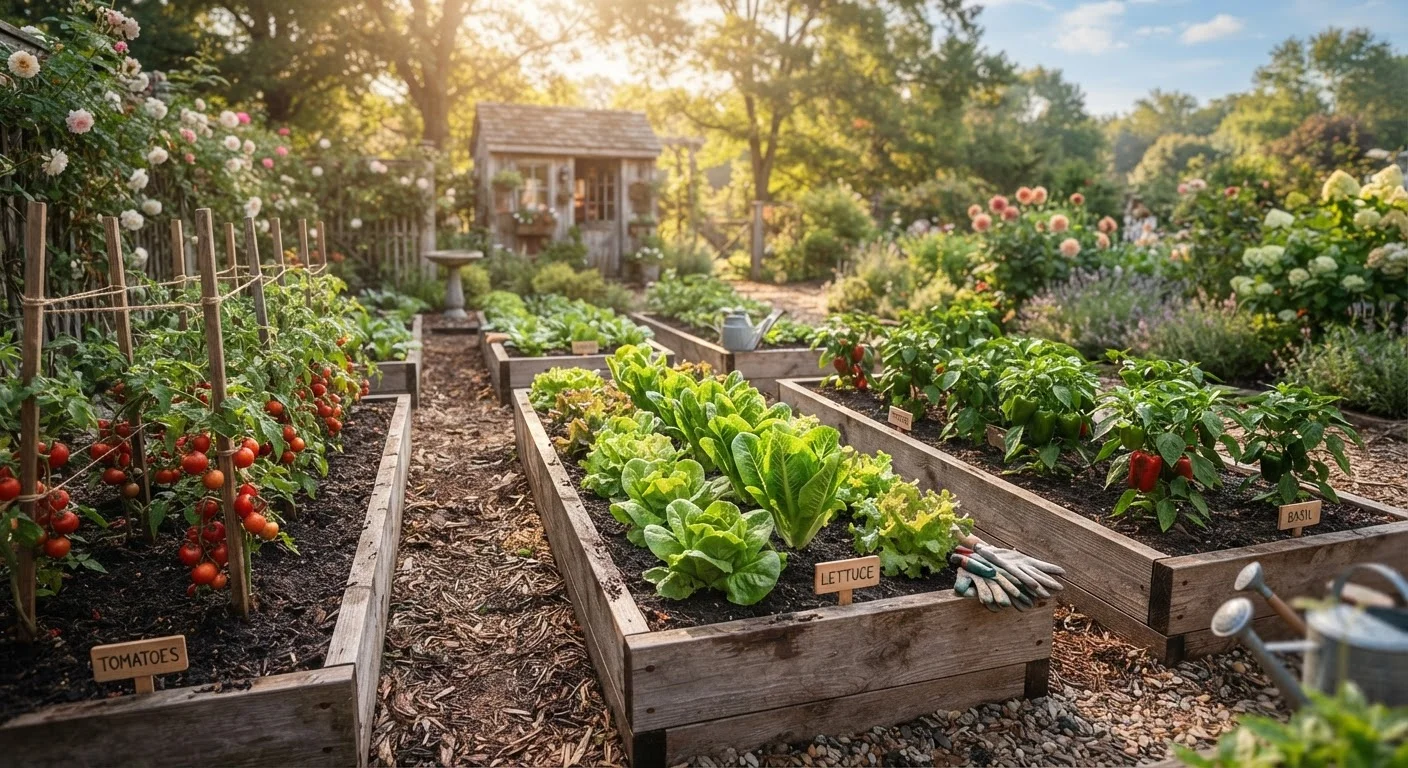
Start small: A 4×8 foot bed is manageable for one person, gives you room to grow four to six crop types, and can be expanded next year. Trying to maintain a large plot in your first season is a common path to burnout.
Account for height: Taller plants (like staked tomatoes or pole beans) should go on the north side of your bed so they don't shade shorter neighbors. Lettuce and herbs do fine in partial shade from taller companions.
Think in successions: As cool-season crops like lettuce finish in early summer, replant that space with warm-season crops. This keeps your garden productive throughout the season rather than harvesting everything at once.
Keep a simple garden journal: Note planting dates, what worked, what didn't, and which varieties you liked. Gardening improves dramatically from year to year when you have records to reference.
Once you've got your first season underway, looking ahead helps. Our fall garden prep guide covers what to do when the season winds down - from soil care to mulching and equipment storage. And if you've been influenced by popular gardening advice, it's worth checking our article on gardening myths that lead beginners astray to separate what actually works from persistent folklore.