

Key Takeaways
Summary
18 items · 1.5-3 hours spread across a weekend
Why Fall Garden Prep Matters
Most gardening advice focuses on spring planting, but what you do in autumn has an equally big impact on how your garden performs the following year. Fall prep protects plants you want to keep, enriches the soil while it still has warmth to absorb amendments, and saves you hours of scrambling come spring thaw.
The timing of your prep hinges on your first expected frost date, which varies widely across the US - from late September in northern states like Minnesota to late November across the Deep South. Look up your USDA Plant Hardiness Zone and your local average first frost date through the National Gardening Association or your county extension office before you begin. If you're already thinking about what spring will look like, our guide on annuals vs. perennials can help you plan a smarter, longer-blooming yard from the ground up.
Soil Care & Planting
Mulching & Frost Protection
Tender Bulbs & Plant Storage
Cleanup & Plant Health
Equipment Winterizing
Tools and Supplies You'll Need
Before you start working through the checklist, gather your materials. Having everything on hand prevents repeated trips to the garage and keeps momentum going once you're outside.
Garden fork or spade
Used to dig up tender bulbs and work compost into garden beds.
Shredded leaf mulch or straw
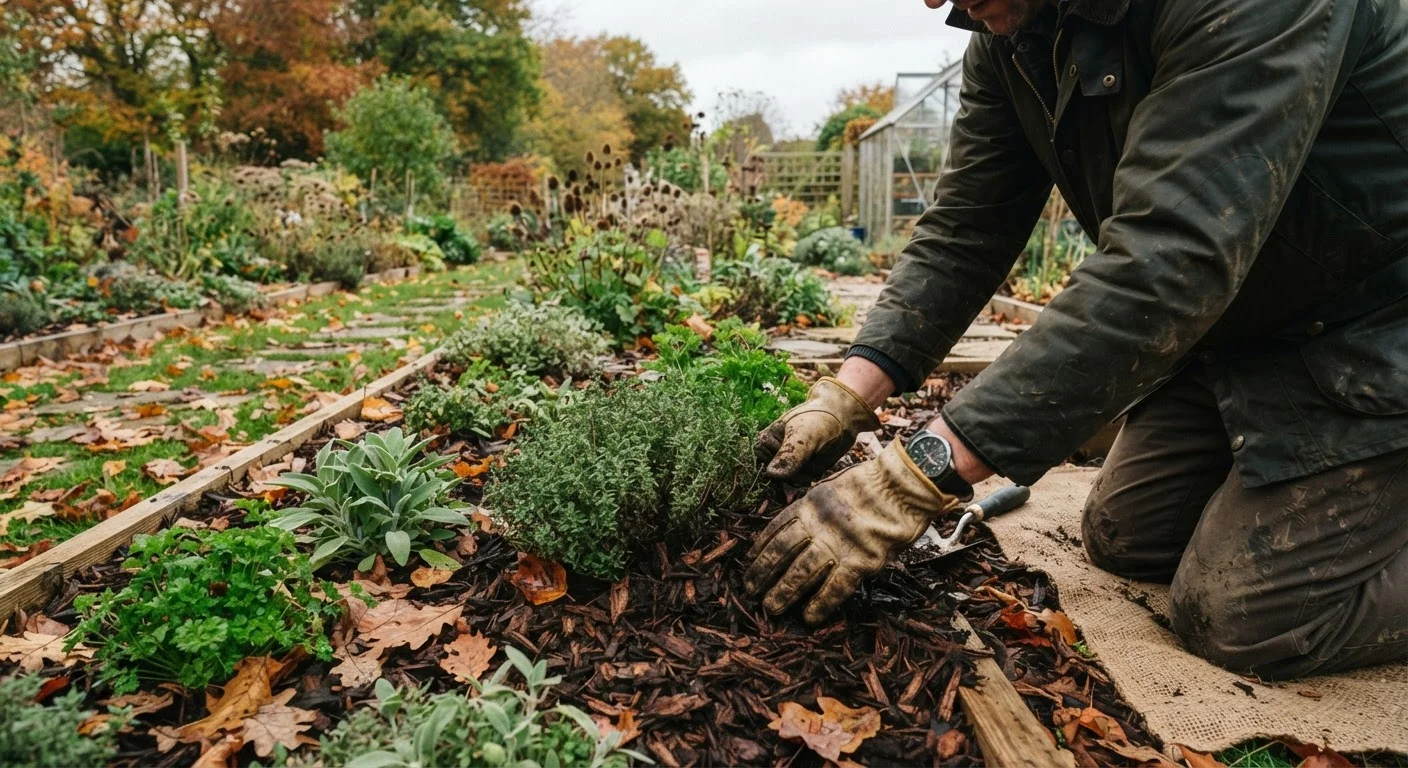
Provides insulating ground cover over perennial beds and around shrub bases.
Bypass hand pruners
Clean cuts when removing dead annuals and trimming back perennial stems.
Soil test kit
Determines pH and basic nutrient levels so you can add the right amendments this fall.
Burlap fabric
Wraps young shrubs and evergreens for wind and desiccation protection through winter.
Peat moss or paper bags
Keeps unearthed tender bulbs dry and cushioned during indoor winter storage.
Lightweight machine oil (e.g., general-purpose tool oil)
Prevents rust on metal tool surfaces during long winter storage.
Soil, Cleanup, and Putting the Garden to Bed
Once your checklist is complete, your garden won't just survive winter - it'll be better positioned to thrive come spring. Healthy soil retains more moisture, supports beneficial organisms through the cold, and warms faster once temperatures rise. Don't overlook the small tasks: rinsing out pots, coiling hoses, and wiping down pruners take minutes but prevent real damage and expense.
Don't Skip the Irrigation Winterization
Failing to drain in-ground irrigation lines is one of the most costly fall oversights - water left in pipes can freeze, expand, and crack both pipes and fittings. If your system uses backflow preventers or has complex zoning, consult a licensed irrigation contractor rather than attempting to blow out the lines yourself. The cost of a professional winterization visit is far less than spring repair bills.
After a hard winter, a thorough spring walkthrough is always worth doing. Our spring home inspection checklist covers both the garden and the broader property so nothing gets missed once the snow melts. And if you're prepping more than just the garden this fall, fall weatherproofing your home is a natural companion task to tackle the same weekend.
Watch for Disease When Composting Debris
Not all fall cleanup material belongs in your home compost pile. Leaves or stems infected with fungal diseases - such as powdery mildew, black spot, or blight - can survive a typical backyard compost process and reinfect plants next season. Bag these materials and send them out with yard waste collection instead. When in doubt, leave it out of the compost.