

| Best universal amendment | Finished compost (University cooperative extension consensus) |
| Ideal vegetable garden pH | 6.0-7.0 (USDA and land-grant university extension guidelines) |
| Compost application depth | 2-4 inches worked into top 6-8 inches (General horticultural practice) |
| Where to get a soil test | Your state's cooperative extension service (Available in all 50 states) |
| Time for sulfur to lower pH | Several months to a full growing season (Varies by soil type and sulfur rate applied) |
Why Soil Amendments Matter Before You Plant Anything
Most American garden soil - whether you're working with heavy clay in the Midwest, sandy loam in the Southeast, or compacted subsoil left by construction crews - doesn't arrive ready for plants. Soil amendments are materials worked into the existing soil to change its physical structure, chemistry, or biology. Done correctly, they help roots breathe, water drain properly, and nutrients stay available. Done without understanding, they can make things worse.
The first step is always a soil test. Your local cooperative extension service (affiliated with land-grant universities in every state) can process an inexpensive test that tells you your soil's pH, organic matter content, and nutrient levels. Without that baseline, you're guessing. If you're new to food gardening, see our beginner vegetable garden guide for how soil prep fits into the full planting process.
| Best universal amendment | Finished compost (University cooperative extension consensus) |
| Ideal vegetable garden pH | 6.0-7.0 (USDA and land-grant university extension guidelines) |
| Compost application depth | 2-4 inches worked into top 6-8 inches (General horticultural practice) |
| Where to get a soil test | Your state's cooperative extension service (Available in all 50 states) |
| Time for sulfur to lower pH | Several months to a full growing season (Varies by soil type and sulfur rate applied) |
The Most Common Soil Amendments and What They Actually Do
Here's a plain-English breakdown of the amendments you'll encounter most often at garden centers and in gardening advice.
Soil amendment
Any material added directly to soil to change its physical structure, drainage, pH, or nutrient profile. Unlike fertilizers applied on the surface, amendments are typically worked into the soil.
Soil pH
A measure of how acidic or alkaline your soil is, on a scale from 0 to 14. A pH of 7 is neutral; most vegetables and lawn grasses prefer a slightly acidic range of 6.0-7.0.
Perlite
Lightweight volcanic glass that has been heat-expanded into porous white particles. Added to soil mixes to dramatically improve drainage and prevent compaction, without decomposing over time.
Compost
Decomposed organic matter - food scraps, leaves, plant trimmings - that improves soil structure, feeds beneficial microbes, and slowly releases nutrients. It benefits nearly every soil type.
Lime (agricultural)
Ground limestone used to raise soil pH in acidic soils. Calcitic lime supplies calcium; dolomitic lime supplies both calcium and magnesium. A soil test is required before applying.
Gypsum
A calcium sulfate mineral that adds calcium and sulfur to soil without significantly changing pH. Most beneficial for sodic (high-sodium) soils or compacted clay, particularly in arid regions.
Organic Amendments
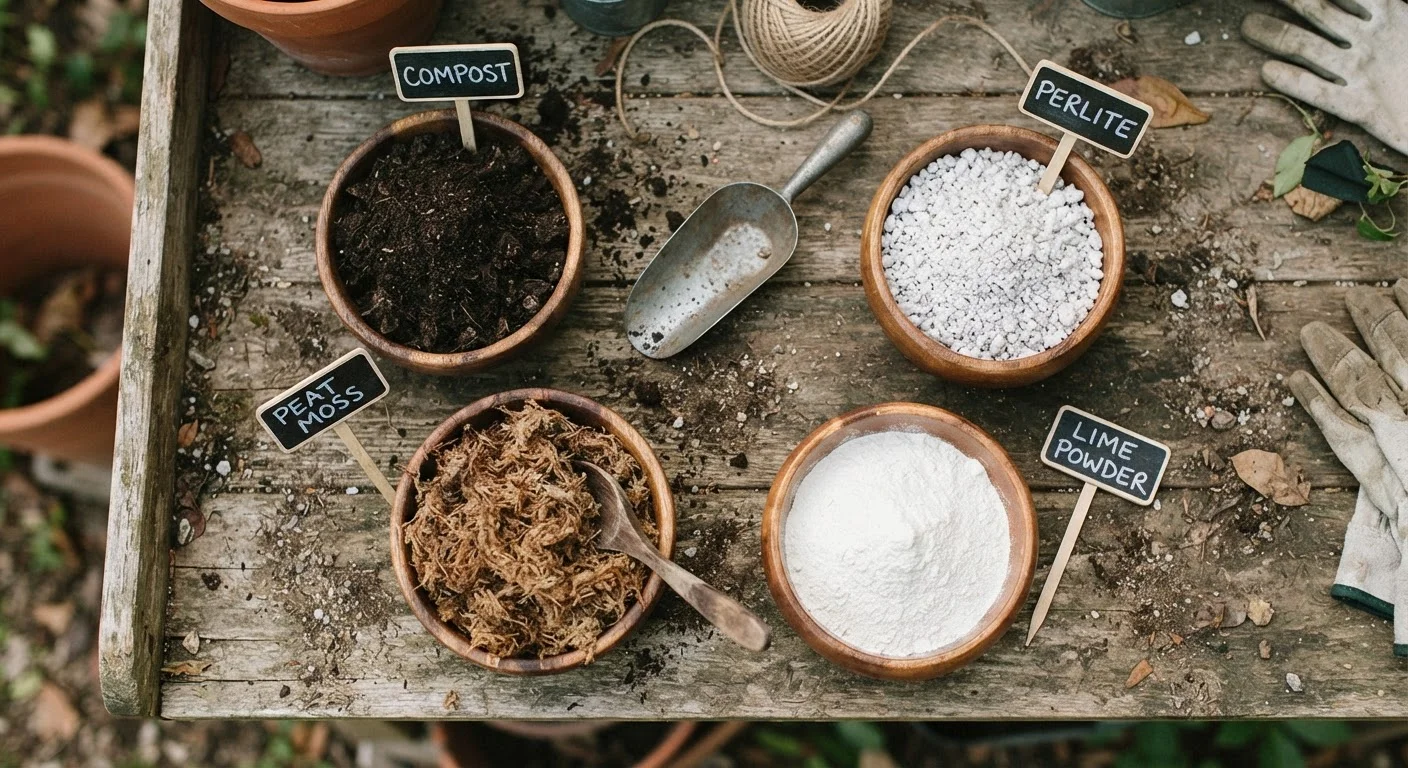
- Compost - Decomposed plant and food material that improves structure in both clay and sandy soils, adds beneficial microorganisms, and supplies a slow, gentle release of nutrients. It's the closest thing to a universal soil improver. Apply 2-4 inches worked into the top 6-8 inches of soil before planting.
- Aged manure - Similar benefits to compost but nutrient ratios vary by animal source. Always use well-aged or composted manure; fresh manure can burn plants and may carry pathogens.
- Peat moss - Acidifies soil slightly and improves water retention, making it useful for acid-loving plants like blueberries and azaleas. However, it has sustainability drawbacks since peat bogs take centuries to regenerate. Coconut coir is a common alternative with similar texture properties.
Inorganic and Mineral Amendments
- Perlite - Volcanic glass heated until it pops, creating lightweight white particles that dramatically improve drainage and aeration. It doesn't decompose or compact. Widely used in container mixes and raised beds with heavy native soil.
- Vermiculite - A heated mineral that retains moisture while still improving aeration - the opposite balance from perlite. Useful for seed-starting mixes and soils that dry out too fast.
- Agricultural lime (calcitic or dolomitic) - Ground limestone that raises soil pH (makes it less acidic). Most lawns and vegetable gardens prefer a pH of 6.0-7.0. Dolomitic lime also supplies magnesium. Never apply without a soil test confirming you need it.
- Sulfur - Lowers soil pH over time, useful for acid-preferring plants or naturally alkaline Western soils. Works slowly - months rather than weeks.
- Gypsum - Adds calcium and sulfur without significantly changing pH, and can help break up tight clay soils high in sodium. Results vary by soil type; evidence is strongest for sodic soils common in parts of the West and Plains.
Not every amendment works equally well in every situation. Some popular recommendations don't hold up under scrutiny - see common gardening myths debunked for a reality check on widely repeated advice.
Matching Amendments to Your Specific Situation
Amendments should be chosen based on your diagnosed soil problem, not a one-size-fits-all prescription.
Always Soil Test Before Amending
Over-liming or applying the wrong amendment can create new problems - such as locking out nutrients - even with good intentions. A soil test from your cooperative extension office typically costs $15-$25 and tells you exactly what your soil lacks. It's the single most useful step before spending money on any amendment. Results usually include specific application rate recommendations tailored to what you want to grow.
- Compacted clay soil: Prioritize compost worked in deeply over multiple seasons. Gypsum may help in sodium-heavy clay. Avoid adding sand alone - sand plus clay without sufficient organic matter can create a concrete-like mix.
- Fast-draining sandy soil: Add compost and vermiculite to build water and nutrient retention. Raised beds with an improved mix are often easier than fighting sandy native soil.
- Acidic soil (common in the humid Southeast and Pacific Northwest): Lime raises pH toward the range most vegetables prefer. Test first, follow recommended rates on packaging, and retest the following season.
- Alkaline soil (common in arid regions - Southwest, Great Plains): Sulfur or acidifying fertilizers can help, but results are gradual. Raised beds with imported soil are sometimes more practical than amending in-ground alkaline soil.
Amendments pair naturally with a good mulching practice. Once your soil is improved, surface mulch protects that work by moderating temperature and reducing moisture loss. Our guide to mulching correctly explains how to apply it without harming plants. And because USDA climate zones affect what your soil and plants need seasonally, understanding your hardiness zone is a useful companion to any soil work.