

Key Takeaways
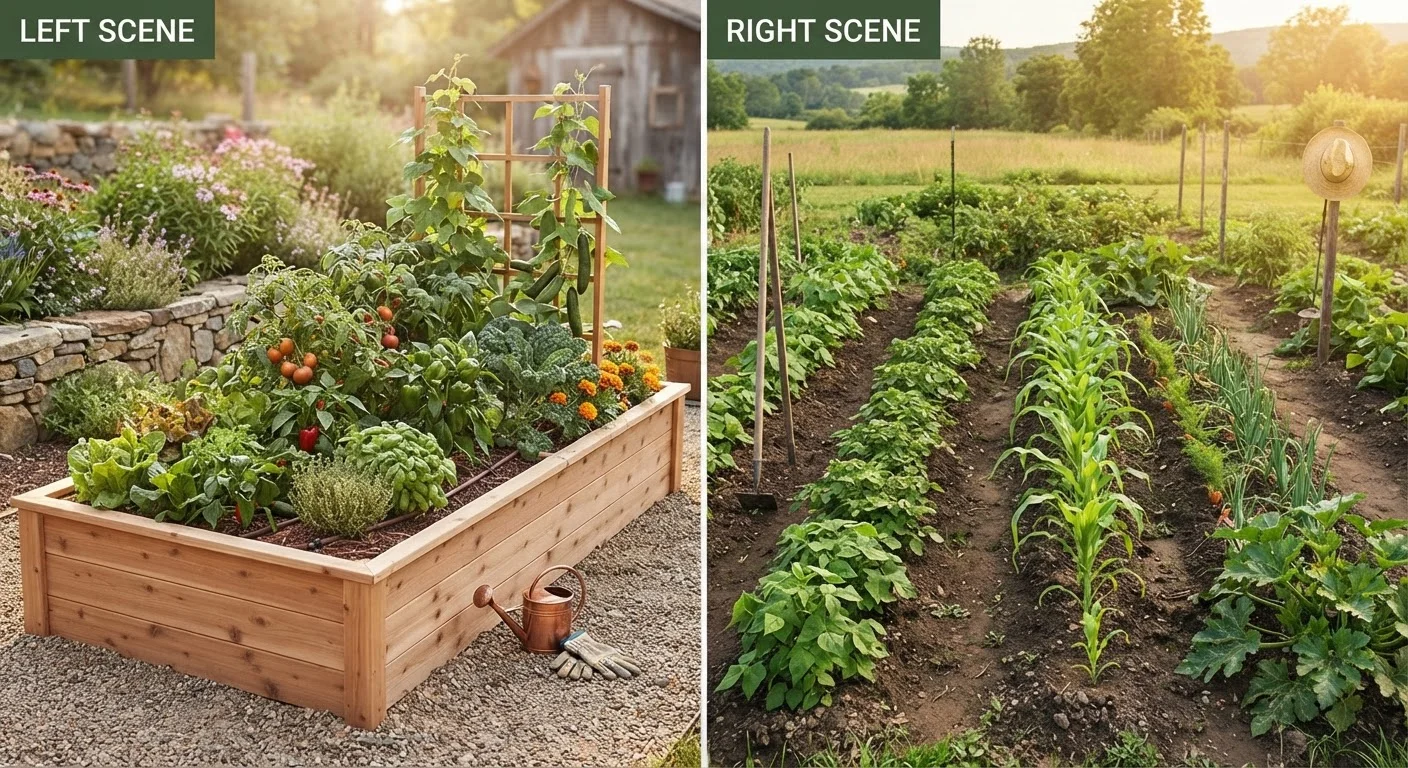
Option A
Raised Beds
The controlled, high-performance option for challenging sites.
Best for: Gardeners dealing with poor native soil, drainage issues, or limited mobility who want faster results.
Option B
In-Ground Planting
The traditional, low-upfront-cost approach for established yards.
Best for: Homeowners with decent existing soil who want to grow at scale with minimal infrastructure investment.
If your yard has heavy clay or compacted soil
Raised Beds
Building up above native soil lets you sidestep drainage and compaction problems entirely without years of soil amendment work.
If you're gardening on a tight budget
In-Ground Planting
In-ground gardens require little more than a shovel and compost to get started, keeping initial costs minimal.
If you have back problems or limited mobility
Raised Beds
A bed built 12-18 inches high reduces bending significantly, making routine tasks like weeding and harvesting far more comfortable.
If you want to grow large-scale crops like corn or winter squash
In-Ground Planting
These crops need wide spacing and deep, unrestricted root runs that are impractical to provide in a raised bed at reasonable cost.
If you're in a northern climate and want an early start
Raised Beds
Raised beds can warm 8-10°F faster than surrounding ground in early spring, letting you plant weeks ahead of the in-ground season.
Soil Control and Quality
Soil is where both methods diverge most sharply. With raised beds, you build the growing medium from scratch - typically a mix of topsoil, compost, and an aerating material like coarse perlite. This means every plant starts in optimized conditions regardless of what sits below. For gardeners in regions with notoriously difficult native soil - heavy Gulf Coast clay, rocky New England subsoil, or compacted suburban fill - this is a meaningful advantage.
In-ground planting works with what you have. If your yard has loamy, well-draining soil, you may need little more than a seasonal compost amendment to garden productively. If your soil is poor, however, improvement takes time. Building healthy in-ground soil through repeated compost additions and cover cropping is a multi-year project, not a weekend fix. Worth noting: the popular belief that adding gravel beneath a planting area improves drainage is actually a gardening myth - see our article on common gardening myths for more on this.
| Criterion | Raised Beds | In-Ground Planting |
|---|---|---|
| Upfront cost | Moderate to high ($150-$400+ per bed) | Low (compost and tools only) |
| Soil control | Complete - you build the mix | Dependent on native soil quality |
| Drainage | Excellent by design | Varies with native soil |
| Spring warm-up speed | Faster (8-10°F warmer early season) | Slower in cold climates |
| Weed pressure | Lower, especially early on | Higher without mulching |
| Suitable crop scale | Small to medium plantings | Any scale, including large crops |
| Physical accessibility | High - reduced bending | Low - ground-level only |
| Long-term soil health | Requires periodic topping off | Self-improves with good practice |
Cost, Effort, and Setup
Raised beds carry a higher upfront investment. Materials for a single 4×8-foot cedar bed - lumber, hardware, and enough quality fill to top it adequately - can run $150-$400 depending on your region and what you source. Scale that to several beds and the costs add up quickly. In-ground plots, by contrast, require little beyond labor, a few tools, and compost. For large growing areas, that cost difference is substantial.
Maintenance effort over time tilts differently. Raised beds tend to suppress weeds more effectively early on (especially when topped with mulch) and don't require tilling. In-ground beds can compact over the seasons and may need annual loosening, but they also benefit naturally from earthworm activity and soil biology that self-maintains over time. Both approaches need attentive watering - and if you're deciding how to deliver that water efficiently, our comparison of drip irrigation vs. sprinklers walks through the options in detail.
8-10°F
Warmer soil temperature in raised beds (early spring)
University extension programs across the northern US have documented this soil temperature advantage in early-season trials.
4×8 ft
Standard raised bed size recommended for access
Most cooperative extension services recommend this footprint so gardeners can reach the center without stepping on the soil.
3-5 years
Typical time to build healthy in-ground soil from poor native clay
Soil scientists generally estimate this timeline for consistent compost and cover-crop amendments to meaningfully improve heavy clay or compacted soil.
Growing Season, Drainage, and Plant Fit
In cooler US climate zones (USDA Zones 3-6), raised beds offer a practical seasonal edge. The elevated soil mass warms faster than the surrounding ground in late winter and retains heat longer into fall, which can realistically extend your growing window by two to four weeks on each end. For crops like tomatoes or peppers - which need consistent warmth - that margin matters.
Drainage is almost always better in a raised bed, which is a clear win for plants that dislike wet feet. However, this cuts both ways: in hot, dry climates like the Southwest or during summer heat waves, raised beds can dry out within a day or two and require more frequent irrigation than in-ground plots.
Plant selection matters, too. Raised beds excel for intensively grown vegetables, herbs, and cut flowers. Deep-rooted or sprawling crops - think sweet corn, watermelon, or indeterminate winter squash - are awkward and expensive to accommodate in beds. In-ground planting handles those crops naturally. If you're pairing your vegetable garden with ornamental plantings, our guide to annuals vs. perennials can help you think through what to grow alongside your edibles.