

Key Takeaways
Assessing Your Space Before You Plant
The single most decisive factor in small-space food gardening isn't square footage - it's sunlight. Before buying a single seed or pot, spend a full day observing where direct sun falls and for how long. Most fruiting vegetables (tomatoes, peppers, cucumbers) require at least six hours of unobstructed direct sun. Leafy greens and herbs tolerate four hours but will produce more in six.
Next, consider weight limits. Balcony railings and decks have structural load ratings that containers of wet soil can easily challenge. If you're renting or unsure, check with your building manager or a structural professional before placing heavy planters. Lightweight plastic or fabric grow bags significantly reduce load without sacrificing performance.
Finally, note your US hardiness zone and typical frost dates - both shape what you can grow and when. The USDA Plant Hardiness Zone Map, available through the USDA Agricultural Research Service, is the standard reference. Knowing your last spring frost date tells you when it's safe to transplant warm-season crops outdoors.
Track Sun Before You Buy Anything
Use your phone's compass to identify which direction your balcony or window faces, then stand in the space and note when shadow falls across it. Do this on a clear day in the season you plan to grow. This one step will save you from buying plants your space simply cannot support.
Balcony Gardening: What Actually Works
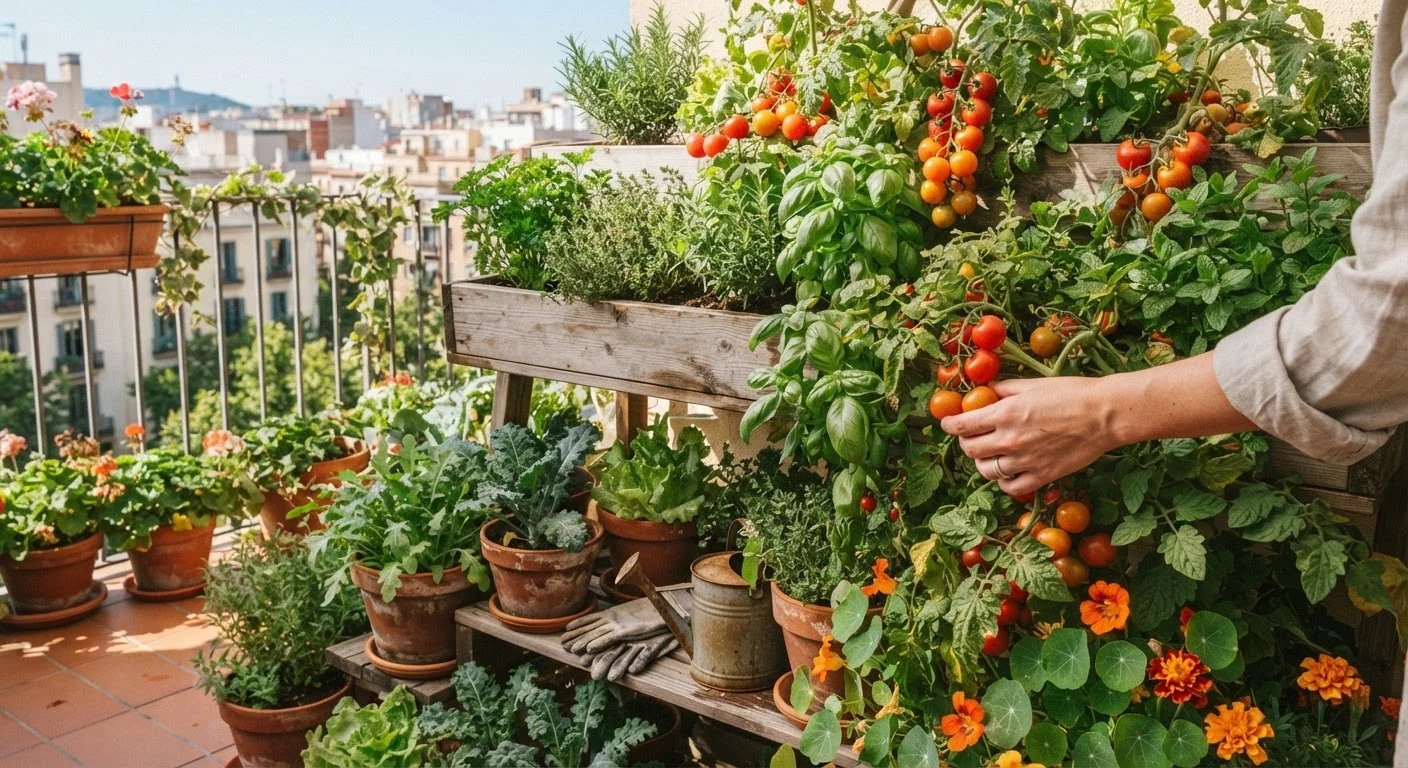
Balconies are one of the most productive small spaces when managed correctly. The key constraints are wind exposure, weight, and reflective heat from surrounding surfaces. South- and west-facing balconies typically offer the most sun in the continental US; north-facing balconies are generally unsuitable for most food crops.
Wind desiccates plants and can topple taller containers. Windbreaks - trellises with climbing plants, bamboo screens, or even strategically placed large pots - buffer airflow without blocking light. Tomatoes, beans, and cucumbers grow happily on balconies when given a sturdy trellis or cage and a container of at least 5 gallons (10-15 gallons is better for indeterminate tomatoes).
For a deeper look at which plants genuinely thrive versus struggle in container conditions, see our guide to container gardening on patios and balconies. It covers the real trade-offs that gardening advice often glosses over.
6+ hrs
Daily sun needed for most fruiting vegetables
The University of Minnesota Extension identifies six or more hours of direct sunlight as the threshold for productive tomato, pepper, and cucumber crops.
5 gal
Minimum container size for compact tomatoes
Most cooperative extension programs recommend at least a 5-gallon container for determinate tomato varieties, with 10-15 gallons for indeterminate types.
4×8 ft
Standard raised bed size for small yards
A 4×8 foot raised bed is the most common beginner recommendation, offering enough area for a mixed planting while remaining reachable from either side without stepping in.
Window Boxes for Edibles
Window boxes are best understood as herb and salad gardens, not vegetable plots. Their shallow depth (typically 6-8 inches) limits root development, ruling out most fruiting crops. What thrives: basil, chives, cilantro, parsley, thyme, mint (kept in its own container to prevent spreading), and cut-and-come-again lettuce varieties such as 'Black Seeded Simpson' or 'Oak Leaf.'
Place window boxes on the sunniest window ledges available and use a high-quality potting mix with good drainage. Add drainage holes if the box doesn't have them - waterlogged roots kill herbs quickly. Succession planting every three to four weeks keeps lettuce from bolting all at once and ensures a continuous harvest through the season.
Interior sill gardening is a separate discipline with its own constraints. If your windows lack outdoor ledges, this guide to indoor plants in low-light spaces explains which varieties adapt to dim interior conditions - though most food crops are not among them.
Making the Most of a Tiny Yard
A small in-ground or patio yard opens up options that balconies can't support. A 4×8 foot raised bed, built to the commonly recommended 10-12 inch depth, holds enough volume for a genuinely productive mix of vegetables. Raised beds warm faster in spring than ground soil, drain well, and can be filled with optimized growing mix rather than whatever native soil happens to be there.
Vertical growing multiplies your effective square footage. A simple cattle panel arch or a wall-mounted trellis system allows cucumbers, pole beans, winter squash, and even small pumpkins to grow upward rather than sprawling outward. Pair vertical crops with compact or dwarf varieties bred for container or small-space performance - seed packet labels and catalog descriptions will identify these.
If you're comparing the small-yard approach to a full backyard garden, our ground-up backyard vegetable garden guide covers soil preparation, bed layout, and crop selection for larger plots with in-ground growing.
Check Weight Limits Before Adding Raised Beds
Wood-framed raised beds filled with soil are heavy - a 4×4 foot bed at 10 inches deep can weigh several hundred pounds when saturated. If your yard is on a rooftop terrace, deck, or elevated slab, verify the load-bearing capacity with a structural professional before installation. Lightweight blended growing mixes and fabric beds can substantially reduce this weight.
Soil, Water, and Feeding in Containers
Never use garden or yard soil in containers. In-ground soil compacts in pots, restricts roots, and drains poorly. Use a quality commercial potting mix - ideally one formulated for vegetables - or blend your own using compost, perlite, and coconut coir. Compost is especially valuable: even a modest home composting setup can supplement your mix. This walkthrough on composting kitchen scraps explains how to build usable compost even in small urban settings.
Container plants dry out far faster than in-ground plants - daily watering in midsummer heat is routine. Self-watering containers with a reservoir at the base significantly reduce this burden and keep soil moisture more consistent. Drip irrigation on a simple timer is another practical solution for balconies.
Because frequent watering leaches nutrients from the mix, container vegetables need regular feeding. A balanced, slow-release granular fertilizer worked into the mix at planting, supplemented with a liquid fertilizer every two to three weeks during the growing season, generally sustains productive plants. Follow label directions and avoid over-fertilizing, which promotes leafy growth at the expense of fruit.
The Best Crops for Small-Space Food Gardening
Not all vegetables reward the limited-space grower equally. These categories consistently deliver the best return on a small footprint:
- Herbs: Basil, chives, thyme, and parsley yield continuously, cost more per ounce at the store than almost any vegetable, and need minimal space. Start here if you're new to food gardening.
- Salad greens: Loose-leaf lettuce, arugula, spinach, and mesclun mixes grow quickly, tolerate partial shade better than most crops, and can be harvested repeatedly by cutting outer leaves.
- Compact tomatoes: Varieties labeled 'patio,' 'dwarf,' or 'determinate' are bred for containers. 'Tumbling Tom,' 'Patio F1,' and similar cultivars produce well in 5-gallon containers.
- Peppers: Naturally compact and heavy-bearing in a single container; they love heat reflected off walls and paving.
- Radishes and green onions: Mature in as little as three to four weeks, can tuck into almost any gap in a planter, and provide fast encouragement for new gardeners.
- Bush beans: Productive in a single large pot or a short row in a raised bed, no staking needed.
Before committing to a crop list, check your assumptions against the evidence. Our article on common gardening myths separates popular folklore - like putting gravel at the bottom of pots - from what research actually supports.