

Key Takeaways
Start here
What Are Aromatics?
Next
The Essential Aromatic Families
Then
How Heat Transforms Aromatics
Explore further
Classic Aromatic Bases from Around the World
Put it to work
Practical Tips for Using Aromatics Every Day
What Are Aromatics?
The word aromatic in a culinary context refers to any ingredient that releases concentrated flavor and fragrance when it encounters heat - or even when it's simply cut or bruised. These are not the main proteins or starches in a dish. They are the supporting cast that transforms a pot of simmered chicken into something deeply satisfying rather than merely edible.
Most aromatics fall into a few natural categories: alliums (onions, garlic, leeks, shallots), root vegetables (carrots, parsnips), celery-family plants, and fresh or dried herbs. What unites them is their ability to contribute flavor complexity far beyond their volume. Understanding this class of ingredients is one of the most efficient skills you can develop as a home cook - one that immediately improves nearly every savory dish you make.
Aromatics
Ingredients - usually vegetables, alliums, or herbs - that release intense fragrance and flavor when cooked, forming the flavor base of a dish.
Alliums
The onion plant family, including onions, garlic, shallots, leeks, and chives. They are among the most widely used aromatics in cooking worldwide.
Sweating
A cooking technique where aromatics are cooked slowly in fat over low heat until softened and translucent, without any browning occurring.
Mirepoix
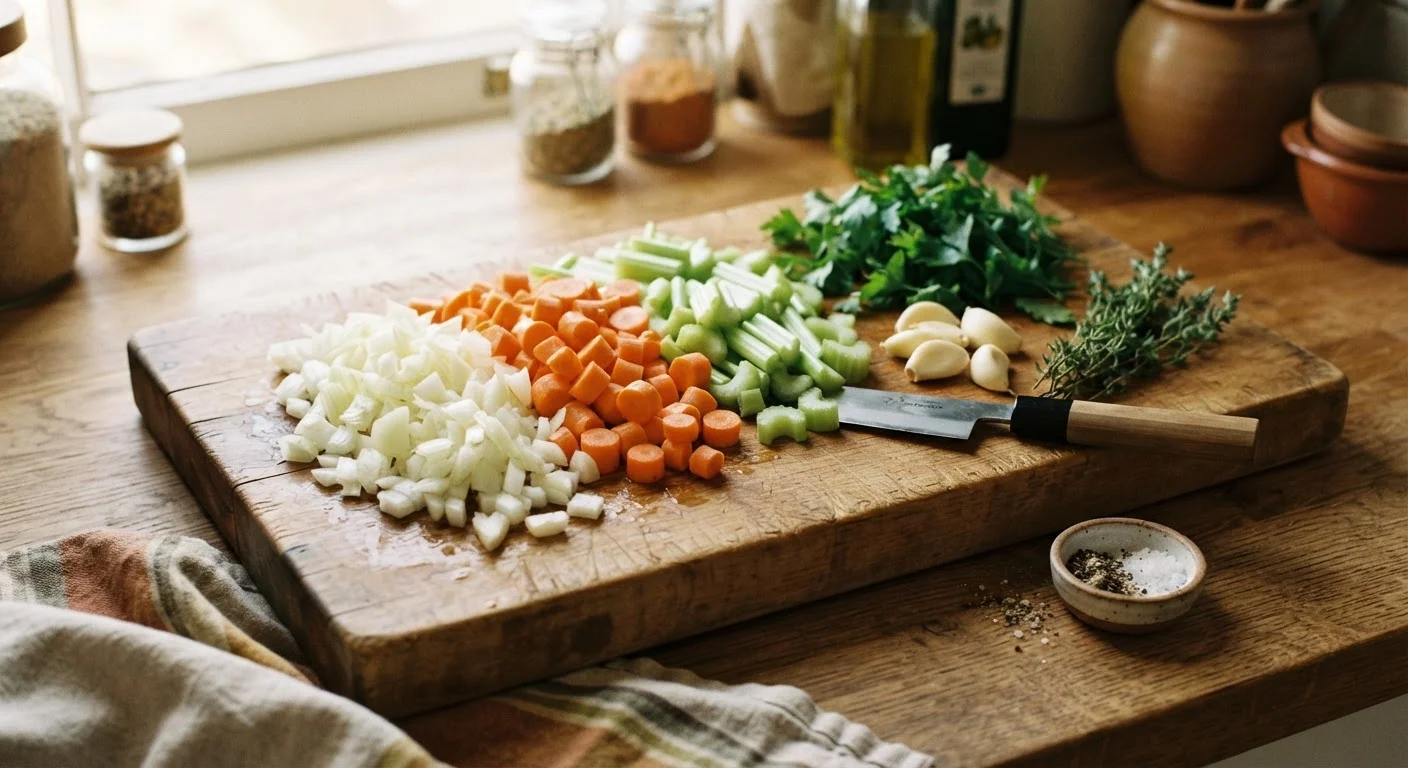
A classic French aromatic base made from diced onion, carrot, and celery, used as the flavor foundation for soups, stocks, braises, and sauces.
Maillard Reaction
A chemical reaction between amino acids and sugars that occurs when food is heated, producing the brown color and complex, savory-sweet flavors in cooked aromatics.
Caramelizing
Cooking aromatics - most often onions - over sustained low heat until their natural sugars break down, turning them golden-brown and deeply sweet.
The Essential Aromatic Families
Alliums - the onion family - are the backbone of aromatic cooking worldwide. Yellow onions are the workhorses: mild enough to use generously, sturdy enough to hold up through long cooking. Shallots offer a more delicate, wine-friendly sweetness. Leeks contribute a subtle, almost grassy onion flavor well suited to soups and braises. Garlic is the most pungent of the group; a little goes a long way, and it deepens to a rich, nutty sweetness when cooked slowly.
The carrot-celery pairing is nearly universal in Western cooking. Carrots add gentle sweetness that balances savory or acidic elements. Celery brings a faintly bitter, vegetal note and a lot of moisture. Together with onion, they form the core of the French mirepoix - one of the world's most-used flavor foundations.
Herbs and spices round out the picture. Bay leaves, thyme, and parsley stems are staples of the Western kitchen, releasing their oils slowly into stocks and braises. Fresh ginger functions as an aromatic in many Asian and South Asian traditions, providing sharpness and warmth that dried ginger doesn't replicate.
Sharp knife skills make prepping aromatics faster and more consistent - a worthwhile investment before any long cooking session.
How Heat Transforms Aromatics
Raw aromatics are pungent and sometimes harsh. Cooking changes their chemistry in ways that unlock their full potential. Understanding the two main transformations - softening and caramelizing - gives you control over what kind of flavor you're building.
Sweating means cooking aromatics slowly over low to medium heat with a small amount of fat, just until they soften and become translucent. No browning occurs. This technique extracts flavor gently, producing a sweet, mild base ideal for creamy soups, light sauces, and risotto.
Caramelizing goes further. Sustained heat drives out moisture and triggers the Maillard reaction, producing the golden-brown color and complex, toasty sweetness associated with French onion soup or a deeply flavorful pan sauce. This process takes patience - true caramelized onions require 30 to 45 minutes over low heat, not the five minutes some recipes suggest.
Choosing the right fat matters too. Butter adds richness and promotes gentle browning; olive oil contributes its own flavor and handles moderate heat well. The right oil for the job depends on the dish, the heat level, and the flavor profile you're after.
Don't Rush Your Aromatics
The single most common home cook mistake is adding liquid too soon after putting aromatics in the pan. Give onions and garlic time to soften and, if the recipe calls for it, begin to brown before any broth, wine, or water goes in. That extra five minutes of patience is where much of the dish's flavor is built.
Classic Aromatic Bases from Around the World
One of the most illuminating things about aromatics is how global cuisines have independently arrived at the same approach - build a flavorful base first - while using completely different ingredients.
| Cuisine | Base Name | Core Ingredients |
|---|---|---|
| French | Mirepoix | Onion, carrot, celery |
| Cajun/Creole | Holy Trinity | Onion, celery, bell pepper |
| Spanish/Latin | Sofrito | Onion, garlic, tomato, pepper |
| Italian | Soffritto | Onion, carrot, celery (similar to mirepoix) |
| West African | Tomato base | Onion, tomato, pepper, garlic |
| South Asian | Tarka / base masala | Onion, ginger, garlic, spices |
Recognizing these patterns helps you improvise intelligently. When a recipe calls for mirepoix, you already understand the logic. When you explore food culture from another tradition, you can identify its aromatic structure and adapt recipes with confidence.
For dishes that rely on aromatics throughout a long simmer - like braising - that foundational base becomes the single most important contributor to the dish's final flavor.
Practical Tips for Using Aromatics Every Day
Aromatics are forgiving, low-cost, and available in virtually every grocery store - which makes them ideal tools for elevating everyday cooking without extra expense or complexity.
- Start with fat: Aromatics release their flavor into fat more effectively than into water. Add them to oil or butter before any liquid goes into the pan.
- Don't rush the base: Giving aromatics five to eight minutes of unhurried cooking before adding anything else pays dividends in flavor depth.
- Match cut size to cooking time: Fine dice for quick sauces; rough chop for stocks and braises where the aromatics will be strained or cooked for hours.
- Layer herbs strategically: Woody herbs like thyme and rosemary go in early; delicate ones like basil and fresh parsley go in at the end.
- Save your scraps: Onion skins, carrot tops, celery leaves, and parsley stems all contribute to homemade stock - nothing needs to be wasted.
Aromatics work in concert with the broader principles of flavor - salt, fat, acid, and heat. If you want to understand how every element in a recipe contributes, exploring what salt, fat, acid, and heat each do is a natural next step. Building these fundamentals together is the fastest path from following recipes to cooking intuitively.