

Key Takeaways
Farmers Market as Cultural Space
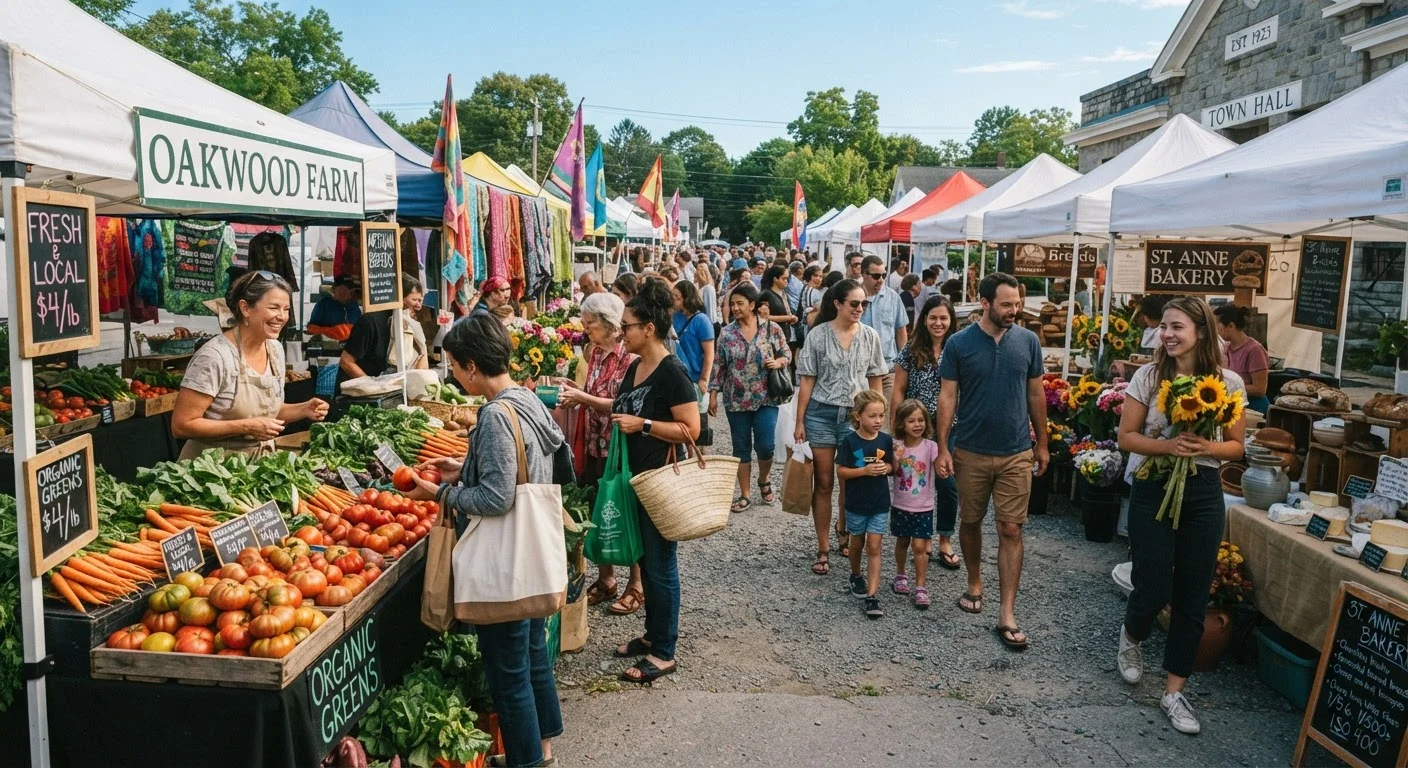
A farmers market is more than a place to buy vegetables - it is a recurring public gathering where community values, local identity, and social relationships are actively expressed and reinforced. These markets function as what sociologists call 'third places': environments that are neither home nor work, where people meet, linger, and build a shared sense of belonging. The weekly rhythm of a market creates ritual, and the vendors, musicians, and regulars who show up become characters in a living story about who a community is and what it cares about.
In urban geography and food systems research, farmers markets are studied as sites of 'alternative food networks' - spaces that challenge industrialized food supply chains while simultaneously serving social and civic functions.
The Third Place in a Parking Lot
Sociologist Ray Oldenburg introduced the idea of the 'third place' - a social environment separate from home and work where community life takes root. Coffee shops, barbershops, and diners have long filled that role. In many American towns today, the Saturday farmers market has quietly joined that list.
What distinguishes a market from a grocery run is the friction - the pausing, the sampling, the brief conversation with a vendor about whether the tomatoes are good this week. That friction is the point. It slows people down long enough to encounter their neighbors. Just as diners have historically served as democratic gathering spaces, farmers markets occupy a similar civic role, one built around proximity and repetition rather than a shared meal.
The layout of a market - open-air, walkable, without the scripted flow of a retail store - encourages lingering. And lingering is how community forms.
8,700+
Farmers markets operating across the U.S.
According to USDA data, the number of farmers markets in the United States grew dramatically from roughly 1,700 in 1994 to over 8,700 by the late 2010s.
~50%
Markets accepting SNAP/EBT benefits
USDA reports that approximately half of federally listed farmers markets now accept Supplemental Nutrition Assistance Program benefits, up significantly from a decade ago.
1 in 3
Americans live near a farmers market
Research from the USDA Economic Research Service suggests a substantial share of the U.S. population lives within reasonable distance of at least one operating farmers market.
What the Stalls Actually Sell
The produce is the obvious draw, but the range of what appears at most established markets tells a richer story. Fermented foods like kimchi, sourdough, and artisan pickles - part of a broader culinary rediscovery that connects Americans to global food traditions - are now fixtures at markets across the country. So are handmade ceramics, locally roasted coffee, native plant seedlings, and prepared foods from immigrant-owned food businesses that may lack the capital for a brick-and-mortar location.
Each of these categories signals something about what the surrounding community values - whether that's culinary adventure, environmental consciousness, or support for entrepreneurship on the margins. Markets in different regions carry distinct personalities: a market in coastal Maine has a different cultural fingerprint than one in Central Texas or the Pacific Northwest, even if both sell heirloom tomatoes.
Identity, Access, and Who Gets to Belong
The cultural power of farmers markets comes with an honest tension. These spaces often skew toward higher-income, college-educated shoppers - and the pricing of small-batch, sustainably grown food frequently reflects that reality. Critics have noted that markets can become aspirational performance spaces rather than genuinely inclusive community institutions.
That critique deserves serious engagement. A market that celebrates local food culture while pricing out a significant portion of the local community is only partially fulfilling its civic promise. The growth of SNAP/EBT acceptance and matching programs at many markets reflects a real effort to address this gap - though access remains uneven nationwide.
Understanding how place shapes identity and access - as explored in discussions of rural versus urban America - helps explain why markets in different communities function so differently, and who feels at home in them.
Markets as Living Cultural Documents
Like street food around the world, a farmers market is a readable text. The vendors present, the foods on offer, the languages spoken, the music played - all of it encodes information about a place's history, demographics, and aspirations. A market that features Vietnamese herbs alongside Appalachian honey and West African spices is narrating a story of immigration and cultural layering that no civic brochure could match.
Similarly, holiday food traditions reveal deep truths about heritage and belonging - and markets operate on the same principle, just weekly rather than annually. The rhythms are slower and more ordinary, but that regularity is precisely what gives them their cultural weight.
For communities navigating change - gentrification, demographic shifts, economic pressure - a farmers market can become a contested space, a place where questions about belonging and authenticity play out through something as tangible as what's for sale and who's selling it.
“Markets are where a community shows up to negotiate its values. What's sold, who's there, and who feels welcome - those aren't incidental details. They're the whole story.”
— Alison Hope Alkon, Sociologist and author researching race, food systems, and alternative food movements