

Key Takeaways
Fermentation
Fermentation is a natural process in which microorganisms - bacteria, yeasts, or molds - break down sugars and starches in food or drink, transforming their flavor, texture, and nutritional profile. Humans have used fermentation for thousands of years to preserve food, develop complex tastes, and make staples like bread, cheese, wine, and yogurt. Nearly every food culture on Earth has its own signature fermented foods.
Fermentation is technically an anaerobic metabolic process; lactic acid fermentation (used in kimchi, yogurt, and sourdough) and alcoholic fermentation (used in beer and wine) are the two most common types in food production.
An Ancient Technology With Global Roots
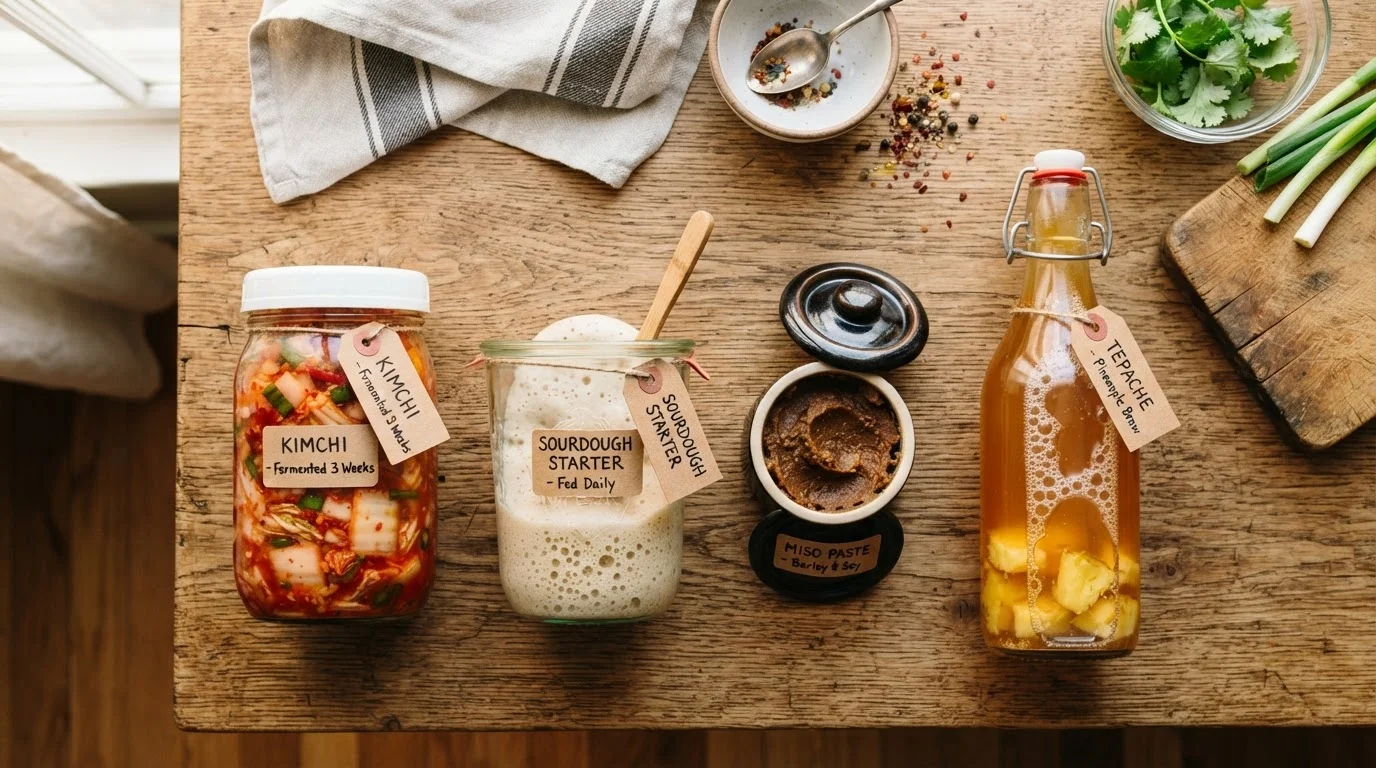
Long before refrigerators or canning facilities existed, people everywhere discovered that microbial transformation could preserve food and make it more interesting. Korean households aged cabbage into kimchi. Japanese kitchens cultivated miso from soybeans and koji mold. Mexican families fermented pineapple rinds into tepache. Eastern European communities turned milk into kefir. These weren't culinary novelties - they were survival strategies refined over generations into beloved traditions.
The diversity of fermented foods worldwide reflects something profound: different climates, crops, and microbes produce radically different results. Tempeh from Indonesia, injera from Ethiopia, kvass from Russia, and fish sauce from Southeast Asia all share fermentation as a foundation, yet taste nothing alike. This variety is part of what makes fermentation such a compelling lens for understanding food culture globally. As immigrant food traditions reshaped the American table, fermented foods have traveled with communities and quietly taken root in new soil.
How Industrial Food Pushed Fermentation Aside
The twentieth century transformed how Americans ate. Refrigeration removed the need to ferment for preservation. Industrial dairies pasteurized milk and mass-produced uniform yogurt. Sliced sandwich bread replaced sourdough loaves that required days of preparation. Shelf-stable, consistent, and convenient became the defining values of modern American food.
This wasn't purely a loss - it brought cheaper, safer calories to more people. But it also flattened flavor and severed the cultural knowledge that fermentation traditions carried. Many ethnic communities continued their fermented food practices at home, even as mainstream American food culture moved on. The sauerkraut grandmothers made in basements, the kimchi fermented in Korean American households, the miso paste maintained in Japanese American pantries - these practices persisted outside the commercial mainstream.
10,000+
Years humans have practiced fermentation
Archaeological evidence suggests fermented beverages and foods date back at least 10,000 years across multiple civilizations worldwide.
~$1.5B
U.S. kimchi market value by mid-2020s
Industry analysts have tracked rapid growth in kimchi sales in the United States, reflecting broader consumer interest in fermented and Korean foods.
500%
Increase in home sourdough searches, spring 2020
Google Trends data recorded a dramatic spike in sourdough-related searches during pandemic lockdowns, illustrating fermentation's moment in American home kitchens.
The Comeback: What's Driving American Interest
Today, fermented foods are experiencing a genuine cultural revival in American kitchens and restaurants. Several forces are converging. The artisan food movement has elevated handcrafted, slow-process foods. Growing interest in global cuisines has introduced millions of Americans to kimchi, miso, and tepache as flavor-forward ingredients rather than exotic novelties. The pandemic-era sourdough boom demonstrated that fermentation could be both a meaningful domestic ritual and a point of community connection.
Immigrant and diaspora communities deserve particular credit here. As mainstream understanding of authentic ethnic food deepens, more eaters are engaging with fermented foods in their original cultural contexts rather than as sanitized trends. Farmers markets have also played a role - as cultural spaces that go beyond produce, they've become places where small-batch fermenters introduce shoppers to locally made kimchi, kombucha, and kraut.
“Fermented foods are living foods - they carry the fingerprint of a specific place, a specific community, and a specific time. When we eat them, we're participating in something much older than ourselves.”
— Sandor Ellix Katz, Author of 'The Art of Fermentation' and widely cited voice on fermentation culture
Flavor First: What Fermentation Actually Does to Food
Beyond preservation, fermentation fundamentally changes flavor in ways that are difficult to replicate by other means. Acids sharpen and brighten. Umami deepens - a connection worth exploring for anyone curious about the fifth taste Americans are still learning to name. Funk, sourness, and complexity emerge from microbial activity in ways that no spice blend can duplicate.
Sourdough's tang comes from lactic and acetic acids produced by wild yeast and bacteria. Miso's savory depth is the result of koji mold breaking down soy proteins over months or even years. Tepache's slight effervescence and tropical sourness come from wild fermentation on pineapple skins. Each process is distinct, and each results in something genuinely irreplaceable in the flavor world. For home cooks eager to explore these techniques, the Cooking & Recipes hub offers practical starting points.
What Americans are rediscovering, perhaps above all, is that fermented foods are interesting. They tell stories about place, time, and culture in every bite - and that's a compelling reason to bring them back to the table.