

Key Takeaways
Why Most Meal Prep Fails
The idea of spending Sunday afternoon cooking 21 labeled meals sounds satisfying - until Wednesday, when you're eating the same lukewarm grain bowl for the fourth time and resenting every bite. This is where most meal prep attempts collapse: they're too rigid, too ambitious, or both.
Effective meal prep isn't about cooking everything in advance. It's about reducing the number of decisions and steps you face on a tired Tuesday evening. The goal is a stocked fridge of flexible components that can combine into several different meals - not a stack of identical containers.
Before diving into any prep session, take a few minutes to review what you actually have on hand and what you need. Our pre-cook checklist can save you from mid-session surprises that derail the whole effort.
The Component Method: What to Actually Prepare
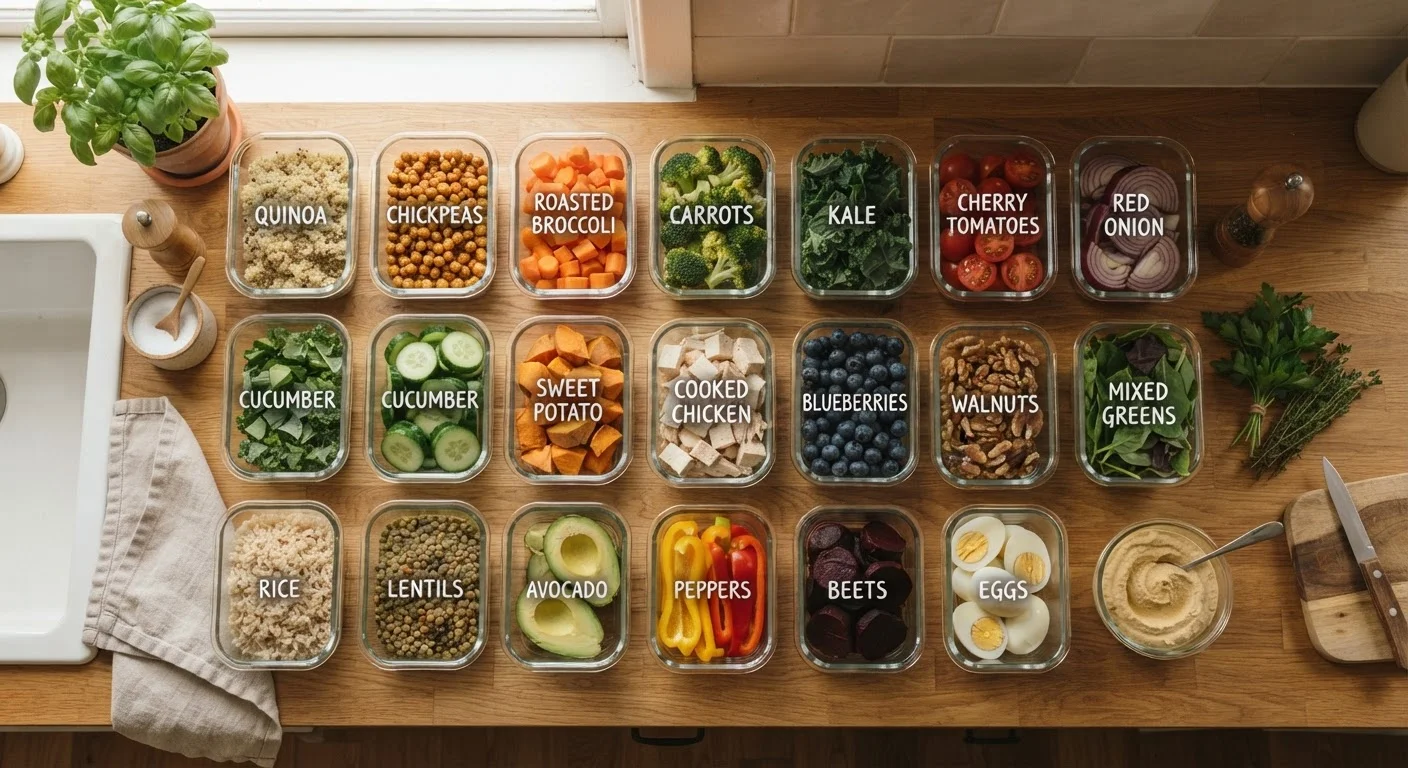
Instead of assembling full dishes, focus your prep session on three core categories: proteins, grains, and vegetables. When each is ready to go, assembly takes minutes.
Batch-cook one or two proteins at the start of the week
Protein is often the most time-consuming element of a meal to prepare on the spot. Having cooked chicken, hard-boiled eggs, or seasoned ground turkey ready to go eliminates the biggest bottleneck on busy evenings.
Cook a large batch of a whole grain every week
Grains like brown rice, farro, or quinoa take 20-45 minutes to cook but reheat in minutes. They serve as a neutral, filling base that works across many flavor profiles.
Wash, chop, and store vegetables immediately after shopping
The biggest barrier to using fresh vegetables mid-week is the inertia of washing and cutting them when you're already hungry and rushed. Removing that step makes healthy choices the easy choice.
Keep a simple, flexible sauce or dressing on hand
The same protein and grain combination eaten with different sauces tastes like a different meal. A couple of sauces extend your component variety without extra cooking.
Plan for two to three meal formats, not specific recipes
Rigid recipe planning creates waste when plans change. Thinking in formats - bowl, wrap, soup - gives you structure with room to adapt based on what's actually in the fridge.
Roasted vegetables are especially versatile. A sheet pan of broccoli, sweet potato, and chickpeas can go into a grain bowl Monday, a wrap Tuesday, and a frittata Wednesday. If you want to maximize that approach, sheet pan cooking is one of the most efficient methods for prepping vegetables and proteins at the same time with minimal cleanup.
Building the Habit: Time, Storage, and Realism
A sustainable prep routine fits into your real life - not an idealized version of it. One focused session of 60 to 90 minutes tends to be more productive than an exhausting four-hour cooking marathon that you never repeat.
Storage matters too. Cooked grains keep well for four to five days refrigerated. Proteins are best used within three to four days. Washed and cut raw vegetables can last up to five days when stored dry in airtight containers. Label everything with the date so nothing gets forgotten.
On the nutrition side, prepped components make it easier to build genuinely balanced meals without tracking every number. If you want a practical framework for assembling plates that cover your nutritional bases, building a balanced plate offers a food-group proportion approach that pairs naturally with component prep.
Finally, faster prep starts with sharper skills. If chopping vegetables feels slow or awkward, investing time in foundational knife skills will pay dividends every single week.