

Food & Drink

What to Check Before You Start Any Recipe

Share
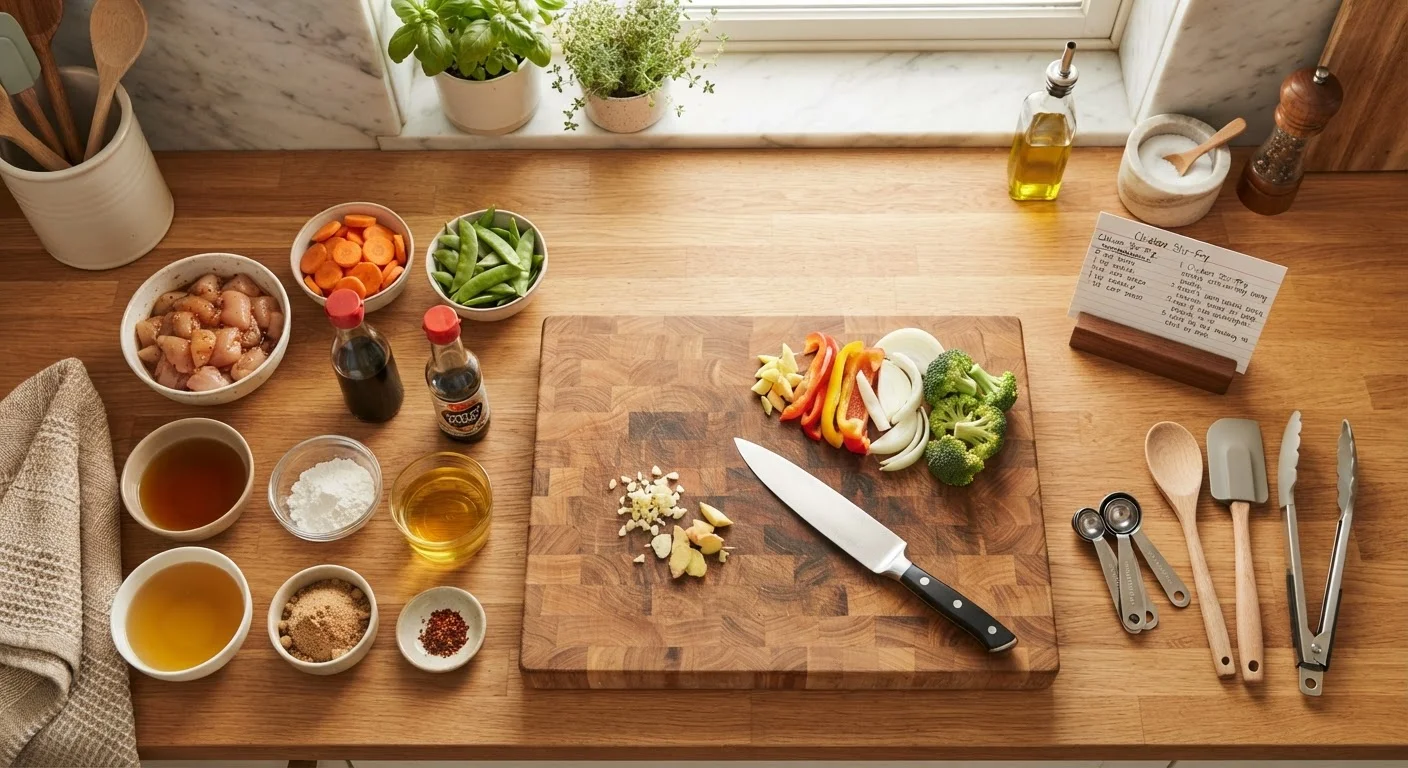
Organized kitchen counter with measured ingredients, utensils, and a recipe card laid out before cooking.

Key Takeaways

Reading the entire recipe before starting is the single most impactful habit a home cook can build.
Checking pantry staples and specialty ingredients ahead of time prevents mid-cook grocery runs.
Confirming your equipment is clean, calibrated, and the right size prevents texture and timing failures.
Understanding active vs. passive time in a recipe helps you plan your cooking session accurately.
Mise en place — measuring and organizing ingredients before heat is applied — reduces mistakes significantly.
10–20 min

Summary

22 items · 10–20 minutes

Why a Pre-Cook Checklist Matters

Most kitchen disasters don't happen at the stove — they happen in the moments before it. Reaching for baking powder and finding an empty tin, realizing mid-sear that your pan is too small, or discovering a dough needs four hours of chilling when dinner is in ninety minutes: these are avoidable frustrations. A quick pre-cook check gives you a complete picture of what you're walking into.

Professional kitchens rely on mise en place — a French term meaning "everything in its place" — as a foundational discipline. Home cooks who adopt even a simplified version of this habit report fewer ruined dishes and a noticeably calmer cooking experience. This checklist is designed to make that habit fast and practical. It pairs well with the principles in our guide to meal prep that actually works, particularly if you're cooking for the week ahead.

Read the Recipe

Read the recipe from start to finish before touching a single ingredient. Must
Identify any steps with long passive times — marinating, chilling, rising, or resting — that affect your overall schedule. Must
Note any techniques you're unfamiliar with and look them up before you begin. Should
Check the yield and scale up or down if needed, adjusting all ingredient quantities proportionally. Should

Ingredients Audit

Pull every ingredient from your pantry, fridge, and freezer and confirm you have the correct quantity of each. Must
Check that perishables — dairy, eggs, meat, fresh herbs — are fresh and within a safe use-by window. Must
Verify you have the specific form of each ingredient called for (e.g., unsalted vs. salted butter, whole vs. ground spices). Must
Confirm any specialty or less-common ingredients before planning the meal, not the day of cooking. Should
Bring refrigerated ingredients like butter or eggs to room temperature if the recipe calls for it. Should

Equipment Check

Confirm you have every piece of equipment listed in the recipe, including the correct pan size and shape. Must
Make sure all equipment is clean, dry, and accessible before you begin — not still in the dishwasher. Must
Check that your oven, thermometer, or any calibrated tool is functioning accurately. Should
Pre-line baking pans with parchment or grease them as directed so they're ready when you need them. Should
Set out mixing bowls, colanders, cooling racks, or any passive equipment in your workspace before starting. Nice to have

Mise en Place Setup

Measure all dry and wet ingredients into individual prep bowls or containers before applying any heat. Must
Complete all chopping, mincing, zesting, or other prep work on ingredients before starting the cooking process. Must
Pre-heat your oven, grill, or skillet to the correct temperature so it's ready at the right moment. Should
Group ingredients by the order they'll be added to the recipe to minimize confusion during active cooking. Nice to have

Timing and Planning

Calculate your total cook time including all passive steps and set a start time that works backward from when you want to serve. Must
Identify any steps that can run simultaneously (e.g., a sauce reducing while pasta boils) and plan the sequence. Should
Set timers in advance for any steps with narrow time windows, such as resting meat or par-cooking vegetables. Should

Using This Checklist Effectively

Work through the checklist in the order presented — it's structured to surface the most time-sensitive issues first. Timing problems (like a required marinating step) need to be caught before you check your equipment, not after. For complex recipes, consider doing a first pass the evening before, focusing on ingredients and timing, then a second pass an hour before you cook to confirm equipment and setup.

Don't Skip the Full Read-Through

Skimming a recipe and jumping straight to cooking is the most common source of mid-recipe surprises. A step buried in the instructions — "refrigerate overnight," "let stand 2 hours," or "you'll need a stand mixer" — can derail an entire meal if caught too late. Even experienced cooks read a new recipe in full before they start. Budget three to five minutes for this single step; it will save far more time than it costs.

One area worth extra attention: ingredient labels. Recipes often call for a specific form of an ingredient — "packed brown sugar," "sifted flour," "unsalted butter" — and substituting incorrectly changes the chemistry of a dish. Our guide on how to actually read an ingredient list covers the labeling conventions that matter most. If your recipe involves chicken, also check our breakdown of why chicken breast dries out — many of those problems start in the prep phase, not at the pan.

Required

Kitchen Scale

Weighing ingredients by mass is far more accurate than volume for baking and many savory recipes.

Required

Instant-Read Thermometer

Confirms doneness for meat, poultry, fish, and certain baked goods with far more accuracy than visual cues.

Required

Mise en Place Prep Bowls

Small ramekins or bowls for measuring and organizing each ingredient before cooking begins.

Optional

Oven Thermometer

Verifies your oven's actual temperature, which commonly differs from its dial setting by 25°F or more.

Required

Kitchen Timer (dedicated or phone)

Tracks multiple simultaneous steps so nothing overcooks while your attention is elsewhere.

Food & Drink Editorial Team is the collective byline for our editorial team and contributor network. Articles published under this byline or an editorial pen name are researched, written, and reviewed according to our editorial standards for clarity, consistency, and independence before publication.

View all articles by Food & Drink Editorial Team →
Disclaimer: The content on this site is for informational purposes only and is not a substitute for professional advice. Always consult a qualified professional for guidance specific to your situation.