

Key Takeaways
Why Skip the Numbers?
Calorie and macro tracking can be useful tools for some people, but research consistently shows that rigid numerical approaches to eating are difficult to sustain and can heighten anxiety around food for many individuals. The goal of balanced eating - getting a reliable mix of nutrients across the day - can be achieved through a simpler, proportional lens.
The U.S. Department of Agriculture's MyPlate model and Harvard's Healthy Eating Plate both use visual plate divisions rather than gram targets, reflecting a broad professional consensus that proportion-based thinking is practical and effective for general health. If you're curious about how this connects to mindful approaches to food, mindful eating offers a complementary framework worth exploring.
What you will need
What Goes on a Balanced Plate
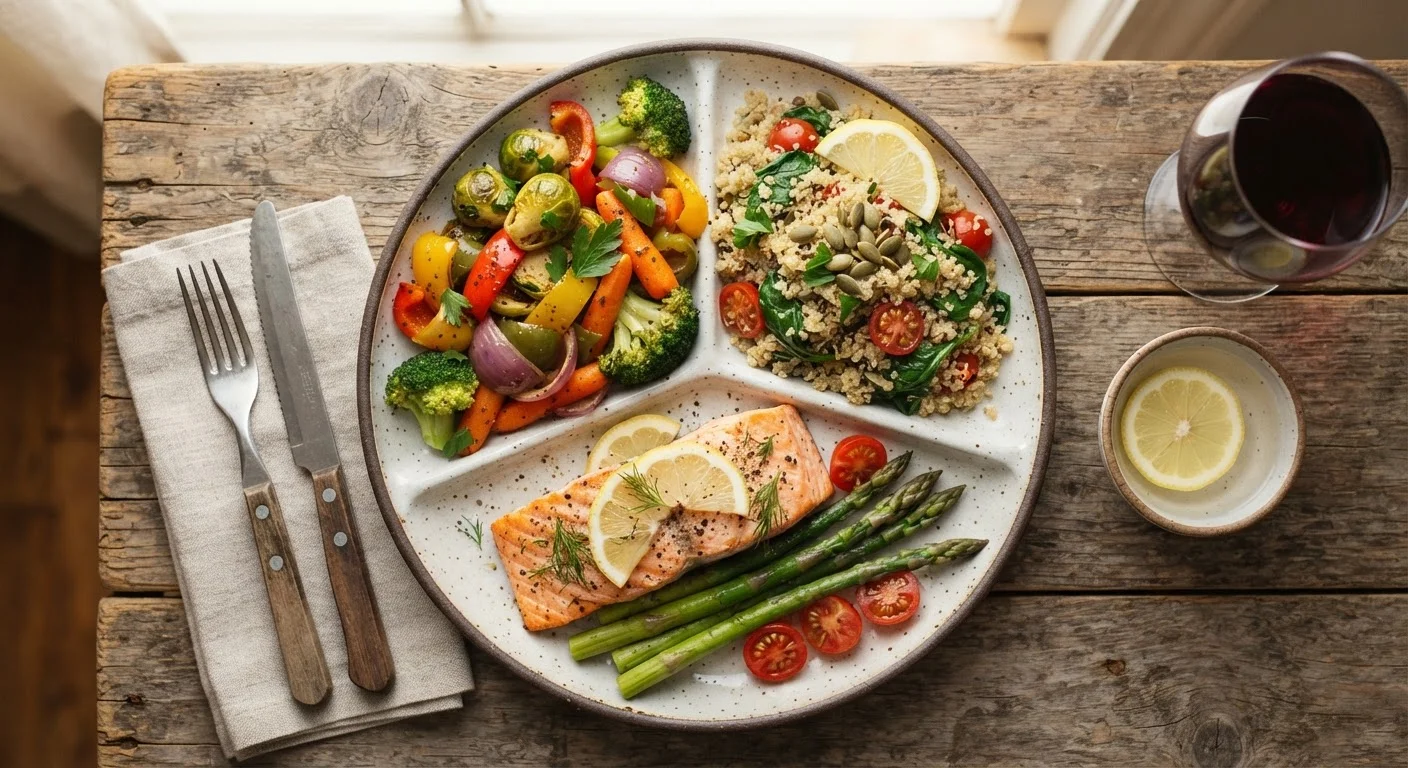
A workable, evidence-grounded plate model breaks down into four broad zones. Think of these as flexible targets rather than precise rules.
- Vegetables and fruits (about half the plate): Prioritize a variety of colors - each pigment group broadly reflects different phytonutrients. Leafy greens, cruciferous vegetables, root vegetables, legumes, and whole fruits all count. Variety over volume.
- Whole grains (about one quarter): Brown rice, oats, whole-wheat bread, quinoa, barley, and corn tortillas are reliable examples. Whole grains retain fiber and micronutrients that refined grains lose during processing.
- Quality protein (about one quarter): This includes legumes, fish, poultry, eggs, tofu, tempeh, and lean meats. Protein quality - how completely the body can use a given source - is worth understanding if you rely heavily on plant proteins.
- Healthy fats (a modest addition, not a separate zone): Olive oil, nuts, seeds, and avocado contribute essential fatty acids and help absorb fat-soluble vitamins. They belong on the plate even if they don't occupy a visual slice of it.
Variety Beats Perfection Every Time
No single meal needs to be nutritionally complete. What matters is the pattern across days and weeks. A meal heavy on whole grains one day and lighter the next is normal and fine. Aim for consistent variety rather than an ideal plate at every sitting.
How to Build the Plate Step by Step
Start with vegetables and fruit as your foundation
Before adding anything else, mentally (or physically) fill half your plate with vegetables, legumes, or whole fruit. Frozen and canned options without added sodium or sugar count equally toward this goal - fresh is not a requirement.
Add a whole grain to fill one quarter
Choose a grain that feels appropriate to the meal - rice, pasta, bread, or another option. Look for "whole grain" as the first ingredient on packaged items. A portion roughly the size of your closed fist is a reasonable visual reference for most adults.
Place a protein source in the remaining quarter
Select a protein that fits your preferences and dietary pattern - animal-based or plant-based both work within this framework. Aim for variety across the week rather than optimizing any single meal. Legumes like lentils or black beans do double duty, counting as both protein and a plant-based fiber source.
Add a small amount of healthy fat
Drizzle olive oil over roasted vegetables, add a handful of nuts alongside the meal, or include a slice of avocado. These additions are modest in volume but meaningful for nutrient absorption and satiety. This step is easy to skip - make it a deliberate habit.
Choose a beverage that doesn't undermine the plate
Water is the default recommendation from most dietary guidelines. Unsweetened coffee, tea, and plain sparkling water are also reasonable. High-sugar beverages add significant calories with minimal nutritional return and are worth limiting rather than eliminating entirely if you enjoy them.
Making It Work Across Real Life
A plate model only helps if it adapts to varied meals - takeout containers, bowls, wraps, soups, and mixed dishes don't always present as neat quadrants. The mental shortcut is to ask: Is roughly half of this meal plant-based? Is there a fiber-rich carbohydrate source? Does it contain protein? Three affirmative answers signal a reasonably balanced choice without any calculation.
For busy weeks, building a few flexible staple components in advance makes applying this framework far easier. The practical meal prep strategies covered in our cooking section address exactly this. And if cost is a concern, it's worth knowing that eating nutritiously on a budget is genuinely achievable with the right ingredient choices.
Finally, keep in mind that nutritional needs shift over a lifetime. Nutrition through every stage of adulthood explores how priorities evolve - a useful read if you're cooking for multiple generations or navigating a life transition.
This article is for general informational purposes only and is not a substitute for personalized medical or dietary advice. Consult a qualified healthcare professional or registered dietitian for guidance specific to your health needs.