

Key Takeaways
USDA Plant Hardiness Zone
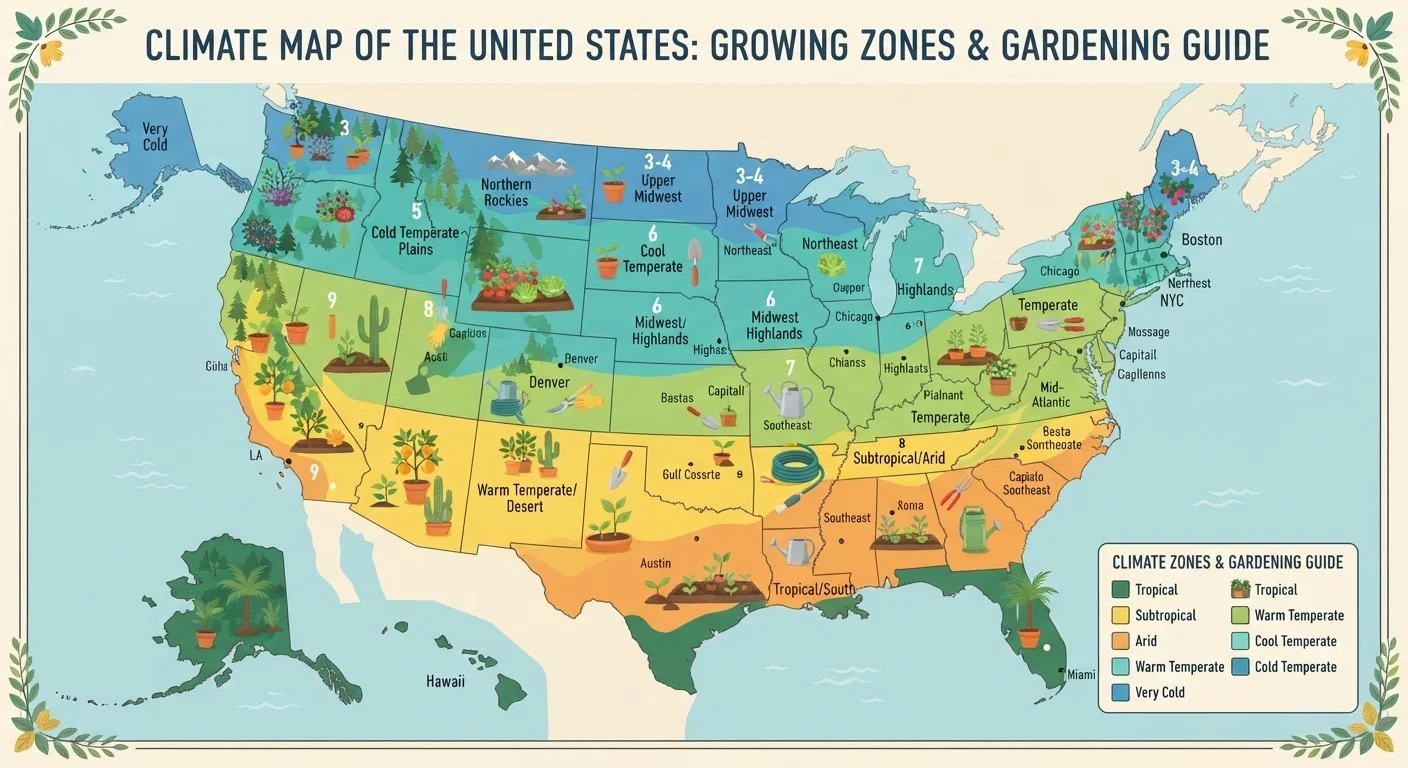
A USDA Plant Hardiness Zone is a geographic designation that tells you how cold your area typically gets in winter. The US Department of Agriculture divides the country into 13 numbered zones based on the average annual extreme minimum temperature. Plant labels and seed catalogs use these zone numbers to indicate which plants can survive winter in a given location.
Each zone spans a 10°F range, and each is further split into 'a' and 'b' half-zones representing 5°F increments. The map was most recently updated in 2023 using temperature data from 1991-2020.
What the Zone Number Actually Tells You
When a plant tag reads "Hardy to Zone 7," it's making one specific promise: this plant can survive the average coldest night your Zone 7 location experiences in winter. That's it. The number is not a measure of summer heat, rainfall, humidity, soil type, or growing season length.
The 13 zones run from Zone 1 (interior Alaska, with minimum temperatures below -50°F) to Zone 13 (parts of Hawaii and Puerto Rico, where temperatures rarely drop below 60°F). Most of the contiguous US falls between Zone 4 and Zone 10. The higher the zone number, the milder the winter.
Zone ratings work like a filter: if a shrub is rated for Zones 5-9, it should survive winter in any of those zones. A gardener in Zone 4 would need to provide winter protection or treat it as an annual. A gardener in Zone 10 would face a different problem - that plant may not get the cold dormancy period it requires to bloom or fruit properly.
13
Total USDA hardiness zones across the US
The USDA Plant Hardiness Zone Map divides the country into 13 primary zones, each spanning a 10°F range of average annual minimum temperature.
~50%
US locations shifted to warmer half-zone in 2023
According to the USDA, approximately half of the country moved into a warmer half-zone in the 2023 map update, reflecting 30 years of temperature data from 1991-2020.
5°F
Temperature difference between half-zones (a vs. b)
Each numbered zone is divided into 'a' and 'b' sub-zones, each representing a 5°F difference in average annual minimum temperature.
How to Find Your Zone and Read the Map
The USDA hosts an interactive version of the Plant Hardiness Zone Map at planthardiness.ars.usda.gov. Enter your ZIP code and the tool returns your zone designation immediately - for example, "7b" or "9a." Most nurseries, seed packets, and plant catalogs reference these same designations.
One important caveat: the map reflects averages across a geographic area. Your actual yard may be notably different. A yard in a low-lying frost pocket may perform like a colder zone, while a garden against a south-facing brick wall in a sheltered urban neighborhood can act a full zone warmer. These local variations are called microclimates, and paying attention to them can expand - or limit - what you're able to grow.
Check Your Microclimate Before Planting
Walk your yard on a cold morning after a frost and note which spots thaw first and which stay frozen longest. The fast-thawing areas are your warmest microclimates - ideal for borderline plants. Low-lying spots, north-facing beds, and open exposed areas will consistently run colder than the zone average.
If you're planning a vegetable garden for the first time, understanding your zone is the right first step before choosing crops and timing your plantings. Our beginner's guide to starting a vegetable garden walks through the full setup process once you have that foundation in place.
What Zones Don't Tell You - and What Does
Hardiness zones answer one question well and leave the rest to other resources. Here's what they don't cover:
- Summer heat: A Zone 8 garden in coastal Oregon and a Zone 8 garden in Dallas, Texas share similar winter lows but wildly different summer temperatures. The American Horticultural Society publishes a separate Plant Heat Zone Map for this dimension.
- Frost dates: Your last spring frost and first fall frost define your actual growing window. These dates vary even within the same zone and must be looked up separately - your local cooperative extension office is the most reliable source.
- Rainfall and humidity: A drought-tolerant desert plant and a moisture-loving fern may share the same zone number but have completely incompatible needs.
For perennial plants in particular, zone compatibility is just the beginning. Understanding how annuals and perennials differ will help you think through which plants are actually worth investing in for your specific climate and goals.
Native plants often sidestep many of these questions entirely - they evolved within their regional zone and climate, making them naturally well-suited to local conditions. See our article on why native plants are recommended so frequently for more on that approach.
Zones Are Based on Historical Averages
Hardiness zone ratings reflect typical minimum temperatures, not worst-case extremes. An unusually severe winter - a polar vortex event, for example - can push temperatures well below what your zone normally sees. Plants growing at the edge of their zone rating are most vulnerable in these outlier years. Building in a margin of caution, especially for expensive trees and shrubs, is a reasonable approach.
Putting It Into Practice Before You Buy
The single most practical use of zone knowledge is preventing wasted money on plants that won't survive your winters. Before purchasing any perennial, tree, or shrub, check three things: the zone rating on the label, your confirmed zone, and the specific microclimate of the planting spot.
Container gardening adds a layer of complexity: pots expose roots to air temperature on all sides, which means a plant rated for your zone may actually need one zone warmer of protection when grown in a container outdoors. Container gardening on patios and balconies covers these trade-offs in more detail.
Once you know your zone and have your plants selected, soil quality becomes the next variable to address. Hardiness ratings assume plants are growing in reasonably appropriate conditions - poor soil can weaken a plant enough that it fails a winter it would otherwise survive. Understanding common soil amendments is a useful next step for making sure the growing environment supports the plants you've chosen.
Zones are a map, not a guarantee. Treat them as the first filter in a larger decision, not the final word.