

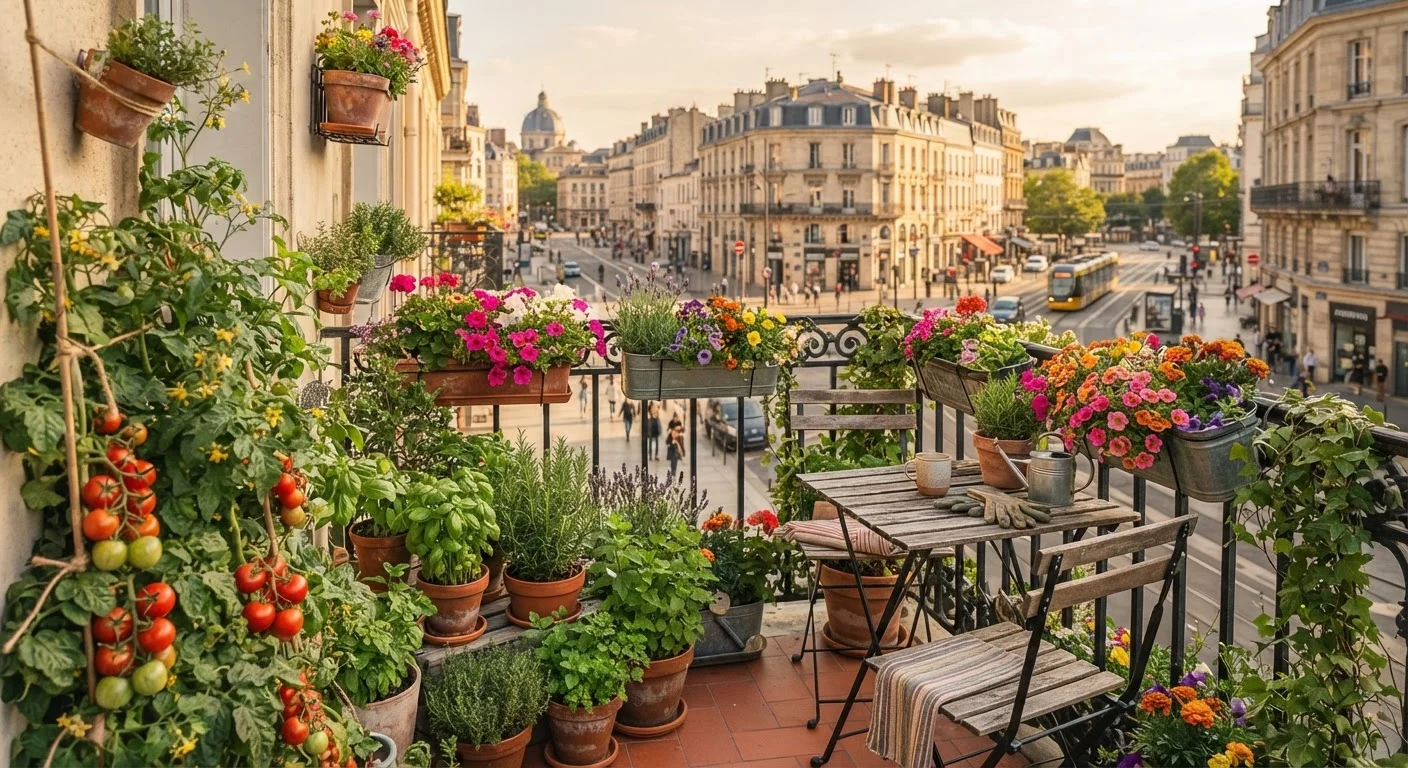
Key Takeaways
Works in any outdoor space, no ground access needed
Patios, balconies, rooftops, and even driveways can host productive container gardens. This makes gardening accessible to renters and urban residents who have no yard at all.
You control the soil quality completely
Poor native soil, clay, or contaminated ground isn't a barrier. Every pot gets exactly the mix the plant needs, which can lead to better results than struggling with a problematic yard.
Portable and repositionable as light changes
If a spot proves too shady in summer or too exposed in winter, most containers can simply be moved. That adaptability is something in-ground planting cannot offer.
Easier to manage pests and disease
Isolated containers make it straightforward to remove and quarantine a sick plant before problems spread to others, something much harder to do in a continuous garden bed.
Low barrier to entry for true beginners
Starting with two or three pots of herbs or lettuce is far less overwhelming than preparing a full garden bed, and the investment of time and money is proportionally small.
Dries out fast, demands frequent watering
Containers lose moisture through their walls and drainage holes far more rapidly than ground soil, especially in summer. In hot climates, daily watering is often necessary to keep plants alive.
Nutrients deplete quickly and need replenishment
Regular watering leaches nutrients out of the potting mix within weeks. Without consistent fertilizing throughout the season, plant growth slows noticeably and yields drop.
Root space limits plant size and variety
Large or deep-rooted crops like full-size tomatoes, squash, and most root vegetables simply don't perform well in pots, no matter how attentive the care.
Balcony weight limits can be a genuine safety issue
Wet soil and large ceramic containers are heavy. Exceeding a balcony's structural load rating is a real risk that's easy to overlook when enthusiastically filling a space with pots.
Higher long-term cost than ground gardening
Potting mix needs replacing or refreshing each season, containers eventually crack or degrade, and fertilizer is an ongoing expense that ground gardens can partially offset with compost.
Our Verdict
Container gardening is a genuinely practical way to grow food and ornamentals when in-ground space isn't available. It rewards attention and consistent care, but it isn't a no-maintenance shortcut - pots demand regular watering, fertilizing, and replanting that ground beds don't. Matching plant choice to pot size and sun exposure is what separates thriving containers from struggling ones.
Ideal for renters, apartment dwellers, and homeowners with paved outdoor areas who want fresh herbs, compact vegetables, or seasonal color without committing to a traditional garden bed.
Why Container Gardening Appeals to So Many Beginners
When you don't have a backyard - or the backyard you have is mostly concrete - containers offer a genuine path to growing something. A pot of basil on a sunny balcony or a self-watering planter of lettuce by the patio door can produce real food with a surprisingly small footprint.
Container gardening also lets you control growing conditions more precisely than ground planting. You choose the soil mix, you decide where the pot lives, and you can move it if the spot turns out shadier than expected. That flexibility makes it especially forgiving for beginners who are still learning what plants need. For a deeper comparison with traditional approaches, see how raised beds and in-ground planting compare.
That said, containers come with a distinct set of constraints. Understanding both sides before you invest in pots and soil will save you frustration - and dead plants.
Works in any outdoor space, no ground access needed
Patios, balconies, rooftops, and even driveways can host productive container gardens. This makes gardening accessible to renters and urban residents who have no yard at all.
You control the soil quality completely
Poor native soil, clay, or contaminated ground isn't a barrier. Every pot gets exactly the mix the plant needs, which can lead to better results than struggling with a problematic yard.
Portable and repositionable as light changes
If a spot proves too shady in summer or too exposed in winter, most containers can simply be moved. That adaptability is something in-ground planting cannot offer.
Easier to manage pests and disease
Isolated containers make it straightforward to remove and quarantine a sick plant before problems spread to others, something much harder to do in a continuous garden bed.
Low barrier to entry for true beginners
Starting with two or three pots of herbs or lettuce is far less overwhelming than preparing a full garden bed, and the investment of time and money is proportionally small.
The Real Drawbacks Worth Knowing Upfront
Containers amplify every stress plants experience. A hot afternoon bakes the roots through the pot walls in ways ground soil never would. Wind on a high balcony accelerates moisture loss. Miss a couple of watering days in July and most vegetables won't recover.
Nutrient depletion is another underappreciated issue. Every time you water, some nutrients leach out through the drainage holes. Unlike garden beds, which draw on a broader soil ecosystem, containers are closed systems that need regular replenishment - typically through a balanced slow-release or liquid fertilizer applied on a schedule throughout the growing season.
Dries out fast, demands frequent watering
Containers lose moisture through their walls and drainage holes far more rapidly than ground soil, especially in summer. In hot climates, daily watering is often necessary to keep plants alive.
Nutrients deplete quickly and need replenishment
Regular watering leaches nutrients out of the potting mix within weeks. Without consistent fertilizing throughout the season, plant growth slows noticeably and yields drop.
Root space limits plant size and variety
Large or deep-rooted crops like full-size tomatoes, squash, and most root vegetables simply don't perform well in pots, no matter how attentive the care.
Balcony weight limits can be a genuine safety issue
Wet soil and large ceramic containers are heavy. Exceeding a balcony's structural load rating is a real risk that's easy to overlook when enthusiastically filling a space with pots.
Higher long-term cost than ground gardening
Potting mix needs replacing or refreshing each season, containers eventually crack or degrade, and fertilizer is an ongoing expense that ground gardens can partially offset with compost.
Weight is a concern that's easy to overlook until it becomes urgent. A 15-inch ceramic pot filled with wet potting mix can weigh 50 pounds or more. Before arranging multiple large containers on a balcony, check your building's structural load rating - most apartment balconies are engineered for furniture and people, not the equivalent of several hundred pounds of soil. When in doubt, consult your building manager or a structural engineer.
Which Plants Actually Thrive in Pots
The honest answer: compact and shallow-rooted plants. Herbs are the most reliable container crops across nearly every US climate zone - basil, parsley, chives, mint (which actually does better confined to a pot), thyme, and oregano all perform well in 6- to 8-inch pots with good drainage and at least six hours of sun.
Leafy greens including lettuce, spinach, and kale work well in wider, shallower containers and can be harvested continuously. Cherry tomatoes in 5-gallon or larger containers, peppers, and compact bush beans are realistic food crops for sunny patios. Avoid full-size indeterminate tomato varieties, corn, melons, or anything whose root system needs true depth - they'll underperform in pots regardless of how large the container is.
For a broader look at food production in tight spaces, growing food in small spaces covers window boxes and other creative formats alongside container options.
5 gal
Minimum pot size for cherry tomatoes
University extension services generally recommend at least a 5-gallon container for compact tomato varieties to allow adequate root development.
6+ hrs
Daily sun required for most vegetable crops
Most fruiting vegetables need a minimum of six hours of direct sunlight; balconies facing north or east may not meet this threshold for food crops.
Ornamentals tend to be more forgiving than edibles. Petunias, calibrachoa, marigolds, and geraniums reliably fill seasonal containers with color and handle the heat and drought stress of container life better than most vegetables.
Getting the Fundamentals Right
Soil selection is where many container gardens fail before they start. Garden soil compacts in pots, cutting off air to roots and blocking drainage. Use a quality potting mix formulated for containers - it's lighter, drains better, and holds just enough moisture. You may see advice to add gravel to the bottom of pots for drainage; this is actually a persistent myth that can create a perched water table effect and harm roots. Common gardening myths including this one are explained in detail if you want to understand the science.
Drainage holes are non-negotiable. Decorative pots without holes should be used as outer sleeves with a nursery pot inside, not as planting containers directly.
Refreshing Potting Mix Each Season
Potting mix breaks down over time, losing its structure and nutrient content. At the start of each growing season, replace at least half the old mix or top-dress with compost to refresh the growing medium. Fully replacing the mix every one to two years gives plants the best start. Home compost is a cost-effective way to supplement bagged potting mix over time.
Watering rhythm matters more in containers than almost anything else. Check moisture levels by pressing a finger an inch into the soil - if it feels dry at that depth, water thoroughly until it drains from the bottom. A consistent schedule beats guessing. If you're managing multiple containers, drip irrigation options can automate this and reduce the daily commitment significantly.