

Key Takeaways
Our Verdict
Both systems can work well - the deciding factor is what and where you're watering. Drip irrigation excels for vegetable beds, trees, shrubs, and water-conscious gardens, delivering precision and efficiency. Sprinklers remain the practical standard for lawns and large open areas where broad coverage matters more than targeted delivery.
| Best for | Recommended |
|---|---|
| Vegetable gardens, raised beds, and drought-sensitive landscapes | Drip Irrigation |
| Established lawns and large open ground-cover areas | Sprinklers |
| Gardeners prioritizing water conservation and lower utility bills | Drip Irrigation |
| Homeowners wanting simple setup with minimal planning | Sprinklers |
How Each System Works
Understanding the mechanics of each approach helps you match the right tool to your landscape's real needs.
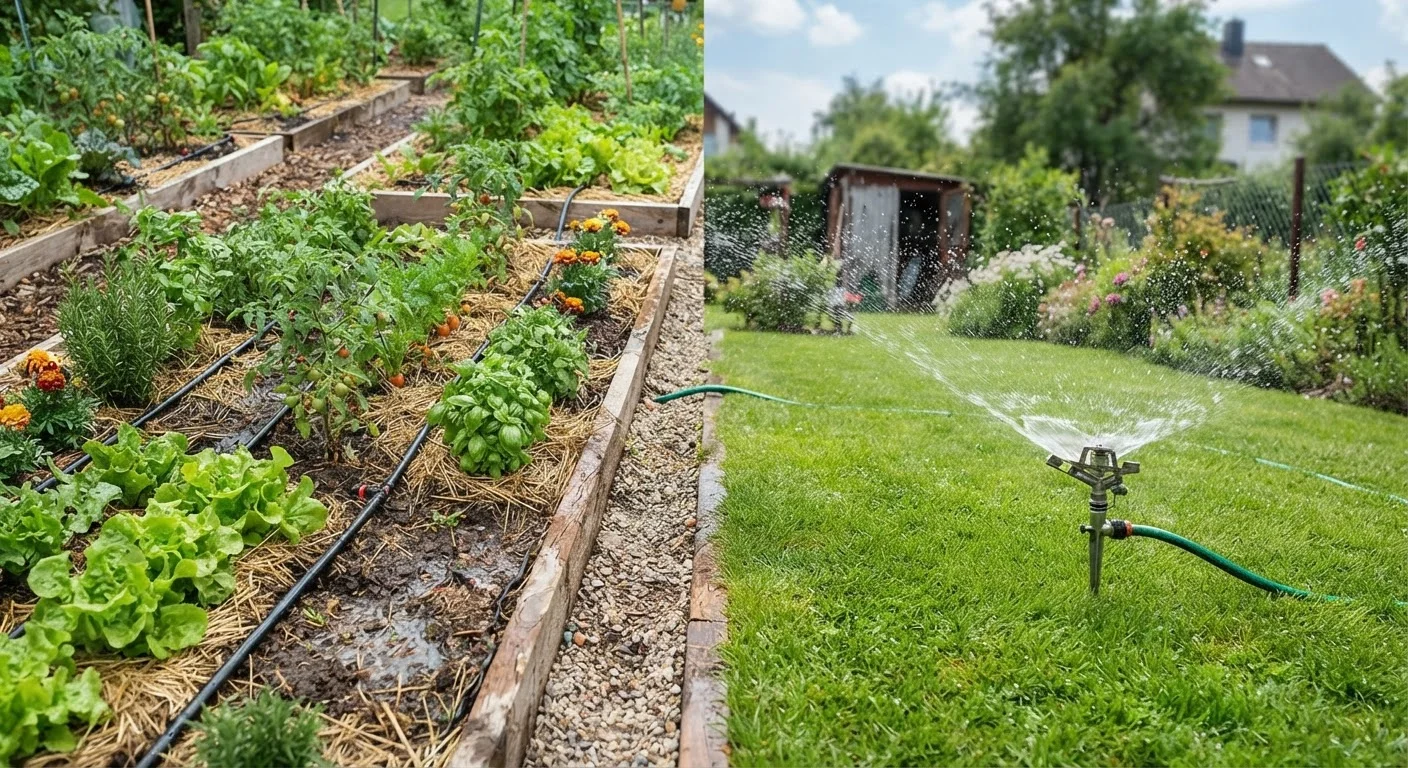
Drip irrigation uses a network of tubing, emitters, and sometimes soaker hoses to deliver water slowly and directly to the root zone of individual plants. Water moves at low pressure - typically 1 to 4 gallons per hour per emitter - minimizing runoff and surface evaporation. Systems are typically connected to a standard outdoor spigot and can be paired with a timer for automation.
Sprinkler systems distribute water overhead, either through fixed pop-up heads, rotating rotors, or portable oscillating sprinklers. They rely on higher water pressure to broadcast water across a wide area. In-ground systems are permanently installed; portable sprinklers attach to a garden hose and require repositioning.
For gardeners growing in containers or compact patio spaces, drip systems integrate well with tight layouts. See our guide to container gardening on patios and balconies for tips on adapting irrigation to confined growing areas.
Water Efficiency and Plant Health
Water efficiency is often the clearest difference between the two systems - and it matters significantly in regions with water restrictions or dry summers.
30-50%
Water savings with drip vs. sprinklers
The EPA's WaterSense program estimates drip irrigation can reduce outdoor water use by 30-50% compared to conventional overhead watering for the same plantings.
~50%
Outdoor water use lost to inefficiency
The EPA estimates that roughly half of the water used for landscape irrigation is wasted due to evaporation, runoff, and overwatering - a problem both system types can address with proper scheduling.
Drip systems apply water slowly at or near the soil surface, so roots absorb it before it can evaporate or run off. This method also keeps foliage dry, which reduces the risk of fungal diseases common in humid climates. Overhead watering, by contrast, wets leaves and can encourage mildew on susceptible plants like squash and roses if watering happens in the evening.
That said, sprinklers aren't inherently wasteful when used correctly. Running them in the early morning - when wind is low and temperatures are cool - cuts evaporative loss considerably. The key is matching the application rate to what your soil can absorb: clay soils need slower rates, while sandy soils drain fast and benefit from shorter, more frequent cycles.
Consistent overwatering is harmful regardless of which system you use. Our article on why overwatering kills more plants than drought explains what proper watering looks like and how to recognize signs of excess.
Setup, Cost, and Maintenance
Your willingness to invest time and money upfront - and to maintain the system over time - should weigh heavily in your decision.
| Drip Irrigation | Sprinklers | |
|---|---|---|
| Water Efficiency | High - delivers water to root zone | Moderate - evaporation and runoff possible |
| Best For | Beds, shrubs, vegetables, trees | Lawns and large open areas |
| Setup Difficulty | Moderate - planning emitter layout required | Low (portable) to High (in-ground) |
| Upfront Cost | Low to moderate for DIY kits | Low (portable) to high (in-ground install) |
| Foliage Wetting | Minimal - reduces disease risk | High - can promote fungal issues |
| Maintenance | Emitter clog checks needed | Head alignment and pressure checks |
| Automation | Easy with timer and valve | Easy with timer; requires controller for zones |
Portable sprinklers are the lowest barrier to entry: attach to a hose, position, and go. In-ground sprinkler systems typically require trenching, a backflow preventer, and often a permit - professional installation is common and generally recommended for anything beyond a small zone. Drip systems occupy a middle ground: planning emitter placement requires thought, but most homeowners can install a basic vegetable-garden system in a few hours without special tools.
Maintenance differs too. Drip emitters can clog, particularly in areas with hard water or sediment, so flushing lines and checking emitters at the start of each season is important. Sprinkler heads can sink, shift, or break from foot traffic or lawn mowers and need periodic realignment.
If you're designing a landscape with long-term efficiency in mind, pairing a drip system with thoughtful plant selection pays dividends. Our piece on low-maintenance outdoor space design covers complementary strategies that reduce weekly watering needs overall.
Which Plants Suit Each System
Plant type, spacing, and root depth are strong indicators of which system belongs in each part of your yard.
Drip irrigation is well-suited for:
- Vegetable gardens and annual beds, where plants are closely and deliberately spaced
- Shrubs, fruit trees, and perennials with defined root zones
- Raised beds, where controlled moisture prevents soil compaction
- Hillside plantings, where runoff from overhead watering is a problem
Sprinklers work better for:
- Turf lawns - especially cool-season grasses like fescue or warm-season types like Bermuda - where uniform coverage across a wide area is essential
- Ground covers planted densely across large beds
- Newly seeded areas where surface moisture is needed for germination
Many homeowners use both: drip for garden beds and a separate sprinkler zone for the lawn. This hybrid approach lets each system do what it does best. If you're weighing how your planting style affects irrigation decisions, raised beds versus in-ground planting explores how bed structure influences drainage and watering needs.