

Key Takeaways
Why Design Choices Determine Your Workload
Most homeowners underestimate how much their outdoor maintenance burden was decided before they ever picked up a rake. The plant selections, lawn shape, soil preparation, and irrigation setup all compound - either adding hours to a Saturday routine or quietly eliminating them. The good news: a thoughtful redesign, done once, pays dividends for years.
This list focuses on foundational principles rather than trendy products, so these strategies apply whether you're starting from scratch or refining an existing yard in any US region. For a broader look at keeping your whole property in shape, the complete seasonal maintenance system is a useful companion resource.
Choose native and regionally adapted plants
Plants native to your area evolved alongside local soils, rainfall patterns, and temperatures, which means they typically need far less intervention once established. They're adapted to local drought cycles, resist regional pests more effectively, and rarely require the fertilizer inputs that exotic species demand. Regionally adapted cultivars - varieties bred for conditions similar to your zone - offer similar advantages even when they're not strictly native.
This isn't just about reduced watering. Native plants tend to have deeper root systems that improve soil structure over time, further reducing maintenance needs. For a deeper look at why landscaping professionals favor them, see why landscapers keep recommending native plants.
Native plants evolved for your local conditions, requiring far less water, fertilizer, and intervention once established.
Replace high-maintenance lawn with strategic hardscaping
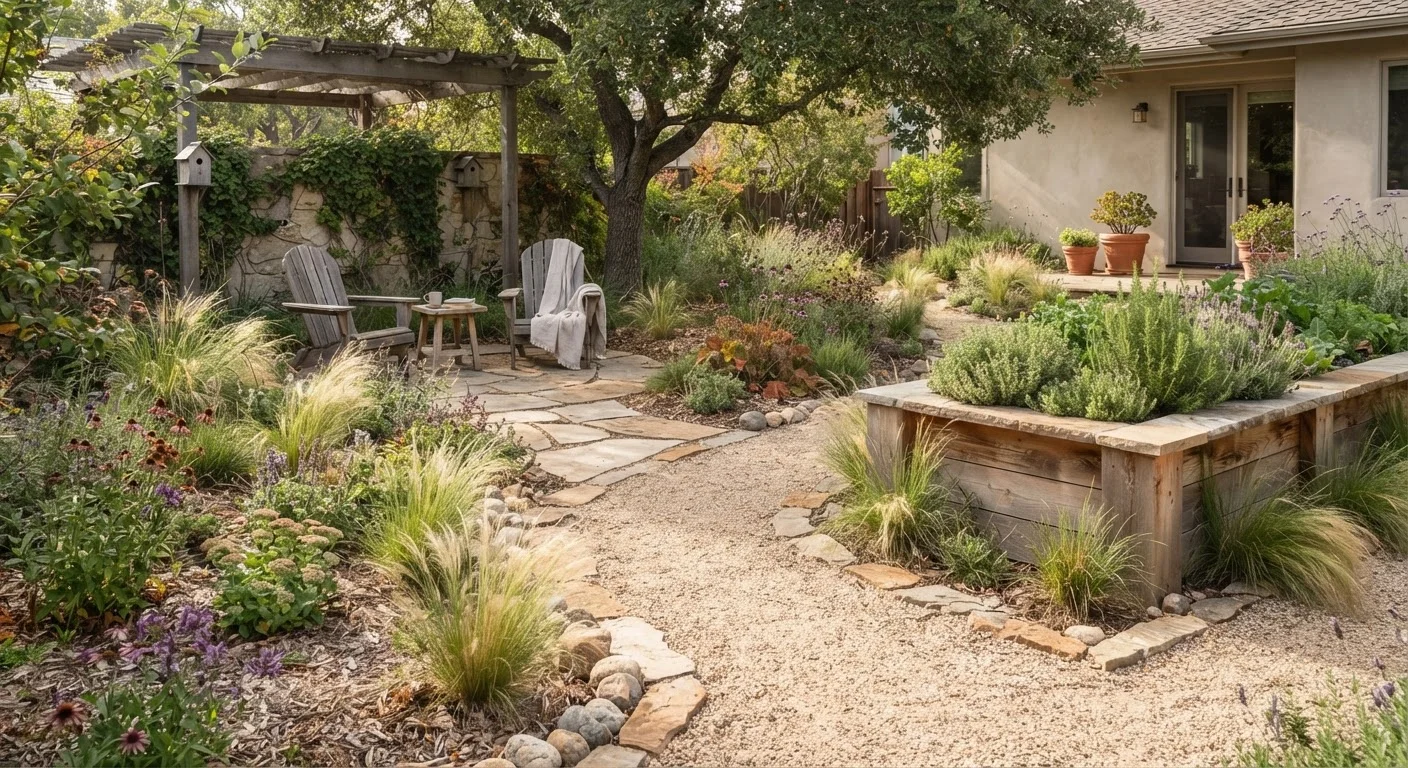
Lawn is the most labor-intensive surface in most American yards - it requires weekly mowing, seasonal aeration, fertilizing, and often irrigation. Replacing portions of lawn with gravel, decomposed granite, flagstone, or pavers can dramatically reduce upkeep. These surfaces handle foot traffic, drain well when properly installed, and require almost no ongoing labor beyond occasional sweeping or re-leveling.
The key is strategic placement: high-traffic paths, areas under trees where grass struggles, and awkward corners around fences or structures are ideal candidates. Pair hardscaping with deep-edged mulched planting beds to prevent encroachment from neighboring grass and weeds.
Replacing lawn in high-traffic or difficult-to-mow areas with gravel or pavers can eliminate hours of weekly cutting.
Install drip irrigation or a programmable watering system
Hand-watering planting beds is one of the most time-consuming recurring tasks for home gardeners. A drip irrigation system delivers water directly to the root zone of each plant, reducing both the time you spend watering and the water wasted to evaporation and runoff. Paired with a programmable timer, it operates without any weekly attention from you.
Drip systems are particularly effective for raised beds, foundation plantings, and shrub borders. Overhead sprinklers work better for large turf areas, though they use more water. Understanding the tradeoffs is worthwhile before you invest: comparing drip irrigation vs. sprinklers covers the options in detail.
A drip system with a timer eliminates nearly all manual watering while often improving plant health through consistent moisture delivery.
Simplify lawn shape and define clear edges
Irregular lawn shapes with tight curves, narrow strips, and awkward corners multiply mowing time disproportionately. Each tricky turn adds minutes, and narrow strips often require a separate string trimmer pass anyway. Reshaping lawn into broader, gentler curves - or converting those awkward strips entirely - makes each mowing session faster and less frustrating.
Clear, well-defined edging between lawn and beds also reduces the frequency of hand-trimming. Metal or concrete edging installed several inches deep helps block grass rhizomes from creeping into mulched areas, which is one of the most persistent weed problems in residential landscapes.
Simpler lawn shapes and deep edging cuts mowing time and prevents the slow invasion of grass into planting beds.
Prioritize perennials over annual replanting
Annuals produce prolific blooms, but they demand replanting every season - a significant investment of both time and money. Perennials, by contrast, die back in winter and return from the same root system year after year. A well-designed perennial border, once established, requires only spring cleanup, occasional division, and light fertilizing rather than a full replanting cycle.
The smartest approach for most homeowners is a mixed planting: a backbone of reliable perennials for consistent structure and color, with a small number of annuals in containers where seasonal variety is most appreciated. For help planning that balance, annuals vs. perennials: planning a yard that blooms year after year offers practical seasonal guidance.
A perennial backbone eliminates the labor of full replanting each spring while still delivering reliable seasonal color.
Apply mulch generously and refresh it on a schedule
A 2-3 inch layer of organic mulch - wood chips, shredded bark, or pine straw - does several jobs simultaneously: it suppresses weed germination, retains soil moisture, moderates soil temperature, and slowly improves soil fertility as it breaks down. Each of those benefits translates directly into less weekly work for you.
Mulch does need occasional refreshing, typically once a year in most US climates, as it compacts and decomposes. The annual refresh is far less labor than the weeding, watering, and soil amending it replaces. Avoid piling mulch directly against plant stems or tree trunks, which can trap moisture and cause rot over time.
Two to three inches of mulch suppresses weeds, holds moisture, and reduces the need for both watering and hand-weeding each week.
Making It Last: Putting the Principles Together
No single strategy here works in isolation - the real savings come when these principles reinforce each other. Native groundcovers fill the gaps between pavers, drip lines water only the beds that need it, and perennial plantings return without replanting labor each spring. The result is an outdoor space that's genuinely enjoyable rather than a weekly obligation.
Start with your biggest time drain
Before redesigning your entire yard, track which tasks consume the most time across a few weekends. Most homeowners find that mowing, watering, or weeding accounts for the majority of their effort. Tackling that single pain point first - whether through lawn reduction, mulching, or irrigation - delivers the fastest return on your redesign investment.
Start by identifying the one or two maintenance tasks that consume the most time right now - whether that's mowing, hand-watering, or fighting weeds - and apply the relevant principle there first. Incremental redesigns are more practical for most homeowners than a complete overhaul, and even modest changes tend to deliver noticeable time savings within a single growing season.