

Key Takeaways
The Counterintuitive Truth About Plant Care
Ask any plant expert what kills the most houseplants, and the answer is almost always the same: too much water, not too little. It feels backward - water is life, after all - but the biology makes sense once you understand what roots actually need.
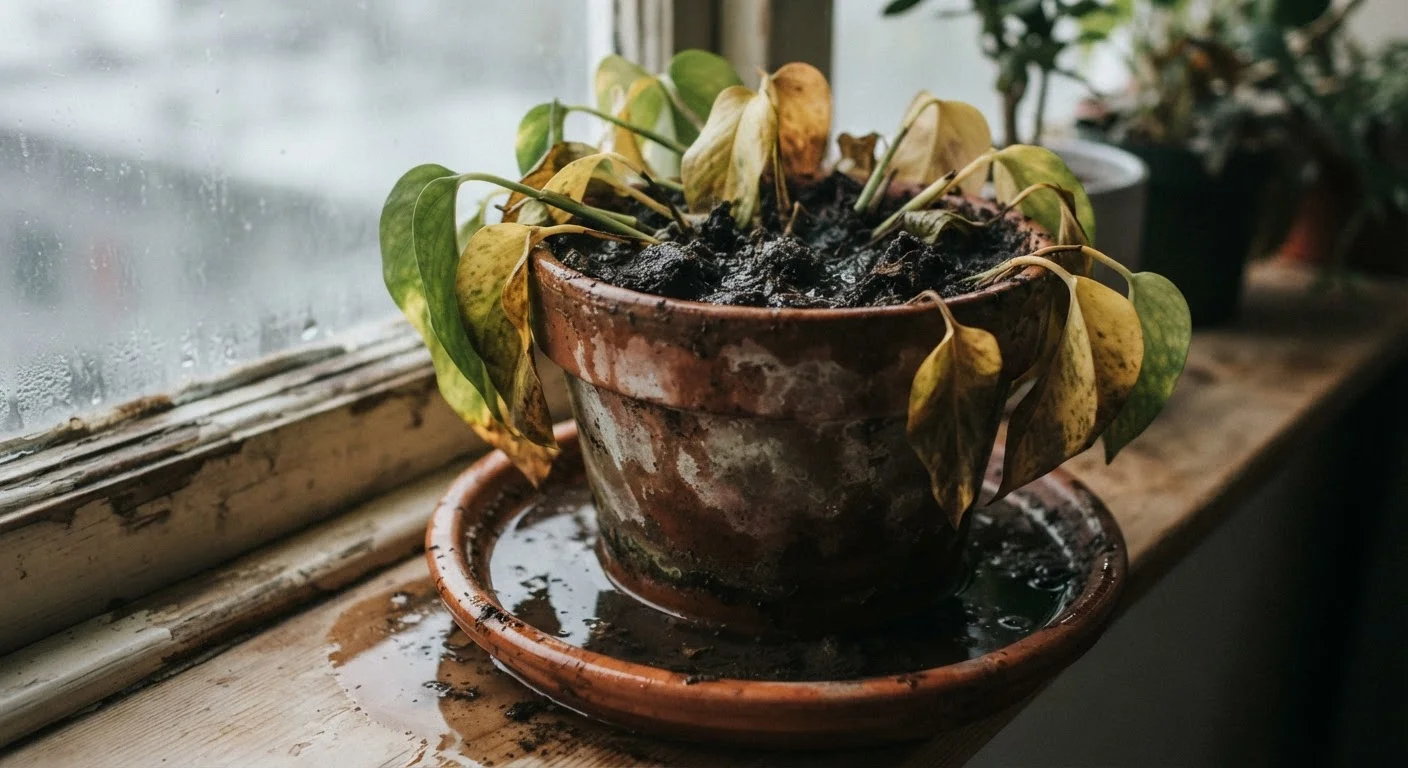
Roots require both moisture and oxygen. When soil stays perpetually wet, the air pockets between soil particles fill with water. Roots begin to suffocate, decay sets in, and the plant can no longer absorb water or nutrients even though it's sitting in plenty of both. The cruel irony is that an overwatered plant often looks thirsty: drooping, yellowing, wilting. Owners respond by watering more, accelerating the damage.
This pattern is so common it shows up in popular gardening myths - the belief that a struggling plant always needs more water being one of the most persistent. Understanding the real cause is the first step toward fixing it.
Watering on a fixed schedule regardless of soil conditions.
Why it happens: A routine feels responsible, and most plant care advice gives general guidelines like 'once a week' that beginners treat as rigid rules.
Treating wilting or yellowing as an automatic sign of thirst.
Why it happens: Wilting is the most visible plant distress signal, and watering is the most intuitive response - even when overwatering is the actual cause.
Using pots without drainage holes or letting plants sit in standing water.
Why it happens: Decorative pots often lack drainage, and many people don't realize saucers need to be emptied after watering.
Applying the same watering frequency to every plant in the home.
Why it happens: Managing many plants is easier with one routine, so owners water everything at once on the same day.
Ignoring seasonal changes in how quickly soil dries out.
Why it happens: Plant care habits established in summer often carry unchanged into winter, when lower light and cooler indoor temperatures dramatically slow soil drying.
Reading the Warning Signs Correctly
Distinguishing overwatering from underwatering takes practice, but there are reliable signals. With overwatering, leaves typically yellow uniformly - older and newer growth alike - and may feel soft or mushy rather than dry and crispy. The soil smells sour or earthy in an unpleasant way. If you slide the plant out of its pot, the roots appear brown, gray, or black and feel slimy rather than firm and white.
Underwatering produces different symptoms: leaves go dry, crispy, or curled at the edges, starting with the oldest growth first. The soil pulls away from the pot's sides and feels bone-dry several inches down.
#1
Cause of houseplant death
Overwatering is consistently cited by horticulturalists and extension educators as the leading cause of houseplant loss among home growers.
2 inches
Soil depth to check before watering
University cooperative extension programs commonly recommend the two-inch finger test as the most practical way for home growers to gauge soil moisture.
When in doubt, the finger test is your most reliable tool: push your finger two inches into the soil. If it feels damp, wait. Only water when the top layer is dry - or, for drought-tolerant plants like succulents and cacti, when the entire root zone has dried out.
Why Overwatering Happens - and How to Stop It
Root Rot Acts Fast - Act Faster
Root rot caused by overwatering can destroy a plant's root system within days in warm conditions. If you notice a foul smell from the soil, visible mold on the surface, or a stem that feels mushy at the base, repot immediately rather than waiting to see if the plant recovers on its own. Delaying intervention significantly reduces the plant's chances of survival.
Correcting overwatering habits requires addressing the system, not just the schedule. Here are the factors that matter most:
- Pot and drainage: A pot without a drainage hole traps water with nowhere to go. Always use containers with drainage, and empty saucers after watering so roots don't sit in standing water.
- Soil mix: Dense, moisture-retentive potting soil compounded with overwatering is a fast path to root rot. Match your soil mix to your plant - succulents and cacti need a gritty, fast-draining mix, while tropical plants tolerate a richer medium.
- Light and temperature: Plants in low-light or cool rooms dry out much more slowly than those in bright, warm spots. A plant on a sunny south-facing windowsill in July needs water far more often than the same plant on a dim winter shelf.
- Plant type: A peace lily and a snake plant sitting side by side do not have the same water needs. Research each plant's native habitat - it tells you a lot about how tolerant it is of wet versus dry conditions.
If root rot has already set in, recovery is possible but not guaranteed. Remove the plant from its pot, trim away all blackened or mushy roots with clean scissors, let the remaining roots air dry briefly, then repot in fresh, dry soil. Skip watering for at least a week to let the plant stabilize. For guidance on smarter watering systems at larger scales, see our comparison of drip irrigation vs. sprinklers.