
Companion Planting: The Garden Strategy Behind Putting the Right Plants Together

Key Takeaways
Companion Planting
Companion planting is the practice of growing two or more plant species near each other because their proximity may benefit one or both plants. Benefits that gardeners seek include reduced pest pressure, improved pollination, better soil health, or more efficient use of garden space. It is one of the oldest gardening strategies, used in traditional agriculture around the world.
The scientific evidence for companion planting is mixed: some pairings have solid research support, while others are rooted in folklore and have not been rigorously tested in controlled studies.
What Companion Planting Actually Means
At its core, companion planting is intentional plant placement. Instead of grouping plants purely by height or harvest timing, you consider whether two species might help each other thrive when placed side by side. The relationship can be mutual - both plants benefit - or one-sided, where one plant simply creates better conditions for its neighbor.
The concept spans several mechanisms. Some plants repel or confuse specific insects. Others attract beneficial predators that eat pests. Certain species fix nitrogen from the air into the soil, making nutrients available to hungry neighbors. A few plants provide physical shade or wind protection that reduces stress on more delicate crops nearby.
What companion planting is not is a magic solution. The term covers a broad range of practices with highly variable evidence behind them. If you're starting a vegetable garden for the first time, it's worth learning the concept clearly before building your layout around it.
A Note on Sources and Claims
A large volume of companion planting information circulates online and in gardening books without clear evidence behind it. University cooperative extension services - affiliated with land-grant universities in each US state - are among the most reliable sources for regionally relevant, research-based guidance. Checking your state's extension publications before committing to a planting layout is a sound habit.
The Evidence: What Research Actually Supports
A handful of companion planting combinations have meaningful scientific support. The most documented is the Three Sisters system: corn, climbing beans, and squash grown together. Beans fix atmospheric nitrogen through root nodules housing symbiotic bacteria. Corn stalks give beans a natural trellis. Squash leaves cover the soil, retaining moisture and reducing weed competition. This polyculture system was developed and refined by Indigenous peoples across North America and remains one of the most studied examples in agricultural research.
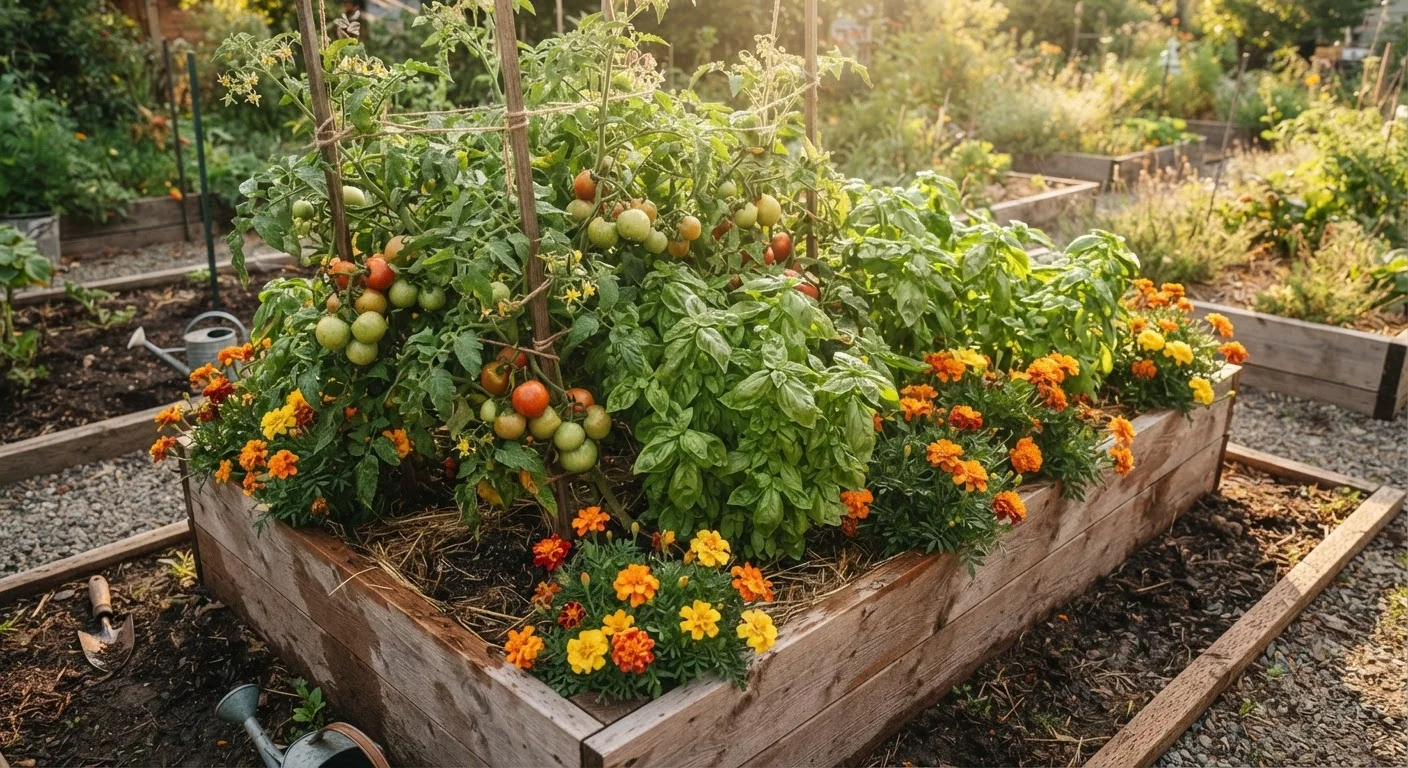
Marigolds (Tagetes species) are another well-researched companion. Studies have shown that French marigolds in particular produce a compound called alpha-terthienyl that suppresses root-knot nematodes - soil-dwelling pests that damage vegetable crops. This effect requires planting marigolds densely and consistently, not just scattering a few plants around.
Nasturtiums are frequently cited as trap crops - plants that attract aphids and other pests away from vegetables. There is reasonable evidence for this in some contexts, though results vary by garden conditions and pest population size.
Many other popular pairings - like planting basil near tomatoes to improve flavor - have little to no controlled research behind them. That doesn't mean they're harmful to try, but gardeners should be cautious about letting unproven claims drive major planting decisions. For more on separating gardening fact from fiction, see common gardening myths that mislead beginners.
3,000+ years
Estimated history of polyculture farming
The Three Sisters companion planting system has been traced back thousands of years in Indigenous North American agricultural traditions, representing one of the oldest documented polyculture practices.
~75%
Of flowering plants that depend on animal pollinators
According to the USDA, approximately 75 percent of flowering plant species rely on pollinators - underscoring why planting pollinator-attracting companions alongside vegetables meaningfully supports fruit and seed production.
Varies widely
Effectiveness of claimed companion pairings
A review of companion planting studies published in horticultural literature consistently finds that results vary significantly by crop type, pest species, soil conditions, and climate - reinforcing that no single pairing is universally reliable.
Practical Ways to Use Companion Planting
Even with its limitations, companion planting offers genuine value when applied thoughtfully. Here's how to use it as a practical tool rather than a fixed rulebook:
- Start with proven pairings. Plant marigolds along the edges of vegetable beds, integrate beans into corn-based rows, or use tall sunflowers to provide afternoon shade for heat-sensitive lettuce in summer.
- Attract pollinators deliberately. Mixing flowering herbs like dill, cilantro, and fennel (in their own area, away from sensitive vegetables) into your garden draws beneficial insects that improve fruit set across the whole plot.
- Separate known antagonists. Fennel, in particular, is widely noted for suppressing neighboring vegetables. Keep it isolated in its own space. Alliums like onions and garlic may similarly reduce yields when planted directly next to beans or peas.
- Use space efficiently. Pairing a tall plant with a low-growing, shade-tolerant neighbor - like corn with squash - maximizes the productive area of your beds without additional inputs.
Good soil preparation and amendment will always have more impact on plant health than any pairing strategy. Companion planting works best as a layer on top of solid gardening fundamentals, not a substitute for them.
Start Small Before Redesigning Your Whole Garden
If you're new to companion planting, try one or two pairings in a single bed rather than restructuring your entire garden at once. Track what you observe across the season - pest levels, plant vigor, and yields - so you have real data from your own growing conditions. What works in a Southern garden may behave differently in the Pacific Northwest.
Applying This in Smaller or Container Gardens
Companion planting is not limited to large in-ground beds. Gardeners working with patios, balconies, or limited outdoor space can still apply the principles with some adaptation. Container gardening introduces real space and root competition constraints, so pairings need to be chosen more carefully.
A large container (15 gallons or more) can comfortably accommodate tomatoes and basil together. The basil won't necessarily improve tomato flavor, but it will attract pollinators and make harvests convenient. Similarly, planting a few marigolds in pots scattered among vegetable containers can help deter common pests like whiteflies, though not eliminate them entirely.
When planning any garden - container or in-ground - think of companion planting as one input in a broader strategy. Consider whether your companion plants are annuals or perennials, since this affects how you'll replant and rotate each season. And where possible, lean toward native flowering plants as companions - they tend to support local beneficial insect populations more reliably than exotic ornamentals.
The goal is a garden that's resilient and productive, where thoughtful plant placement is one of several good decisions working together - not a single strategy carrying all the weight.