

Key Takeaways
Option A
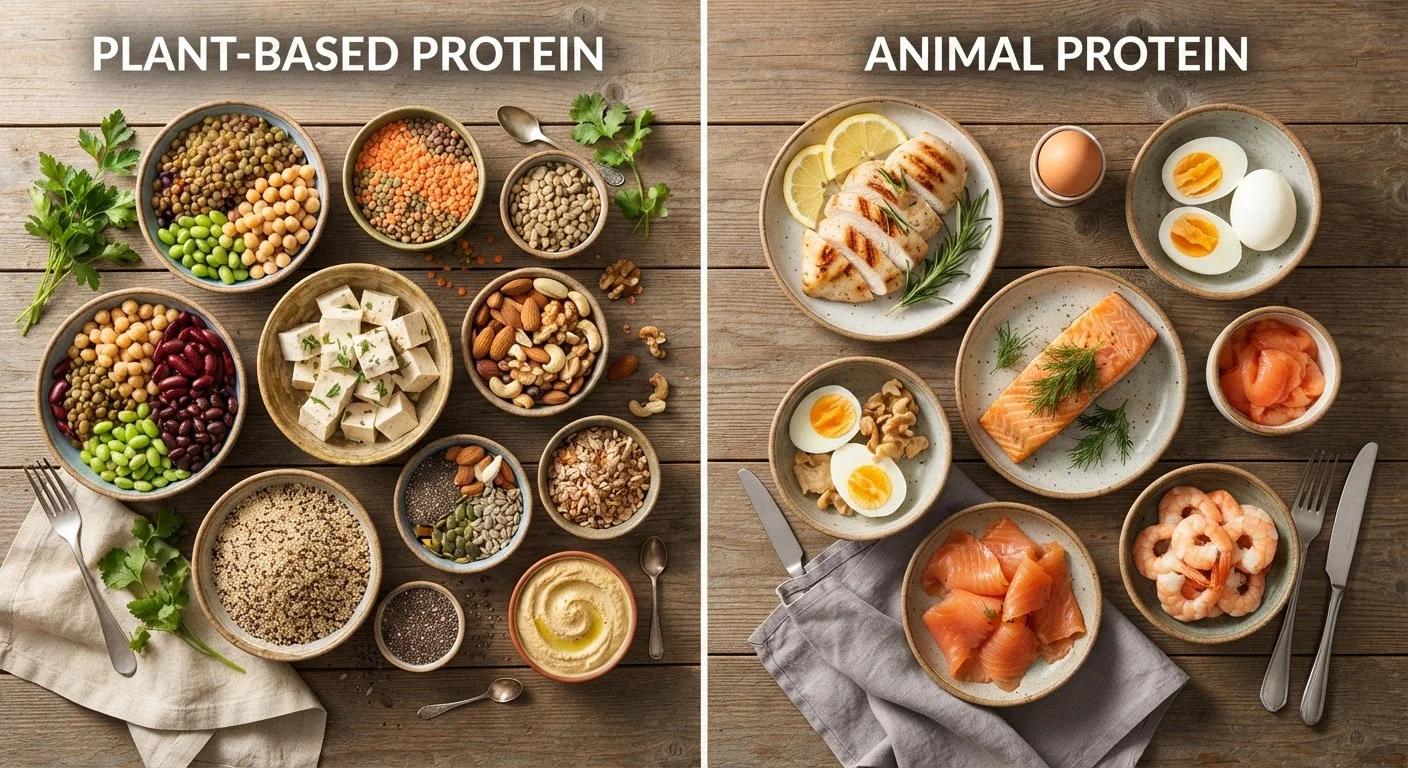
Plant-Based Protein
The fiber-rich, nutrient-diverse option from the plant kingdom.
Best for: People prioritizing fiber, phytonutrients, and lower saturated fat intake alongside their protein goals.
Option B
Animal Protein
The complete, highly bioavailable protein from meat, dairy, and eggs.
Best for: Those seeking complete amino acid profiles and high protein bioavailability in fewer dietary steps.
If you want the most complete, readily absorbed protein with minimal planning
Animal Protein
Animal proteins deliver all essential amino acids in a single source and are absorbed efficiently, making them straightforward for meeting protein needs.
If you want protein paired with fiber, antioxidants, and heart-healthy fats
Plant-Based Protein
Legumes, nuts, seeds, and soy supply substantial protein alongside nutrients that support gut health and reduce cardiovascular risk factors.
If you follow a vegetarian or vegan lifestyle
Plant-Based Protein
A varied diet including soy, legumes, whole grains, nuts, and seeds can meet protein and amino acid needs without animal products.
If you're focused on muscle building or athletic recovery
Animal Protein
Higher leucine content and superior bioavailability in animal proteins - particularly dairy and eggs - are associated with stronger muscle protein synthesis responses.
If you want a flexible approach that maximizes long-term health benefits
Plant-Based Protein
Research consistently links diets rich in plant protein to lower risks of chronic disease, though including some lean animal protein remains a viable and well-studied pattern.
What Makes a Protein 'Complete' or 'Incomplete'?
All proteins are made of amino acids - twenty in total, nine of which are considered essential because the human body cannot synthesize them on its own. A protein source is called complete when it contains all nine essential amino acids in adequate proportions. Animal proteins - including meat, poultry, fish, eggs, and dairy - consistently meet this standard. Most plant proteins, by contrast, are incomplete, meaning they're low in one or more essential amino acids.
That said, incompleteness isn't a dealbreaker. Eating a variety of plant foods throughout the day - say, rice with lentils, or whole grain bread with peanut butter - can supply the full complement of essential amino acids. Soy is a notable exception among plant foods: it's a complete protein on its own, making foods like tofu, tempeh, and edamame particularly valuable. For a deeper look at how protein quality is formally assessed, see our guide to protein quality.
Bioavailability: How Much Protein Does Your Body Actually Use?
Grams of protein on a nutrition label don't tell the whole story. Bioavailability - how efficiently the body digests and absorbs a protein - varies significantly between sources. Nutrition scientists use scoring systems like the PDCAAS and the newer DIAAS to rank proteins by both amino acid completeness and digestibility. Animal proteins routinely score at or near the top of these scales.
Plant proteins, on the other hand, can be partially blocked by naturally occurring compounds called antinutrients - such as phytates in legumes and tannins in certain grains - which can reduce mineral absorption and slow digestion. Cooking, soaking, fermenting, or sprouting these foods can substantially reduce antinutrient levels and improve bioavailability. This nuance is worth understanding whenever you read protein content on a food label; our nutrition label glossary breaks down key terms like bioavailability in plain language.
| Criterion | Plant-Based Protein | Animal Protein |
|---|---|---|
| Amino acid completeness | Usually incomplete (soy is the exception) | Complete in all essential amino acids |
| Bioavailability | Moderate; can be reduced by antinutrients | High; efficiently absorbed |
| Fiber content | High (legumes, whole grains, nuts) | None |
| Saturated fat | Generally low | Variable; higher in red and processed meats |
| Vitamin B12 | Absent (fortification needed) | Naturally present |
| Iron type | Non-heme iron (lower absorption) | Heme iron (higher absorption) |
| Phytonutrients & antioxidants | Rich and diverse | Minimal |
| Environmental footprint | Generally lower | Generally higher (varies by source) |
Beyond Protein: The Full Nutritional Picture
Protein rarely travels alone. Animal sources contribute vitamin B12, heme iron (the most absorbable form), zinc, and complete fats - including saturated fats, which are worth considering in the context of overall dietary pattern. Fatty fish add omega-3 fatty acids, while eggs and dairy provide calcium and fat-soluble vitamins. The nutritional package varies widely even within the animal protein category.
Plant protein sources bring their own distinct advantages: dietary fiber (absent from animal foods entirely), a broad spectrum of antioxidants, phytonutrients like flavonoids and isoflavones, and predominantly unsaturated fats. Legumes in particular are associated in population studies with reduced risk of cardiovascular disease and type 2 diabetes. Those eating mostly plant foods do need to pay attention to vitamin B12, vitamin D, heme iron, and long-chain omega-3s, since these are less abundant or less bioavailable from plant sources. Fortified foods and, where appropriate after consulting a healthcare provider, supplements can help address these gaps.
~33%
Share of global protein from plant sources
The UN Food and Agriculture Organization estimates roughly a third of human dietary protein worldwide comes from plant-based foods, with significant regional variation.
1.0
Maximum PDCAAS score (eggs, whey, soy)
The Protein Digestibility-Corrected Amino Acid Score caps at 1.0; eggs, whey protein, and soy are among the few sources to achieve this top rating.
~16g
Protein per 100g cooked lentils
According to USDA nutritional data, cooked lentils deliver approximately 9g per 100g serving - among the highest plant protein densities available.
Understanding protein in context means looking at whole dietary patterns, not single nutrients in isolation. Our article on whole foods versus processed foods explores how food form and processing can further shape nutritional value.
This article is for general informational and educational purposes only and is not a substitute for professional medical or dietary advice. Consult a qualified healthcare provider or registered dietitian for guidance specific to your health needs.