

Key Takeaways
Protein Quality
Protein quality refers to how well a protein source supplies the amino acids your body actually needs and how efficiently it can absorb and use them. A high-quality protein provides all the essential amino acids in proportions that match what the human body requires. Quantity - the grams listed on a nutrition label - tells only part of the story.
Protein quality is formally measured using scoring systems such as the Protein Digestibility-Corrected Amino Acid Score (PDCAAS) and the more recent Digestible Indispensable Amino Acid Score (DIAAS), both of which account for amino acid composition and digestibility.
Essential Amino Acids: The Building Blocks That Matter Most
Proteins are made of chains of amino acids - 20 in total, but nine of them are classified as essential. Your body cannot synthesize these nine on its own, so they must come from what you eat. The remaining amino acids are considered non-essential because the body can produce them internally under normal conditions.
A protein source is judged largely by how well it delivers these nine essential amino acids: histidine, isoleucine, leucine, lysine, methionine, phenylalanine, threonine, tryptophan, and valine. When any one of these is missing or present in very low amounts, the body's ability to use that protein for building and repair is limited - a concept sometimes called the limiting amino acid.
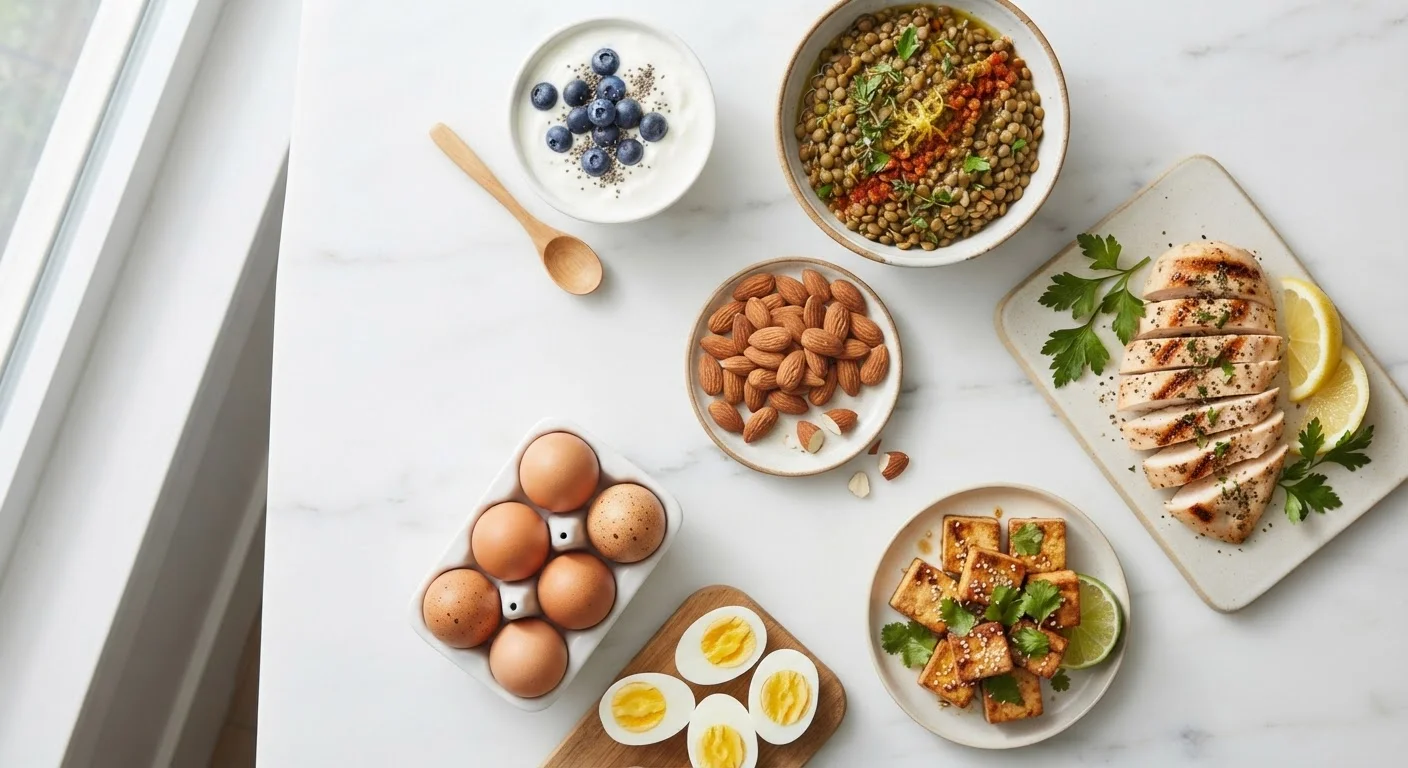
Animal-derived foods - eggs, meat, poultry, fish, and dairy - are typically complete proteins, meaning they supply all nine essentials. Most plant proteins, including those from grains, legumes, and nuts, are incomplete, being low in at least one essential amino acid. Notable exceptions include soy, quinoa, and buckwheat, which are considered complete plant proteins.
Amino Acid Scores Are a Tool, Not a Verdict
PDCAAS and DIAAS scores are useful for comparing proteins in research and food formulation, but they don't mean lower-scoring foods are 'bad.' Foods like wheat or peas still contribute meaningful amino acids and valuable nutrients. These scores are best understood as part of the bigger picture of a varied, balanced diet rather than a strict ranking system.
Digestibility: How Much Protein Your Body Actually Uses
Even when a food technically contains all essential amino acids, the body may not absorb all of it. Digestibility - how efficiently the gut breaks down and absorbs a protein - is the second major dimension of protein quality.
Animal proteins tend to be highly digestible, with absorption rates often above 90%. Plant proteins can be somewhat less digestible due to structural differences and the presence of antinutrients - compounds like phytates and tannins that can interfere with digestion. Processing and cooking typically improve plant protein digestibility significantly.
1.0
Maximum PDCAAS score for top-quality proteins
Whey, casein, egg white, and soy protein isolate all achieve the top PDCAAS score, according to the Food and Agriculture Organization of the United Nations.
~90%+
Typical digestibility of animal proteins
Research published in nutrition science literature consistently finds animal-sourced proteins are digested at rates above 90%, compared to somewhat lower rates for many unprocessed plant proteins.
9
Essential amino acids humans must get from food
The human body cannot synthesize these nine amino acids on its own, making dietary intake the only source, as established by foundational biochemistry and nutrition science.
Two widely used scoring systems capture both amino acid composition and digestibility. The PDCAAS (Protein Digestibility-Corrected Amino Acid Score), adopted by the Food and Agriculture Organization of the United Nations, scores proteins from 0 to 1. Whey, casein, egg white, and soy protein isolate all achieve the maximum score of 1.0. The newer DIAAS (Digestible Indispensable Amino Acid Score) is considered more precise because it measures absorption in the small intestine rather than overall digestibility.
Understanding these measures helps put label claims in context. A food advertising "20 grams of protein" may deliver those grams less efficiently than another with fewer grams but a higher quality score.
Plant Proteins and Complementary Eating
The concept of complementary proteins has been in nutrition science for decades. Because most plant proteins are limited in at least one essential amino acid, combining different sources can fill those gaps. Classic pairings include rice and beans (rice is low in lysine; beans are low in methionine - together they cover both) or whole grain bread with peanut butter.
Importantly, current evidence from organizations including the Academy of Nutrition and Dietetics indicates that these foods do not need to be eaten at the same meal. As long as a variety of plant proteins are consumed throughout the day, the body can pool amino acids effectively. This makes well-planned vegetarian and vegan diets capable of meeting protein quality needs.
For practical guidance on building meals that cover nutritional bases without fixating on numbers, see our guide on building a balanced plate. And if you're also curious about how food processing affects nutritional value more broadly, whole foods vs. processed foods explores that continuum in depth.
A Simple Way to Boost Plant Protein Quality
If most of your protein comes from plants, aim to eat at least two to three different plant protein sources each day - for example, legumes, a whole grain, and a nut or seed. This naturally fills amino acid gaps without the need for precise meal-by-meal calculation. Sprouting and fermenting legumes can also improve their digestibility.
Practical Takeaways for Everyday Eating
Protein quality doesn't require rigid meal planning or expensive supplements. A few evidence-grounded principles can help most people meet their needs:
- Diversify your sources. Relying on one protein food limits your amino acid range. Rotating between animal and plant sources - or mixing plant sources if you eat a plant-based diet - naturally improves overall quality.
- Don't overlook whole foods. Beyond amino acids, foods like eggs, legumes, and fish deliver vitamins, minerals, and other compounds that isolated protein products cannot replicate.
- Consider the full dietary pattern. A single meal or food doesn't make or break protein nutrition. Over the course of days, a varied diet tends to self-correct most gaps.
- Consult a professional for specific needs. Athletes, older adults, people recovering from illness, and those with certain medical conditions may have higher or different protein requirements. A registered dietitian can provide personalized, evidence-based recommendations.
This article is for general informational and educational purposes only and does not constitute medical or dietary advice. Please consult a qualified healthcare or nutrition professional for guidance tailored to your individual health needs.