

Key Takeaways
Why a Framework Beats a Formula
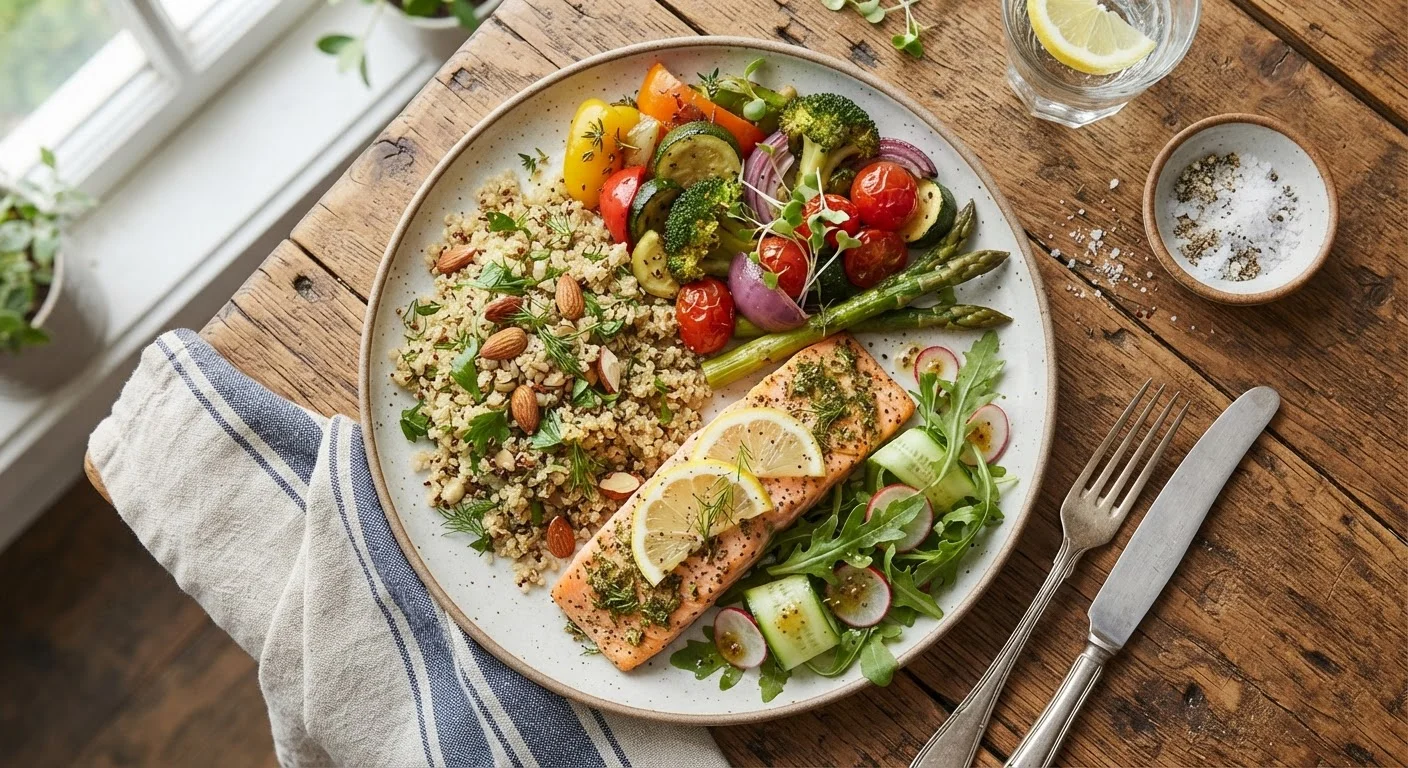
Most people don't need more rules around eating - they need a reliable structure that makes good choices feel intuitive. That's where the plate method comes in. Broadly aligned with guidance from major public health organizations, it uses the physical space on your plate as a proportional guide rather than asking you to track numbers.
The appeal is durability. Unlike rigid meal plans that collapse when life gets busy, a visual framework travels with you - to a work cafeteria, a dinner party, or a restaurant serving an unfamiliar cuisine. It's also compatible with a wide range of eating styles, budgets, and cultural food traditions.
For readers interested in a deeper look at assembling nutritious meals without fixating on numbers, our guide to building a balanced plate without obsessing over numbers explores complementary approaches. And if you're applying this framework to weekly cooking, effective meal prep strategies can help translate these ideas into practical routines.
This article provides general nutrition information and is not a substitute for personalized advice from a qualified healthcare or nutrition professional.
What You'll Need Before You Start
No special equipment is required, but a few basics make the process easier and more consistent.
What you will need
Once you have these in place, the steps below walk you through applying the framework at any meal.
Building Your Balanced Plate, Step by Step
Work through these steps each time you plate a meal. With practice, the proportions become instinctive - you'll stop needing to think through them consciously.
Fill half your plate with vegetables or fruit
Start by covering roughly half the plate with non-starchy vegetables - leafy greens, broccoli, peppers, carrots, zucchini, or whatever you have on hand. A smaller portion of fruit can also count here. Variety in color generally signals variety in nutrients, so mixing two or three types in this half is worth the habit.
Dedicate one quarter to a quality protein source
Reserve roughly a quarter of the plate for protein. This might be poultry, fish, eggs, legumes, tofu, tempeh, or lean meat, depending on your preferences and dietary needs. Plant-based proteins like lentils and chickpeas do double duty, also contributing fiber and complex carbohydrates.
Fill the remaining quarter with whole grains or starchy vegetables
Use the last quarter for a fiber-rich carbohydrate: brown rice, quinoa, whole wheat bread, oats, sweet potato, corn, or winter squash are common choices. Whole grain versions of common staples - pasta, bread, tortillas - generally provide more fiber and micronutrients than refined versions.
Add a small amount of healthy fat
A modest portion of healthy fat - olive oil used in cooking, sliced avocado, a small handful of nuts or seeds - helps with satiety and supports absorption of fat-soluble vitamins. This doesn't need a dedicated plate section; it integrates naturally into preparation or as a finishing element.
Choose a beverage that supports the meal
Water is the default best choice for most meals. Unsweetened beverages - plain sparkling water, herbal tea, coffee without heavy additions - are reasonable alternatives. Sugary drinks add energy without nutritional benefit and are worth limiting as a general pattern, not an absolute prohibition.
The Framework Works for Mixed Dishes Too
Soups, grain bowls, tacos, and casseroles don't fit neatly onto a divided plate - and that's fine. Apply the same proportional thinking to the overall composition: does vegetables dominate, with protein and grain playing supporting roles? That mental check is enough. Rigid adherence to a format matters less than internalizing the underlying balance.
This framework pairs naturally with budget-conscious eating strategies, since prioritizing vegetables, legumes, and whole grains tends to be both nutritionally sound and cost-effective.
Adapting the Framework Over Time
No single meal determines your nutritional health - pattern and consistency matter far more. The plate method is designed to flex. If a meal skews heavily toward one category, the next meal can recalibrate without drama or guilt.
Nutritional needs also shift across life stages. Our overview of nutrition through every stage of adulthood outlines how priorities evolve from early adulthood onward, and the plate method adapts to most of those shifts with only minor adjustments.
It's also worth understanding what happens when whole food categories disappear from the plate entirely. The trade-offs of cutting out entire food groups examines the nutritional consequences of elimination approaches - useful context for anyone considering a more restrictive path.
Finally, how you eat can matter as much as what you eat. Pairing this framework with mindful eating practices can help reinforce awareness of hunger and satisfaction cues over time.
Individual Needs Vary Significantly
The plate method is a general public health heuristic, not a clinical nutrition plan. People managing diabetes, kidney disease, food allergies, gastrointestinal conditions, or other health concerns may need meaningfully different approaches. Pregnant individuals, children, and older adults also have distinct nutritional requirements. Always work with a registered dietitian or qualified healthcare provider for guidance tailored to your circumstances.