

Key Takeaways
Why Budget Eating Has a Bad Reputation - And Why It Doesn't Deserve It
The assumption that eating well costs more is deeply embedded in American food culture. Convenience foods and fast food are cheap and visible; farmers market produce and specialty grains feel aspirational. But the research behind this narrative is more complicated than the marketing suggests.
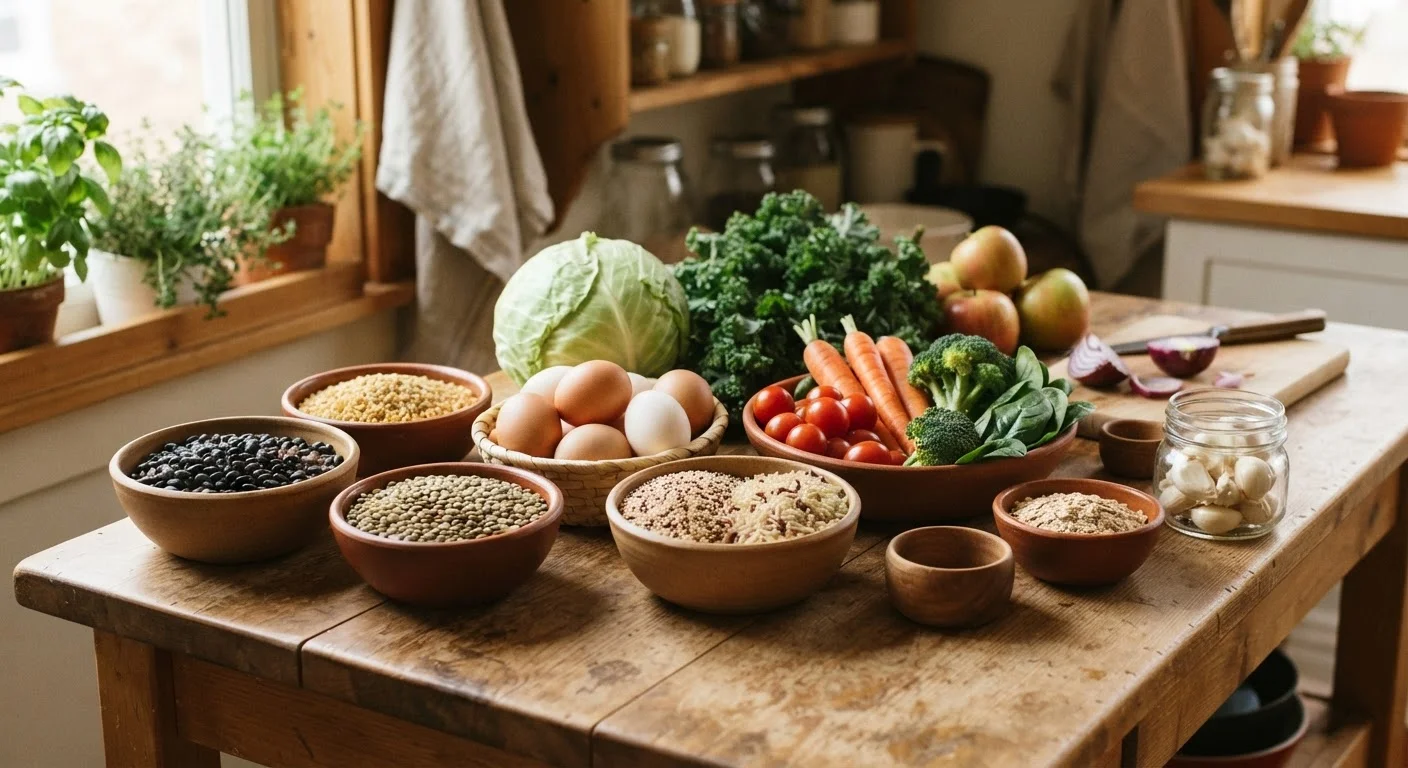
Many high-nutrition foods - dried legumes, oats, cabbage, eggs, canned tomatoes, frozen spinach - are among the least expensive items in any grocery store. The challenge isn't availability; it's knowing which strategies reliably translate to both nutritional quality and lower spending. This article focuses on approaches grounded in that evidence, without prescribing what or how much any individual should eat. For guidance tailored to your specific health needs, consult a registered dietitian or healthcare provider.
If you're also rethinking how food fits into your broader household finances, the budgeting fundamentals covered here offer a useful starting point.
Core Practices That Make the Biggest Difference
The following approaches are consistently supported by nutrition educators and consumer research. No single tactic works in isolation - the strongest results come from combining several of them into a loose weekly rhythm.
Build meals around plant-based proteins as a default, not an afterthought.
Dried beans, lentils, chickpeas, and split peas cost a fraction of most animal proteins and provide meaningful fiber, iron, and protein. Shifting even two or three dinners per week toward legumes produces noticeable savings without a significant nutritional trade-off.
Plan a weekly menu before writing a shopping list.
Unplanned shopping leads to redundant purchases, forgotten ingredients, and spoilage - all of which raise effective food costs. A rough weekly plan creates a targeted list that reduces waste and prevents last-minute takeout spending.
Treat frozen and canned vegetables as nutritional equals to fresh.
Freezing and canning preserve most nutrients at harvest peak, often outperforming fresh produce that has traveled long distances. These formats also reduce spoilage, which is one of the most common sources of invisible food budget loss.
Cook in bulk and design meals around component reuse.
A large pot of grains, roasted vegetables, or cooked beans takes roughly the same effort as a small one but yields multiple meals. Designing this in advance - rather than hoping for leftovers - turns batch cooking into a reliable system.
Choose store-brand staples for pantry items and seasonal produce for fresh.
Generic or store-brand versions of canned goods, grains, oils, and dried pasta are typically identical in quality to name brands and consistently cheaper. For fresh produce, seasonality drives down price and drives up flavor simultaneously.
Quick Actions You Can Take This Week
Changing how you shop and cook doesn't require an overhaul. These lower-lift moves can generate real savings and nutritional benefit almost immediately.
For a broader look at how these habits connect to building a more nutritionally varied diet, see our practical framework for a balanced plate.
What the Numbers Reflect
Context matters when evaluating how far a food budget can stretch. Household size, geography, dietary needs, and access to different store types all shape what's realistic.
~$1,200
Average annual food waste cost per household
The USDA estimates American households waste roughly 30-40% of the food supply; consumer-level estimates suggest this costs the average family over a thousand dollars per year.
3-4x
Cost difference: dried vs. canned beans vs. meat protein
USDA Economic Research Service data consistently shows dried legumes delivering comparable protein per serving at a fraction of the cost of most animal proteins.
30-40%
Potential savings from meal planning vs. unplanned shopping
Consumer nutrition research suggests households that plan meals before shopping spend meaningfully less and discard less food than those who shop without a plan.
It's also worth questioning some conventional wisdom. Not every widely shared money-saving tip holds up - some strategies that feel frugal can quietly cost more in practice. Audit your own patterns honestly before assuming any single fix will work.
“The most expensive food is the food you throw away. Reducing waste is the fastest way to lower your food costs without changing what you eat.”
— Brian Wansink, Former food psychology researcher and author on eating behavior
Putting It Together as a Sustainable Habit
Budget-conscious eating works best when it becomes routine rather than a crisis response. Shoppers who plan weekly menus, cook in batches, and lean on a short list of versatile staples tend to spend less and waste less than those who approach each meal as an isolated decision.
It doesn't require perfection or rigid tracking. Even a rough sketch of the week's meals before a shopping trip makes a meaningful difference. Structured approaches that don't require logging every dollar can help if traditional budgeting methods haven't stuck for you.
Nutritious eating on a limited budget is genuinely achievable for most households - not as a short-term fix, but as a durable, practical approach to food that holds up over time.
This article is for general informational and educational purposes only and does not constitute medical or dietary advice. Consult a qualified healthcare professional or registered dietitian for guidance specific to your health needs.