

Key Takeaways
The American Table Was Never Set in Isolation
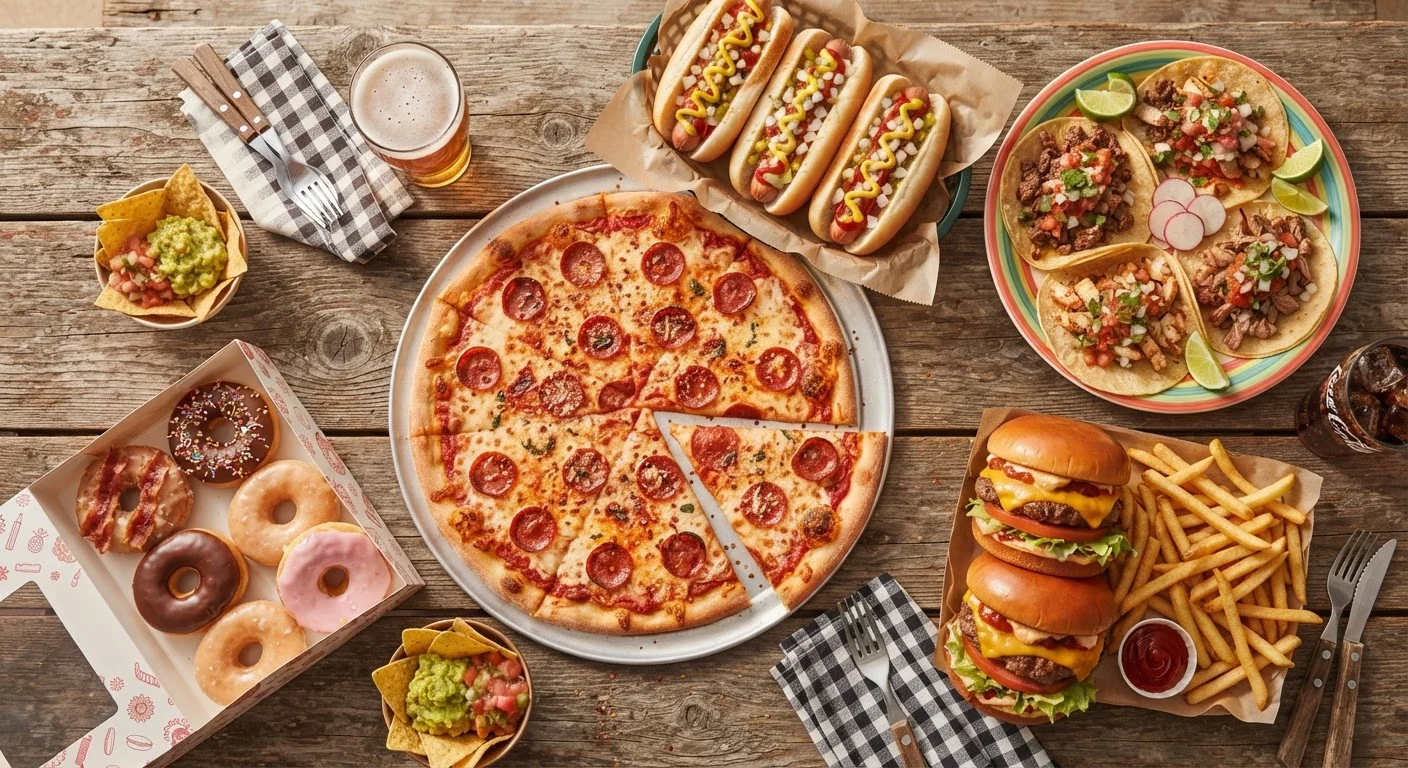
Ask most Americans to name their favorite foods and the list will likely include pizza, tacos, doughnuts, hot dogs, and stir-fry. What those dishes share - beyond being delicious - is an origin story that begins far outside the United States. The American table, as we know it today, is the cumulative result of millions of individual journeys: immigrants arriving with seeds, spice blends, cooking methods, and deep food memories, then slowly, stubbornly, reshaping what the country eats.
This isn't simply a story about cultural curiosity or culinary tourism. It's about survival, identity, community, and the quiet negotiation between holding onto home and adapting to somewhere new. As food historians have long noted, the kitchen is often the last place an immigrant community surrenders its heritage - and the first place the wider culture eventually notices. For a broader look at how these ideas intersect, see our piece on what Americans get wrong about 'authentic' ethnic food.
Pizza: Southern Italy's Gift to the American Mainstream
When Italian immigrants - many from Naples and Sicily - arrived in the late 19th and early 20th centuries, they brought with them a flatbread tradition that bore little resemblance to what most Americans picture today. Early pizzerias in cities like New York and Chicago served Italian immigrant neighborhoods. Wider adoption came gradually, accelerated after World War II when American soldiers who had been stationed in Italy returned home with a taste for it.
The New York slice and the Chicago deep dish that followed are distinctly American inventions - the product of local ingredients, industrial ovens, and a new consumer culture. Italian-American pizza is its own culinary tradition now, distinct from its Neapolitan ancestor and deeply woven into American daily life.
New York's iconic pizza slice is an Italian-American invention, not a direct import from Naples.
The Hot Dog: German Butchers and the Baseball Ballpark
The sausage-in-a-bun that Americans associate with Fourth of July cookouts and baseball games traces directly to German immigrant butchers, particularly those from Frankfurt and Vienna - a debate over origin that sausage enthusiasts have never fully resolved. German immigrants operated butcher shops and street carts across 19th-century American cities, and the frankfurter became a fixture of working-class urban eating.
The bun - practical, portable, and now inseparable from the experience - appears to have been popularized at the 1904 St. Louis World's Fair, though multiple origin claims exist. By the early 20th century, the hot dog was no longer German-American food. It was simply American food, sold at stadiums and street corners coast to coast.
German immigrant butchers introduced the frankfurter; the American hot dog evolved from their street carts.
Doughnuts: Dutch Settlers and a Sweet That Stuck
The fried dough ring that fills pastry cases and drives-through windows across America has its roots in Dutch settler communities of the colonial era. Dutch immigrants brought olykoeks - literally "oily cakes" - small balls of sweetened dough fried in fat. The ring shape that became standard is thought to have developed later, with various folk explanations, though food historians note that practicality - ensuring even cooking - likely played a role.
By the 19th century, the doughnut was embedded in American baking culture. The mass-produced, glazed, ring-shaped version familiar today reflects industrialization rather than any one immigrant tradition, but the foundational technique arrived with Dutch settlers centuries before.
Dutch colonial settlers introduced fried oily cakes that evolved into America's beloved doughnut.
Tacos and Mexican-American Foodways
Tacos did not cross the border as a foreign novelty - Mexican cuisine and the communities that carried it were already present across the American Southwest long before it became part of the United States. As Mexican immigration grew throughout the 20th century, taco stands, taquerias, and food trucks spread through California, Texas, Arizona, and beyond, then into cities far from the border.
Today, the taco occupies a unique position in American food culture: simultaneously a fast-food commodity, a regional tradition, and an ongoing conversation about culinary authenticity. The diversity within taco culture alone - from Oaxacan tlayudas to Baja fish tacos - reflects the regional complexity of Mexican foodways that rarely gets acknowledged in chain restaurant menus.
Mexican culinary traditions were present in the American Southwest before it became U.S. territory.
Soy Sauce and Stir-Fry: Chinese Immigrants and the Wok's Reach
Chinese immigrants arrived in significant numbers during the mid-19th century Gold Rush and transcontinental railroad era, and with them came a culinary repertoire - including wok cookery, soy-based sauces, and steamed rice - that was initially confined to immigrant enclaves. Chinese-American restaurants, which eventually spread to virtually every American town of any size, introduced techniques and flavor profiles that slowly permeated American home cooking.
Stir-frying as a method - high heat, fast cooking, minimal fat - is now common in American kitchens regardless of the cuisine being cooked. Soy sauce sits on millions of pantry shelves as a standard seasoning. These tools arrived through immigrant kitchens before becoming household staples. For more on how fermented ingredients like soy sauce fit into the broader American food revival, see fermentation's global comeback.
Stir-frying and soy sauce entered American home kitchens through Chinese immigrant restaurant culture.
The Bagel: Eastern European Jewish Bakers and New York's Identity
The boiled-then-baked bread ring that defines the New York breakfast experience came with Ashkenazi Jewish immigrants from Poland and Russia, who arrived in large numbers between the 1880s and 1920s. Early bagel production in New York was controlled almost entirely by a tight-knit bakers' union. The chewy, dense texture that distinguishes a traditional bagel from its softer commercial descendants comes specifically from the boiling step before baking - a technique that traveled intact from Eastern European baking tradition.
The bagel's spread beyond Jewish neighborhoods accelerated with industrialized production in the 1960s and 1970s. Today it is a national staple, though food writers and enthusiasts frequently note that the mass-produced version differs significantly from its predecessor - a recurring dynamic in how immigrant food traditions scale into the mainstream.
The bagel's signature chew comes from a boiling technique brought by Eastern European Jewish immigrants.
A Living, Evolving Inheritance
These examples are just a handful among hundreds. Chinese railroad workers introduced techniques that would seed Chinese-American restaurant culture across the continent. Eastern European Jewish immigrants gave New York its bagel tradition. Vietnamese refugees built a thriving pho economy in cities from Houston to San Jose. Each wave of arrival added new flavors, new methods, and new expectations to the American palate.
Explore Immigrant Food Traditions Locally
Many American cities have neighborhoods where immigrant food traditions remain closest to their origins - whether a Vietnamese banh mi shop, a Yemeni bakery, or a Guatemalan market. Visiting these places, engaging respectfully, and spending money in community-owned businesses is one of the most direct ways to connect with living food history. The potluck is another entry point: immigrant communities have long used shared meals as both cultural preservation and an invitation to neighbors.
What makes the American food story distinctive isn't purity - it's permeability. Dishes cross community lines, get adapted by new hands, and re-emerge transformed. That process can be celebrated even as we remain honest about the complicated legacy of fusion cuisine and the questions of credit and cultural respect it raises. The holiday table as a cultural document offers another lens: what families choose to cook on significant occasions tells a story about memory and belonging that no restaurant menu fully captures.
The next time you bite into a hot dog at a summer cookout or fold a slice of pizza on a Friday night, you're participating in a tradition that began in someone else's homeland - and became, over time, unmistakably American.