

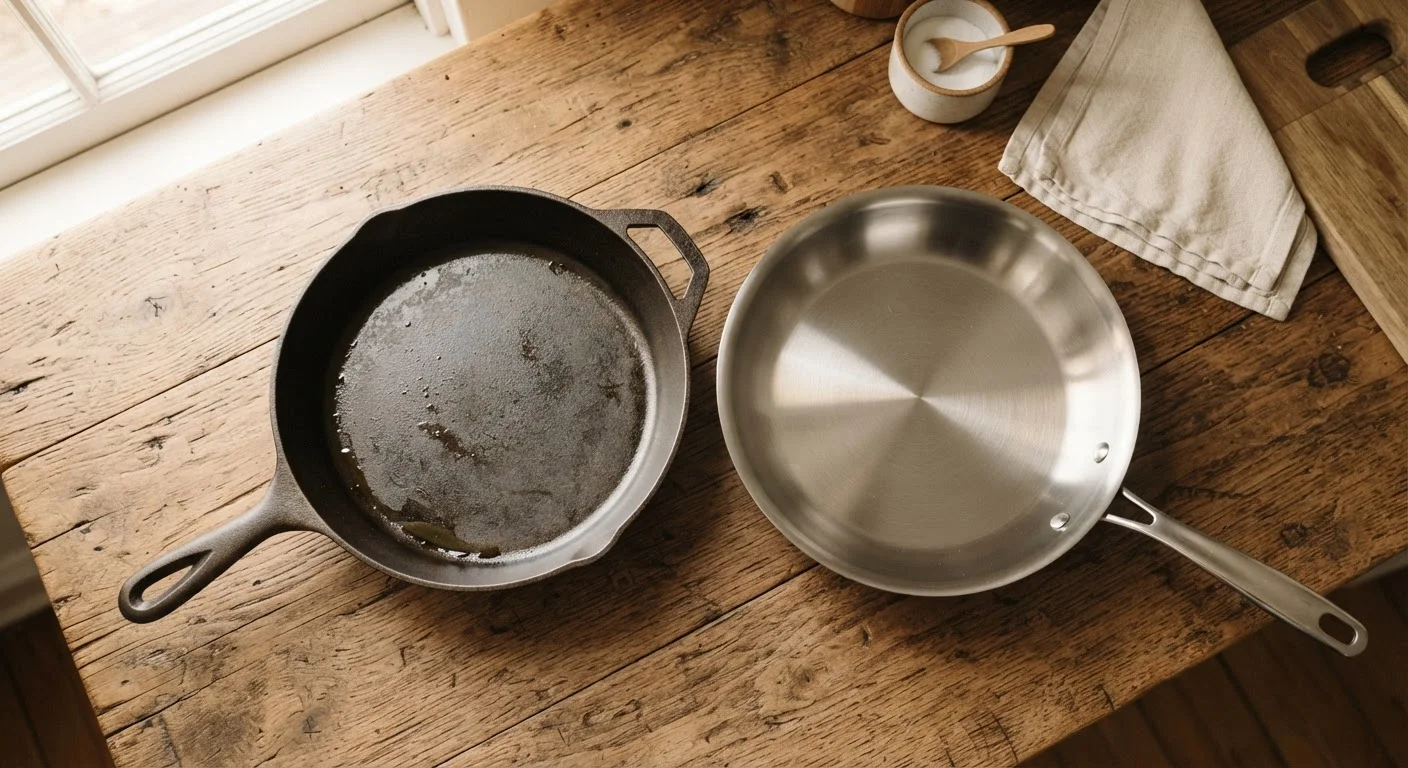
Key Takeaways
Option A
Cast Iron
The heavy-duty, heat-retaining classic.
Best for: Best for cooks who want superior heat retention, oven-to-stovetop versatility, and a naturally non-stick surface that deepens over time.
Option B
Stainless Steel
The responsive, low-maintenance workhorse.
Best for: Best for cooks who value quick temperature control, easy cleanup, and a pan that handles acidic ingredients without fuss.
If you love searing steaks or baking cornbread
Cast Iron
Cast iron's exceptional heat retention produces a deep, even crust on proteins and bakes evenly in the oven - results that are hard to replicate in lighter pans.
If you cook a lot of quick weeknight sautés or pan sauces
Stainless Steel
Stainless steel responds to temperature changes quickly and is ideal for building fond - the browned bits that form the backbone of great pan sauces.
If you frequently cook tomato-based or wine-reduced dishes
Stainless Steel
Acidic ingredients can strip seasoning from cast iron and may pick up a metallic taste; stainless steel handles them cleanly without any reaction.
If you want one versatile pan that goes from stovetop to campfire
Cast Iron
Cast iron works on any heat source - gas, electric, induction, open flame, or oven - and its durability makes it the go-to for rugged, versatile cooking.
If easy cleanup and minimal maintenance matter most to you
Stainless Steel
Stainless steel can go in the dishwasher, tolerates soaking, and never needs seasoning - a clear advantage for busy households.
How Each Pan Actually Works
The core difference between cast iron and stainless steel comes down to how each material handles heat. Cast iron is dense and heavy, which means it takes longer to come up to temperature - but once it's hot, it stays hot. That thermal mass is the reason a cast iron skillet produces such a consistent, deep sear on a steak or an evenly browned bottom on a skillet cornbread. It doesn't flinch when cold food hits the surface.
Stainless steel, by contrast, is thinner and more thermally responsive. It heats up quickly and cools down quickly, which gives cooks more control over delicate tasks like sautéing vegetables or reducing a sauce. A quality stainless pan - particularly one with an aluminum or copper core bonded in the base - distributes heat evenly while still allowing for rapid adjustments. That responsiveness is something cast iron simply cannot match.
Understanding these fundamentals helps you stop thinking about which pan is "better" and start thinking about which one fits the task. See how technique shapes results in our guide on what salt, fat, acid, and heat each do in a recipe.
| Criterion | Cast Iron | Stainless Steel |
|---|---|---|
| Heat retention | Excellent - holds heat under load | Moderate - cools faster |
| Heat responsiveness | Slow to adjust | Fast and precise |
| Weight | Heavy (5-12 lbs typical) | Lighter (2-5 lbs typical) |
| Non-stick quality | Good when well-seasoned | Requires technique and fat |
| Acidic ingredient compatibility | Can strip seasoning | Fully compatible |
| Oven-safe temperature | Virtually unlimited | Up to ~500°F (varies by handle) |
| Maintenance | Requires seasoning and drying | Dishwasher-safe, minimal care |
| Lifespan | Generations with proper care | Many years with normal use |
Maintenance, Seasoning, and Real-World Upkeep
Cast iron's reputation for being high-maintenance is somewhat overstated, but it does require consistent care. The cooking surface is protected by seasoning - layers of polymerized oil baked into the iron - which creates a natural, gradually improving non-stick surface. Maintaining this means drying the pan thoroughly after washing, avoiding prolonged soaking, and applying a light coat of oil before storage. Acidic foods like tomatoes, wine, and citrus can strip seasoning if cooked for extended periods, which is worth keeping in mind when planning a long braise.
Stainless steel asks very little of you. It can go in the dishwasher, tolerate soaking, and handle acidic ingredients without any reaction. The trade-off is that food sticks more readily than on seasoned cast iron or non-stick surfaces - but this is largely a technique issue, not a material flaw. Proper preheating and fat usage solve most sticking problems. The sticky, browned residue (called fond) that forms during cooking is actually desirable: it's the flavor base for pan sauces. Learning to deglaze and reduce turns that residue into something delicious.
~5-12 lbs
Typical weight range for a 10-12" cast iron skillet
The density that gives cast iron its heat retention also makes it significantly heavier than most other cookware - an important ergonomic consideration.
500°F+
Oven-safe temperature for most cast iron
Cast iron handles virtually any oven temperature, while stainless steel ratings often depend on handle materials and typically cap around 500°F.
2-3 min
Recommended preheat time for stainless steel
Allowing stainless steel to preheat fully before adding fat or food significantly reduces sticking - a simple technique that changes results dramatically.
Which Pan Should You Prioritize?
For most home cooks, the honest answer is: both, eventually. Cast iron and stainless steel cover different ground, and a kitchen stocked with one of each handles nearly every cooking scenario. That said, if you're starting out or choosing where to invest first, your cooking habits should guide the decision.
If your meals skew toward high-heat cooking - searing proteins, pan-frying, or oven-finishing dishes - cast iron gives you the thermal muscle to do it well. If you cook more varied weeknight meals, build sauces frequently, or prefer minimal upkeep, stainless steel will serve you more consistently across more situations. And if sheet pan cooking is already part of your weeknight rotation, our guide to sheet pan dinners covers how to maximize a different format entirely.
Neither pan is universally superior. The one that suits your cooking style is the one you'll actually use - and that's the only metric that matters.