

Key Takeaways
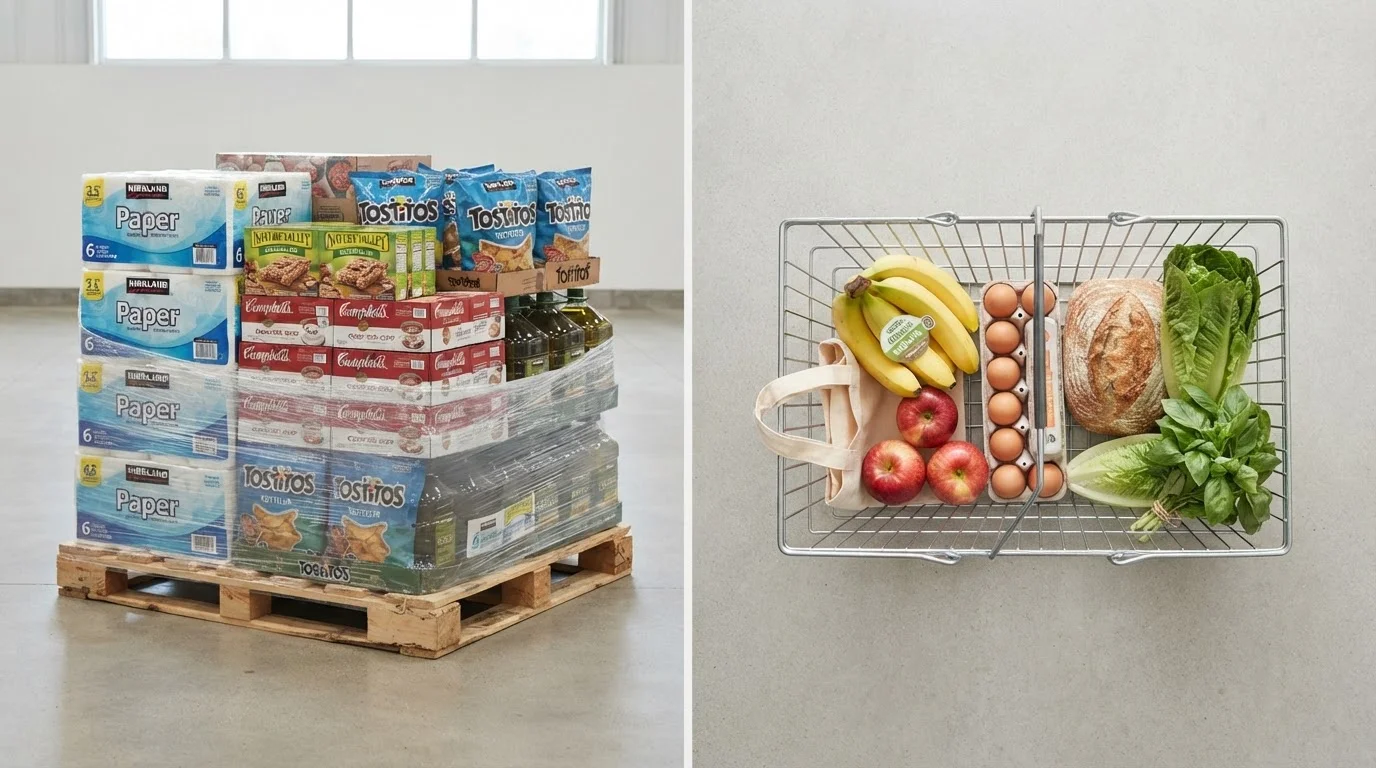
Option A
Bulk Buying
The high-volume, lower-unit-cost strategy.
Best for: Households with predictable consumption patterns and adequate storage for non-perishable or long-shelf-life goods.
Option B
Buying as Needed
The flexible, low-commitment approach.
Best for: Shoppers prioritizing freshness, limited storage, or variable demand - and those managing tight cash flow.
If you have consistent demand and good storage space
Bulk Buying
Stable usage means you'll actually consume what you buy before it expires, and lower unit costs deliver real savings over time.
If you're managing a tight monthly budget or irregular income
Buying as Needed
Smaller outlays preserve cash flow and prevent overcommitting funds to inventory you may not use quickly enough.
If you're shopping for fresh produce, dairy, or specialty ingredients
Buying as Needed
Perishables have short windows; buying only what you'll use immediately dramatically cuts waste and actual cost.
If you use the same household staples repeatedly every month
Bulk Buying
Paper goods, cleaning supplies, and pantry staples with long shelf lives are prime candidates for volume purchasing.
If your needs fluctuate or you're trying a new product
Buying as Needed
Buying small quantities first lets you validate that the product works for you before making a large financial commitment.
The Core Trade-Off: Unit Cost vs. Total Cost
Bulk buying's main appeal is straightforward: the more units you purchase, the lower the cost per unit. A single roll of paper towels at a convenience store might cost $2.50, while the same brand in a 12-pack from a wholesale club can drop to under $1.00 per roll. That gap is real - but it's only part of the financial picture.
Total cost includes what you paid plus what you lost. Spoilage, expiration, storage costs, and the opportunity cost of cash tied up in inventory all chip away at the apparent savings. Understanding total ownership cost is the key discipline here: a bulk discount that leads to 30% waste isn't a deal - it's a loss dressed up as savings.
Buying as needed sidesteps this entirely. You pay more per unit, but you pay only for what you consume. For households with limited storage, unpredictable schedules, or genuinely variable needs, this translates to less waste and a simpler mental load.
| Criterion | Bulk Buying | Buying as Needed |
|---|---|---|
| Unit cost | Lower | Higher |
| Upfront cash outlay | High | Low |
| Spoilage risk | Higher (volume) | Lower (small batches) |
| Storage required | Significant | Minimal |
| Flexibility to change products | Low (committed supply) | High |
| Best product types | Non-perishables, staples | Fresh goods, trial items |
| Cash flow impact | Front-loaded spend | Distributed over time |
When Bulk Buying Actually Pays Off
Bulk purchasing works best when three conditions are met simultaneously: the item is non-perishable (or has a very long shelf life), your usage rate is consistent and high, and you have somewhere to put it without paying extra for storage. Classic examples include paper goods, laundry detergent, canned goods, cooking oils, and certain frozen proteins.
The math also improves for households with multiple people. A single-person apartment may take 18 months to use a 50-count bottle of vitamins before they expire; a family of four might go through the same quantity in a few weeks. Usage rate is the most overlooked variable in bulk-buying math.
~30-40%
Typical unit-cost savings from bulk purchasing
Consumer research generally estimates that buying in volume yields 30-40% lower per-unit costs for shelf-stable household goods compared to single-unit retail pricing.
$1,500+
Estimated annual US household food waste cost
USDA and ReFED estimates suggest the average American household loses over $1,500 worth of food annually to spoilage - a key risk factor when over-buying perishables in bulk.
One useful analytical lens: calculate your true cost-per-use before committing. Looking beyond the sticker price - accounting for how many uses you'll realistically get - gives you a far more honest comparison. This same principle is explored in depth in the context of evaluating product value before any purchase decision.
When Buying as Needed Is the Smarter Move
Perishables are the clearest case for buying as needed. Fresh produce, bread, dairy, and prepared foods have windows measured in days, not months. Buying a flat of strawberries because the unit price is attractive makes no sense if half the flat goes soft before you use it.
Beyond food, buying as needed also makes sense when your preferences are still evolving. If you haven't confirmed that a cleaning product, supplement, or skincare item works for you, committing to a large supply is a gamble. Testing store brands versus name brands in smaller quantities first is a good example of this principle in practice.
Cash flow is another legitimate reason. Buying as needed spreads spending across time rather than front-loading it, which matters when monthly budgets are tight. A larger outlay this week - even if it saves money over six months - may not be worth it if it means deferring a bill or skipping an urgent expense.
Membership Fees Affect the Calculus
Wholesale club memberships typically cost $50-$120 annually. If you buy in bulk infrequently or only in a few categories, the membership fee can offset or eliminate the per-unit savings. Factor annual membership cost into your total savings estimate before concluding that a club purchase was financially advantageous. For light or occasional bulk buyers, standard retail or online options without membership requirements may deliver comparable or better overall value.
Building a Hybrid Approach That Works
Most households benefit from treating bulk and as-needed purchasing as complementary tools rather than competing philosophies. A practical framework: identify your "always-use" items - things with no substitutes, consistent consumption, and long shelf lives - and buy those in volume. For everything else, default to smaller quantities until you've established a pattern.
It's also worth revisiting bulk habits periodically. Household size, dietary preferences, and lifestyles shift. A bulk routine built for a family of five may no longer be rational after kids leave home. Similarly, supply chain pressures can sometimes make stocking up strategically sensible - but that logic applies narrowly to specific, genuinely scarce categories, not as a blanket justification for bulk purchasing across the board.
The goal isn't to buy more or less - it's to buy in the quantities that minimize total cost while matching how you actually live. That requires honesty about usage, honest accounting of waste, and willingness to adjust when the math changes.