

Key Takeaways
Option A
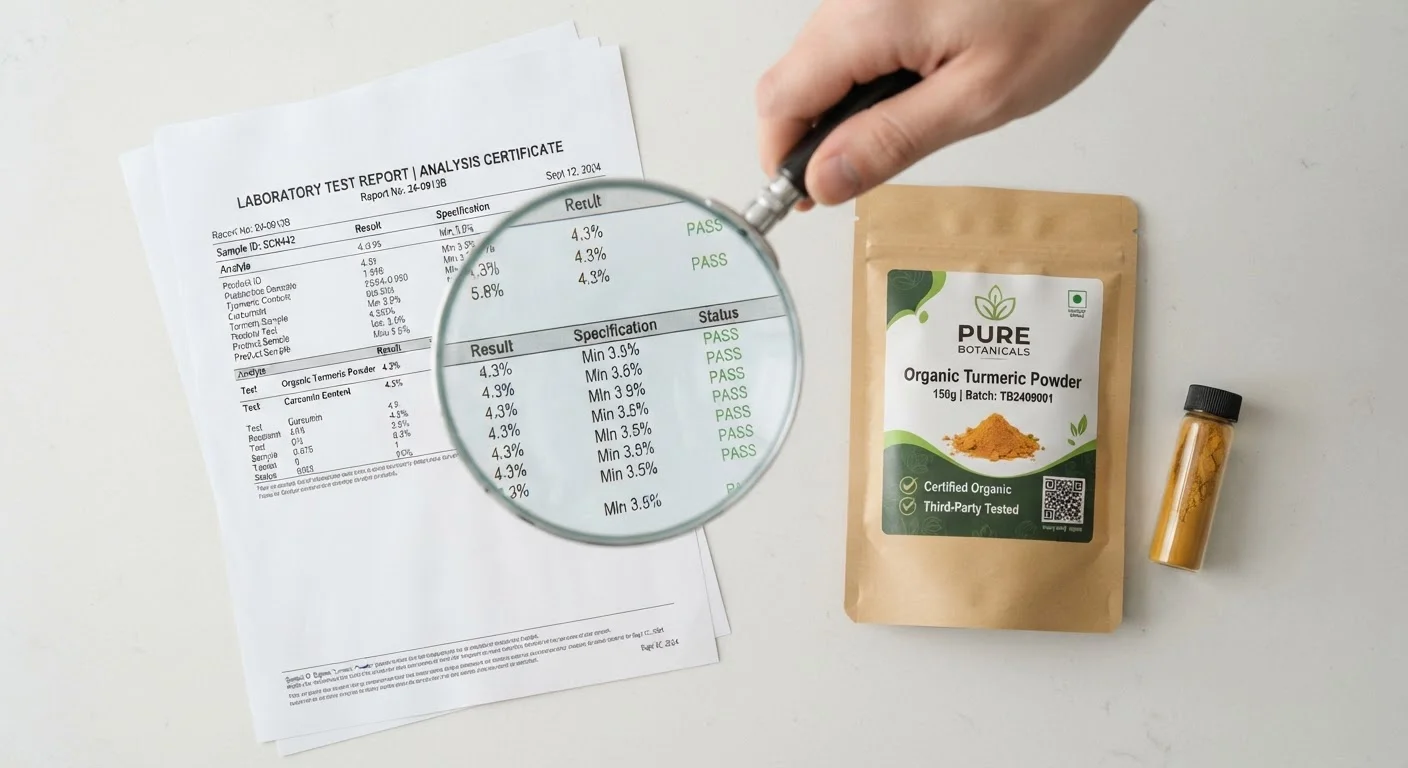
Third-Party Testing
The independent, evidence-based benchmark.
Best for: Consumers who want objective, verifiable data on what a product actually contains or how it truly performs.
Option B
Brand Claims
The company's curated, self-reported story.
Best for: Getting a quick overview of intended use cases and product positioning - while treating figures as a starting point, not a conclusion.
If you're evaluating a supplement, food product, or anything you ingest
Third-Party Testing
Independent lab results are the only reliable way to verify purity, ingredient amounts, and the absence of contaminants - brand labels are not legally required to be independently confirmed before sale.
If you want to understand what a product is designed to do
Brand Claims
Manufacturer descriptions of intended use, compatibility, and design specifications are generally accurate for their stated purpose, even when performance figures are optimistic.
If you're purchasing items for children, pets, or people with health conditions
Third-Party Testing
Vulnerable populations face greater risk from mislabeled or contaminated products; independently verified safety data provides a meaningful additional layer of assurance.
If you're comparing two products in the same category at a glance
Brand Claims
Brand-published specifications are useful for an initial side-by-side comparison, as long as you treat figures as claims to verify rather than confirmed facts.
If budget is limited and you need the most reliable single data point
Third-Party Testing
A product with credible independent certification gives you a concrete, verifiable baseline that no amount of polished marketing copy can replicate.
What Each Approach Actually Means
Brand claims are any statements a company makes about its own product - on the packaging, in ads, or on its website. These include ingredient percentages, performance metrics, safety assurances, and vague phrases like "clinically proven" or "lab tested." In the United States, many categories of consumer goods can reach store shelves with claims that have not been reviewed or confirmed by a government body or neutral laboratory before sale. The Federal Trade Commission (FTC) requires that objective claims be substantiated, but the burden of policing violations largely falls on post-market enforcement rather than pre-market gatekeeping.
Third-party testing means an independent laboratory - one with no ownership stake or revenue relationship with the brand - evaluates the product against defined standards. Results may be published openly or used to support a certification seal. The key word is independent: a lab paid directly by the brand to issue a pass/fail report is not truly third-party, even if the testing itself was technically rigorous. Look for labs that are accredited by recognized bodies such as ISO 17025, which sets global competency standards for testing laboratories.
For a deeper look at how to decode the data these two sources produce, see our guide on reading product specification sheets.
| Criterion | Third-Party Testing | Brand Claims |
|---|---|---|
| Who conducts the evaluation | Independent laboratory or certifier | The company itself |
| Financial independence | No revenue stake in the outcome | Directly motivated to present favorably |
| Methodology transparency | Often published and peer-reviewable | Rarely disclosed in full |
| Legal accountability for accuracy | Lab accreditation standards apply | FTC substantiation rules; post-market enforcement |
| Coverage of negative results | Full results typically reported | Selective - unfavorable findings rarely shared |
| Usefulness for intended-use info | Limited - focuses on measured data | High - designed to explain product purpose |
| Consumer effort to access | Requires active search; not always free | Readily available on packaging and websites |
Where Brand Claims Fall Short - and Where They Don't
Brand claims are not automatically dishonest. Companies accurately describe how to use their products, what materials went into them, and what scenarios they were designed for. The problem is selective presentation: a brand can truthfully report a single favorable test result while omitting a dozen unflattering ones - a practice sometimes called cherry-picking data. Performance figures may also reflect ideal lab conditions that bear little resemblance to real-world use.
Vague language is another consistent pattern. Terms like "supports," "promotes," and "may help" are legally softer than direct efficacy claims and do not require the same level of evidence. The same applies to cosmetic descriptors - a moisturizer labeled "dermatologist tested" only confirms that at least one dermatologist tested it; it says nothing about what that testing found or how many participants were involved.
Understanding how certifications layer on top of brand claims matters here. Our breakdown of certifications and safety marks explains which logos require rigorous independent verification and which are essentially self-awarded.
How to Evaluate Third-Party Testing Credibility
Not every "independently tested" label deserves equal trust. Use this framework before accepting a certification at face value:
- Who paid for the test? If the brand commissioned and funded the study exclusively, independence is compromised even if the lab itself is reputable.
- Is the methodology published? Legitimate certifying organizations publish their testing protocols publicly. If you cannot find how they tested the product, that is a meaningful gap.
- Is the lab accredited? ISO 17025 accreditation is the internationally recognized benchmark for laboratory competence. Check the accrediting body's public registry to confirm.
- Does the certification cover what matters? A "heavy metals tested" seal on a supplement means nothing if the lab only screened for two of the seven regulated heavy metals. Specificity counts.
~30-80%
Label accuracy variance found in supplement studies
Multiple peer-reviewed analyses of dietary supplements have found that actual ingredient quantities can deviate significantly from label claims, sometimes falling far below or exceeding stated amounts.
ISO 17025
International lab competency standard
The International Organization for Standardization's 17025 standard is the globally recognized benchmark for testing and calibration laboratory competence; accreditation requires regular independent audits.
Hundreds
FTC enforcement actions on false ad claims annually
The Federal Trade Commission regularly brings actions against advertisers making unsubstantiated product claims, underscoring that brand self-reporting operates in a regulatory environment with real - if reactive - consequences.
This same critical eye applies to user-generated content. The patterns that make online reviews unreliable - selection bias, incentivized posting - can distort your perception of a product just as much as a misleading label. See our article on why online reviews are broken for practical methods to separate signal from noise.
Practical Steps for Smarter Product Decisions
Combining both sources - skeptically - gives you the strongest foundation. Start with brand claims to understand what a product is supposed to do and how it positions itself in the market. Then look for independent verification before committing, particularly for products involving health, safety, or long-term use.
For consumables and products entering your body or your pet's body, independent verification is especially important. Pet food labeling, for example, presents many of the same tension points: the guaranteed analysis on the bag is brand-reported, while independent lab results can reveal significant discrepancies in actual nutrient content. Our guide on what pet food labels actually tell you walks through exactly that gap.
For durability and performance claims on physical goods, third-party results from consumer-focused testing organizations are particularly valuable - brands tend to test under optimal conditions, while independent reviewers often simulate real-world wear. This distinction matters more than most shoppers realize; a product can perform impressively on day one and fail within a year, which is why understanding both short-term durability and long-term reliability is worth your attention before purchase.
The goal is not to dismiss brand materials entirely - it is to treat them as one input among several, weighted appropriately against the evidence that independent testing can provide.
A Note on Health-Related Products
For supplements, foods, and any product making health-related claims, this article provides general educational context only - not medical advice. Regulatory frameworks and ingredient safety can be complex and category-specific. Consult a qualified healthcare professional before making decisions about products intended to affect your health or the health of dependents.