

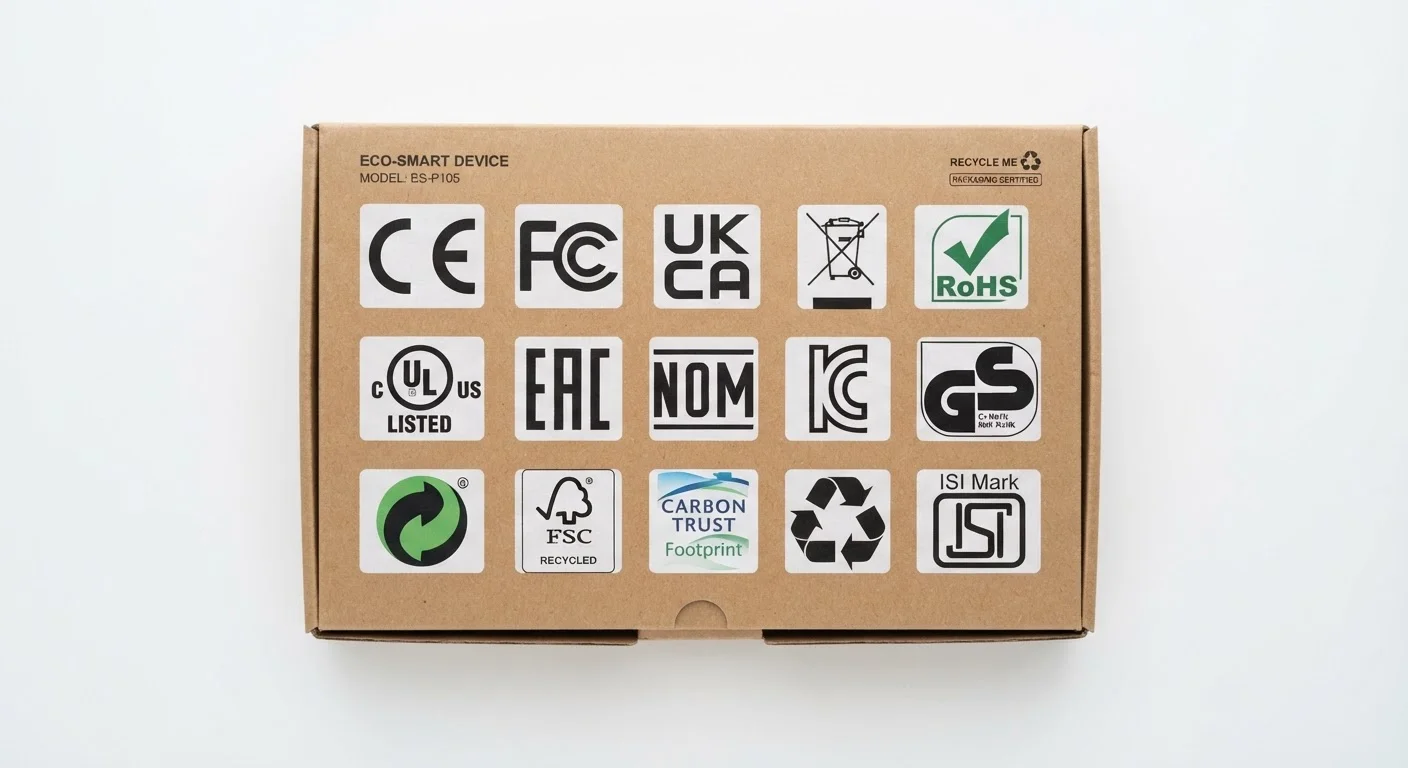
Why Certification Marks Are Not All Created Equal
Walk through any store or scroll through any product listing and you'll encounter a parade of logos, seals, and badges - stars, checkmarks, leaves, shields. The implicit promise is consistent: this product has been verified as safe, effective, or environmentally sound. In reality, those marks operate under wildly different rules. Some require rigorous, ongoing independent audits. Others are created by the manufacturer and placed on the product without any outside oversight whatsoever.
The difference matters practically. A certification backed by an OSHA-recognized Nationally Recognized Testing Laboratory (NRTL) means a qualified third party set performance and safety criteria, physically tested the product, and maintains the right to audit or revoke the mark. A self-awarded seal means none of that happened. Understanding which category a mark falls into is one of the most useful frameworks a consumer can carry.
For a broader look at how independent verification compares to brand assurances, see how third-party testing differs from brand claims.
Marks With Genuine Independent Backing
Several certifications in common U.S. consumer markets are well-established and independently verified:
- UL Listed / UL Certified: Underwriters Laboratories is an OSHA-recognized NRTL. Products bearing UL marks have been tested to published safety standards and are subject to periodic factory audits.
- NSF Certified: NSF International independently tests and certifies products in categories including drinking water filters, dietary supplements, and food equipment. NSF publishes its standards publicly and maintains a searchable database of certified products.
- Energy Star: Administered jointly by the U.S. EPA and the Department of Energy, Energy Star certification requires third-party testing by EPA-recognized labs before a product can carry the mark. The EPA also conducts post-market verification testing.
- USDA Organic: For food and agricultural products, USDA Organic certification requires inspection by an accredited certifying agent - it is not a manufacturer self-declaration.
These marks share a common architecture: an independent body sets the criteria, an independent body (or accredited agent) verifies compliance, and there is a documented process for revoking the mark.
Marks That Deserve More Scrutiny
Not every certification falls neatly into the "rigorous" column. Several categories warrant closer inspection:
- CE Marking: Required for products sold in the European Economic Area, CE marking signals regulatory compliance - but for many product categories, manufacturers can self-declare conformity without independent testing. A Notified Body is only mandatory for higher-risk product classes.
- "Eco," "Green," or "Natural" seals with no named backer: These are frequently self-awarded. The FTC's Green Guides set expectations for truthfulness in environmental marketing, but enforcement is complaint-driven rather than pre-market. A 2021 European Commission screening found roughly 42% of online green claims were exaggerated or unverifiable.
- ISO references on packaging: A product claiming to be manufactured to an ISO standard is referencing a published specification, not a certification. Unless an accredited body audited the product against that standard, the reference is informational at best.
When evaluating packaging marks, ask two questions: Who set the standard? Who verified compliance? If the same company answers both questions, the mark is self-certification. Labels with genuinely ambiguous signals often accompany other warning signs covered in our guide to build quality red flags.
A Simple Framework for Evaluating Any Mark
You don't need to memorize every certification program. A short set of questions works for almost any mark you encounter:
- Is the certifying body named? If the logo is vague or the certifier is the manufacturer itself, treat it as a self-declaration.
- Can you verify the product's status? Legitimate certification programs - NSF, UL, Energy Star - maintain searchable public databases. If you can look up the specific model and confirm certification, the mark carries more weight.
- Are the standards public? Credible certifiers publish the criteria a product must meet. If the standard is proprietary and undisclosed, the mark cannot be independently assessed.
- Is there ongoing oversight? Periodic audits and the possibility of revocation distinguish active certifications from one-time declarations.
This framework applies equally when evaluating pet product claims - the same verification logic used for safety marks applies to label language discussed in our breakdown of what pet food labels actually tell you. And just as certification marks can be misread, so can warranty language - understanding coverage limits is explored in our guide to decoding warranty terms.