
Short-Term Durability vs. Long-Term Reliability: Two Different Things Worth Measuring

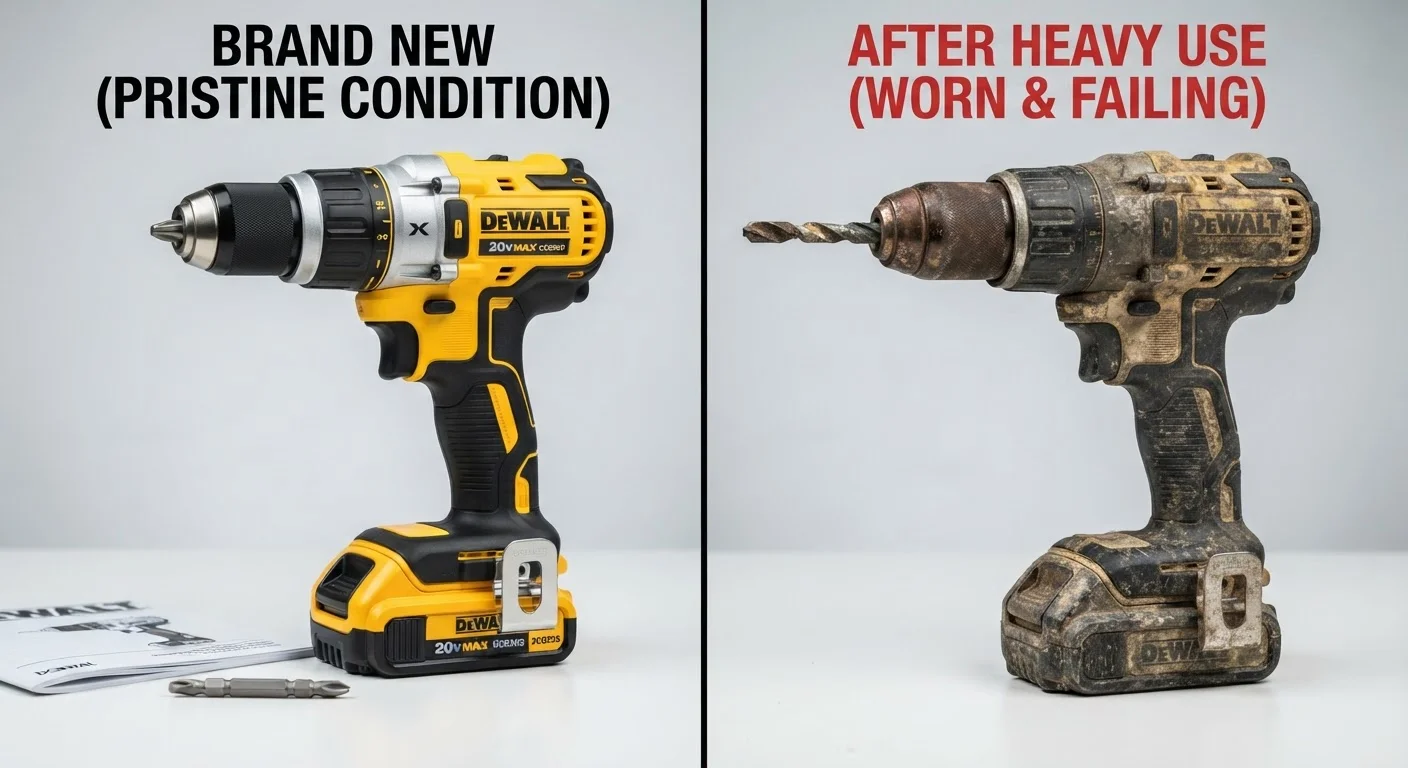
Key Takeaways
Our Verdict
Durability and reliability are related but distinct product qualities that require different evaluation methods. A product that feels solid on day one may still carry a high failure rate; one that looks modest may outperform it over years of real use. Smart purchasing means assessing both, using different tools for each.
| Best for | Recommended |
|---|---|
| Buyers prioritizing impact resistance and physical toughness | Durability-focused evaluation |
| Buyers who need consistent performance over months or years | Reliability-focused evaluation |
| High-use or professional environments where both matter equally | Combined durability and reliability framework |
Why These Two Concepts Get Confused
When shoppers call a product "well-built," they're usually describing something they can feel - the heft of a cast-iron pan, the satisfying click of a cabinet hinge, the thickness of a phone case. That tactile impression is a rough proxy for durability: the ability to resist physical damage, wear, and deformation under stress.
Reliability is different. It describes how consistently a product performs its intended function over time and across repeated use cycles. An appliance motor can be housed in a rock-solid chassis and still burn out after 500 hours of operation. A zipper can feel cheap and still outlast the jacket it's sewn into.
The confusion between the two is understandable - both feed into a general sense of "quality" - but treating them as the same thing leads to predictable purchasing mistakes. See our guide to what engineers look for in a quality product for a fuller picture of how professionals break quality into measurable components.
How to Evaluate Durability
Durability is the more measurable of the two in the short term. It's about physical resilience: resistance to abrasion, impact, moisture, UV exposure, or load stress depending on the product category. Here's how to assess it without a lab:
- Materials: The composition of a product's core materials is the single strongest predictor of physical durability. Raw material quality - alloy grade, fabric weight, polymer type - matters far more than surface finish.
- Construction method: Look for welded versus bolted joints, reinforced stress points, and double-stitched seams. These details signal how a manufacturer anticipates real-world use.
- Third-party ratings: Standards like IP ratings for water resistance, MIL-SPEC drop ratings, or ASTM material standards give objective benchmarks. Third-party testing is far more useful than manufacturer marketing claims.
| Durability | Reliability | |
|---|---|---|
| What it measures | Resistance to physical damage and wear | Consistency of function over time |
| When it's observable | Assessable at point of purchase | Revealed only through extended use |
| Key signals to check | Materials, construction, third-party ratings | Long reviews, warranty terms, known failure modes |
| Common misconception | Heavy or solid = durable | Expensive = reliable |
| Risk of getting it wrong | Physical damage sooner than expected | Functional failures despite intact exterior |
| Best data source | Lab tests, material specs, certifications | 12+ month user reviews, repair forums |
How to Evaluate Reliability
Reliability is harder to assess before purchase because it only reveals itself over time. The most useful signals come from aggregated real-world experience:
- Long-horizon user reviews: Filter reviews by date and look for patterns in 12- to 24-month ownership reports, not first-impression reactions. Phrases like "still going strong" or "failed after X months" are more informative than star ratings alone.
- Warranty structure: A confident manufacturer backs its product with a meaningful warranty. Pay attention to what's covered, for how long, and how claims are handled - not just the headline duration.
- Known failure modes: Search the product name alongside terms like "common problems" or "failure" in forums and repair communities. Recurring issues at predictable intervals indicate systematic reliability problems, not random bad luck.
- Repairability: Products that can be serviced tend to have longer effective lifespans. A repairable product with average reliability often outperforms a non-repairable one with excellent initial build quality.
Use the '12-Month Review' Filter
When reading product reviews, sort by date and specifically seek out reviews written a year or more after purchase. First-week impressions skew heavily toward durability signals (feel, finish, build). Reliability problems - motors failing, seals breaking down, software degrading - tend to surface only after sustained use. A product with glowing early reviews and a trail of complaints at the 12-month mark is telling you something important.
Understanding reliability also feeds directly into value calculations. A product priced 30% higher that lasts three times as long is the better financial decision. Price vs. value frameworks help you run that math before you buy.
Putting Both Measures Together
The most useful purchasing framework treats durability and reliability as two separate axes rather than a single quality score. A product can score high on both, low on both, or high on one and low on the other - and each combination implies a different use case and risk profile.
~80%
Product failures attributed to design, not materials
Engineering literature broadly suggests the majority of product failures originate in design decisions rather than raw material defects, underlining that structural sturdiness alone doesn't guarantee reliability.
2-3x
Lifespan difference between repairable and non-repairable products
Consumer advocacy research consistently finds that products designed for repairability can achieve significantly longer effective lifespans than sealed, non-serviceable equivalents.
When you're comparing options, start with the durability signals you can verify directly - materials, construction, third-party ratings. Then layer in reliability signals from aggregated user data, warranty terms, and known failure histories. Neither dimension alone tells the full story, and no hands-on store test substitutes for long-term ownership data.
This two-axis thinking applies well beyond consumer products. Even in contexts like choosing between short-term flexibility and long-term stability in leasing decisions, the underlying logic holds: short-term feel and long-term performance are distinct things that require different evaluation criteria.