

Key Takeaways
Why Shared Spaces Feel Chaotic - and How to Change That
When two people move in together - whether as roommates, partners, or family - their belongings, habits, and aesthetics collide in real time. The result is often a space that feels like a negotiation rather than a home. Neither person's style reads clearly, and clutter fills the gaps where decision-making stalled.
The good news: shared spaces don't require one person's taste to win. They require a framework that makes room for both. That framework starts with separating two distinct challenges - organization (where things live and why) and style (how things look and feel). Solving the first creates the breathing room to address the second without conflict.
If your living room already feels cramped before the style question even comes up, it helps to think about layout first. Our guide to arranging furniture in tight spaces walks through exactly that.
Best Practices for Organizing Without Erasing Your Identity
The following practices have helped many households find a livable middle ground - one where the space functions well and both residents feel genuinely at home.
Agree on a shared neutral palette before layering in personal accents.
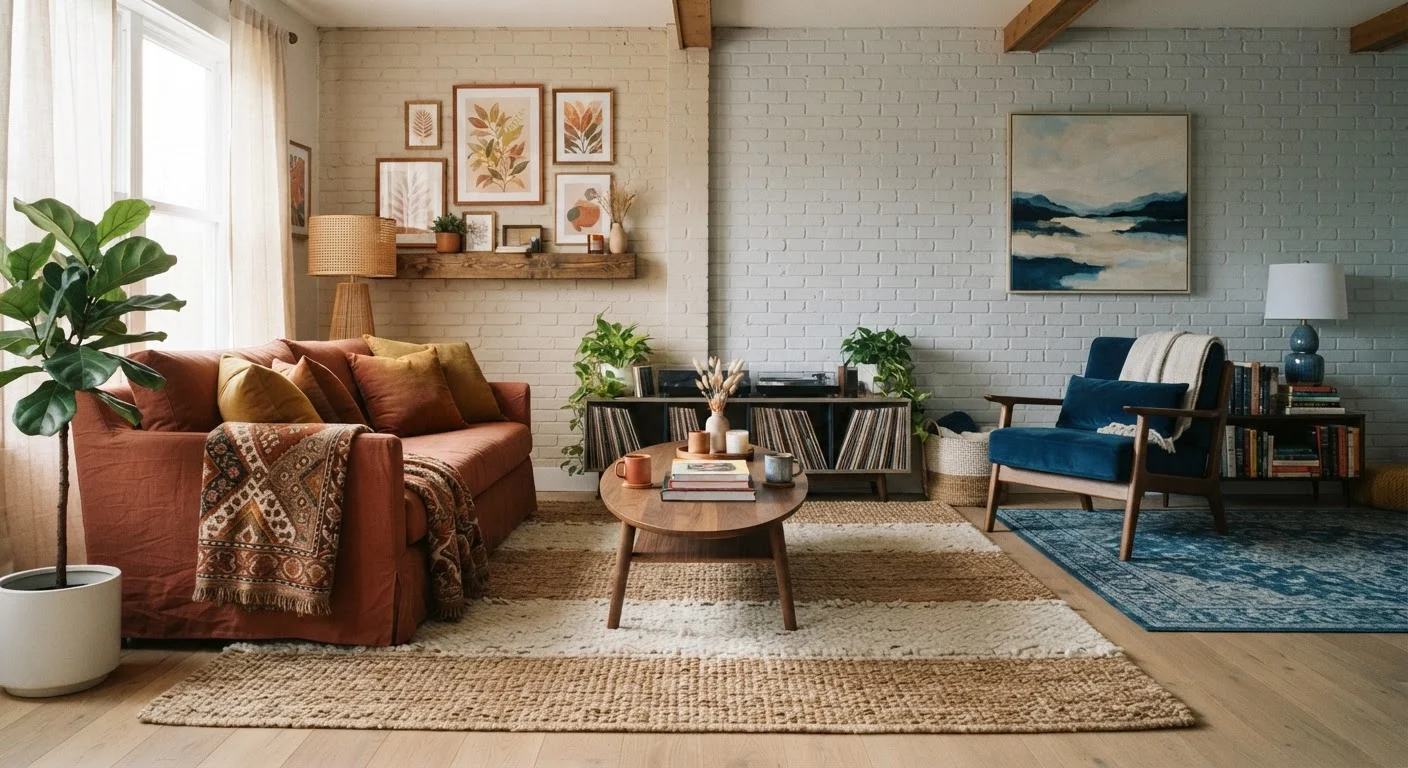
A cohesive base - typically neutral walls and large furniture pieces - gives both residents' individual accents something to work against rather than compete with. Without this foundation, two distinct styles read as visual noise rather than intentional contrast.
Designate personal zones within shared rooms.
Even open-plan spaces benefit from implicit boundaries. When each person has a corner, shelf, or surface that's clearly theirs, they stop unconsciously competing for visual control of the whole room. This reduces both clutter and resentment.
Default to closed storage for items where preferences diverge.
Open shelving invites curation debates; closed cabinets and drawers sidestep them. When two people have different tolerances for visible clutter or different organizational instincts, hiding shared functional items is often the most peaceable solution. For a deeper look at this trade-off, see our piece on open shelving vs. closed cabinets.
Do a joint declutter before making any style decisions.
Style conflicts often dissolve when there's simply less stuff to negotiate. A joint declutter establishes shared ownership of the process, surfaces items both residents actually value, and creates literal space for a more intentional shared aesthetic.
Document what each person considers non-negotiable before compromising.
Most style disagreements happen in the middle ground, not at the extremes. Knowing what each person truly cares about - versus what they're indifferent to - allows both residents to trade concessions strategically rather than reactively.
Start With Quick Wins to Build Momentum
Before tackling the big decisions - furniture, color palettes, major storage - small, immediate changes can reduce tension and show both residents that progress is possible. These quick wins build goodwill and create a cleaner visual foundation to work from.
Once the clutter baseline is reset, conversations about style feel less loaded. You're decorating a tidy room, not competing for space in a crowded one. For a broader room-by-room approach, especially if you're renting, see our room-by-room refresh checklist for renters.
Making Style Compromises That Don't Feel Like Defeats
Shared style isn't about averaging two aesthetics into something neither person loves. It's about identifying where each person's preferences are non-negotiable and where there's genuine flexibility. Most people find they care deeply about two or three things - and are largely indifferent to the rest.
One reliable approach: agree on a neutral structural layer - walls, large furniture, flooring - and allow personal expression in the decorative layer. Throw pillows, art, plants, and shelved objects can carry a lot of personality without requiring consensus on every piece. The rule of three in home décor is a useful framework for styling shared shelves and surfaces so that mixed collections look intentional rather than random.
It's also worth questioning assumptions. Many people believe their style is incompatible with a partner's when in fact the conflict is about clutter tolerance, not aesthetics. Read more about common misconceptions in our article on decorating myths that lead homeowners astray.
When Style Clashes Are Really About Control
Sometimes what looks like a décor disagreement is actually about autonomy - who gets to make decisions about a shared space. If negotiations consistently feel high-stakes or recurring, it may help to discuss decision-making roles explicitly rather than continuing to resolve each item individually. Agreeing in advance who has final say on specific categories (one person leads on soft furnishings, another on storage) can reduce friction without requiring constant re-negotiation.