

Key Takeaways
Summary
28 items · 45-90 minutes
Why a Refresh Checklist Makes Sense for Renters
Renting doesn't mean resigning yourself to blank walls and builder-beige everything. The vast majority of impactful interior improvements are completely reversible - and many cost very little. This checklist helps you work room by room, making deliberate upgrades that improve comfort, function, and style without putting your security deposit at risk.
Before you start, pull out your lease and read the clauses about alterations. Most standard leases prohibit permanent changes - things like painting walls, replacing fixtures, or installing built-ins without written landlord approval. Knowing exactly where your lease draws the line lets you work confidently within it. For a broader overview of your rights and responsibilities as a tenant, see our complete renter's roadmap.
It's also smart to document your unit's existing condition thoroughly before making any changes. Photographs with timestamps create a clear before-and-after record. For detailed guidance on this, check out how to document your rental unit.
Adhesive wall strips (damage-free)
Hang art, mirrors, and lightweight shelves without putting holes in walls.
Tension rods
Create curtain dividers, under-sink organizers, or closet solutions with no hardware needed.
Peel-and-stick removable wallpaper or tile decals
Transform a plain or dated surface without permanent adhesive or paint.
LED smart bulbs or plug-in lamps
Upgrade harsh overhead lighting to warm, dimmable ambiance without rewiring anything.
Removable shelf liner
Protect cabinet and drawer surfaces while adding a personal aesthetic touch.
Smartphone with camera
Document existing room conditions with timestamped photos before and after any changes.
Room-by-Room Refresh Checklist
Work through each room category below. Items marked must are the highest-impact, lowest-risk actions. Should items add meaningful comfort and style. Nice-to-have items are optional finishing touches worth considering if budget and time allow.
Before You Start
Living Room
Bedroom
Kitchen
Bathroom
Entryway & Hallway
Peel-and-Stick Products: Test First
Not all adhesive products remove cleanly from every surface. Older or textured walls, fresh paint, and certain tile glazes can be damaged even by products marketed as removable. Always test in a hidden corner first and follow manufacturer instructions for dwell time and removal technique. When in doubt, ask your landlord before applying anything to walls or fixed surfaces.
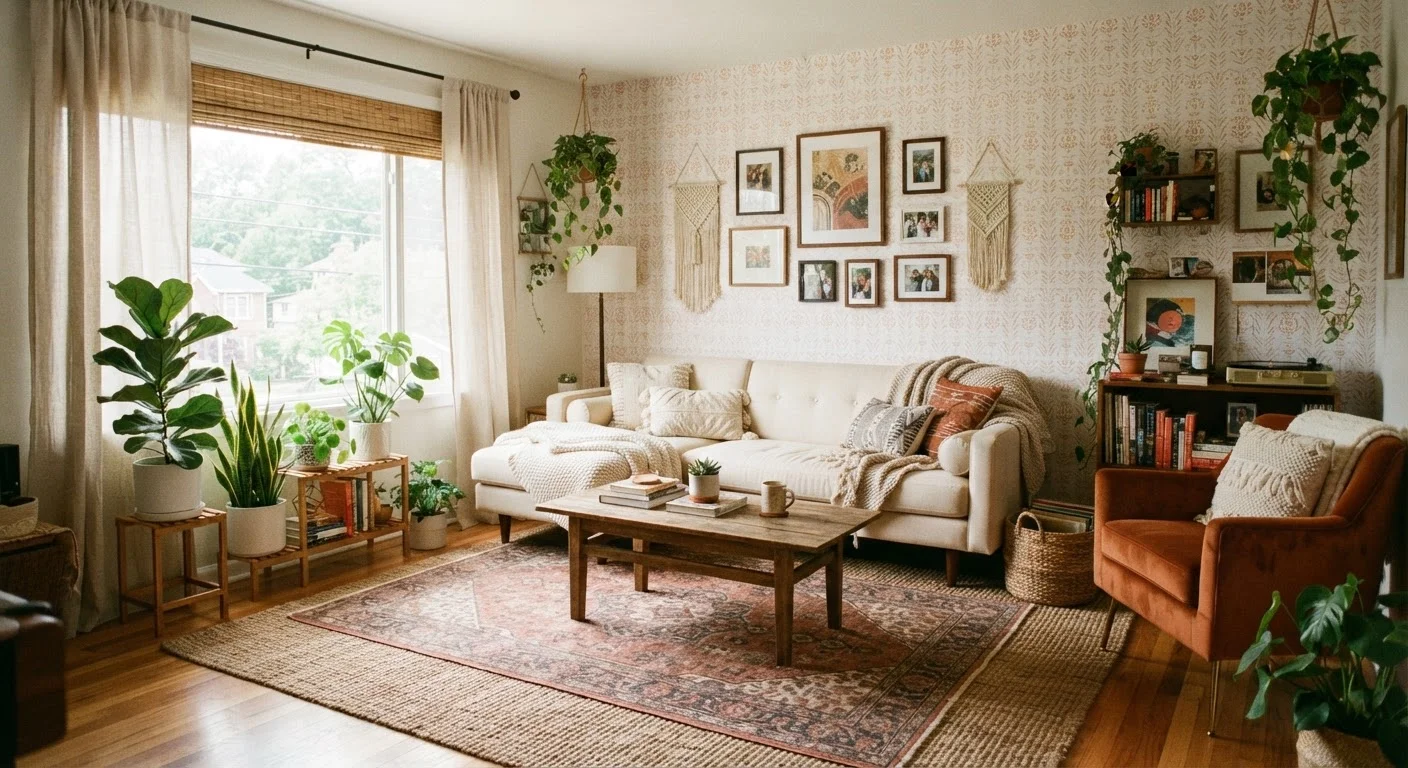
For the living room, furniture placement is one of the most powerful free tools available to you. If your current layout feels cramped or awkward, rethinking the arrangement can transform how a room functions and feels. Our guide on arranging furniture in tight spaces walks through this step by step.
If you share your space with a roommate or partner, balancing personal style across shared rooms is its own challenge. Organizing a shared living space offers practical strategies for making a home feel cohesive without erasing individuality.
Keeping Your Refresh Renter-Friendly
The golden rule for any rental upgrade: if you can remove it cleanly in an afternoon, it's probably safe. Command strips, tension rods, removable wallpaper, and peel-and-stick tiles have all improved dramatically in quality and are widely available. When in doubt about a specific change - especially anything involving walls, fixtures, or permanent adhesives - ask your landlord in writing first. A simple email exchange creates a paper trail that protects both parties.
If you're still in the process of finding a rental or evaluating a new unit, think ahead during showings. Our checklist of questions to ask a landlord during a showing includes what to ask about decoration policies and alteration rules before you commit.
This article is for general informational and educational purposes. Always review your individual lease agreement and consult your landlord before making any changes to your rental unit. Local laws and lease terms vary.