

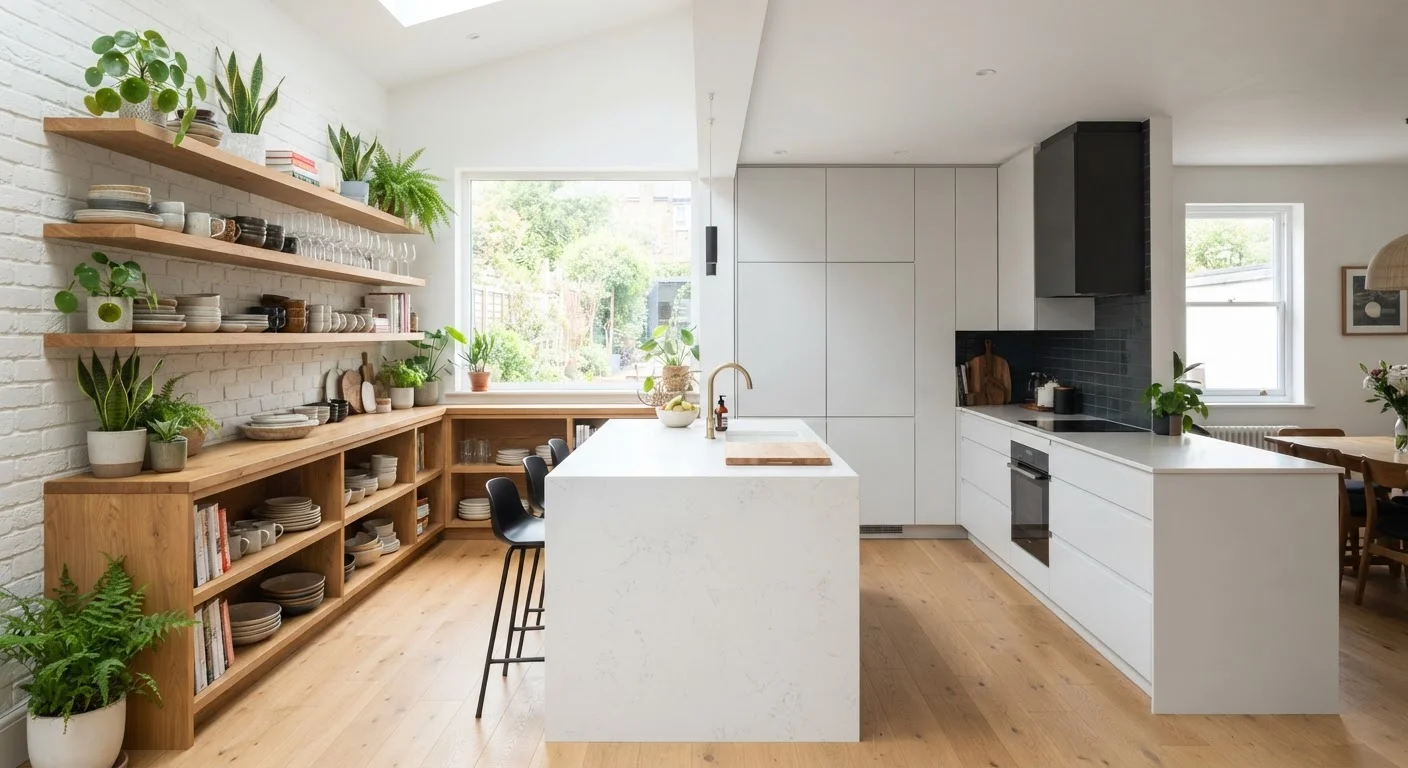
Key Takeaways
Makes rooms feel larger and more open
Removing visual barriers created by cabinet doors allows the eye to travel further, which is especially noticeable in smaller kitchens or open-plan layouts.
Encourages mindful, curated storage habits
When items are always visible, most homeowners naturally pare down to what they actually use, reducing unnecessary accumulation over time.
Items are easier to access and locate quickly
No doors to open and close means frequently used dishes, glasses, and pantry staples are genuinely faster to grab during meal prep.
Adds visual warmth and personality to a space
A well-styled open shelf - mixing textures, plants, and everyday objects - can serve as a design feature rather than just a functional surface.
Requires frequent dusting and wiping
Cooking releases grease and steam that settles on exposed surfaces; open shelves near the stove can visibly accumulate residue within days.
Every item is permanently on display
Mismatched containers, worn-out dishes, or everyday clutter become part of the room's visual landscape with no door to hide them.
Less forgiving of disorganized households
In homes where tidying is inconsistent or multiple people share the space with different habits, open shelving can amplify rather than solve disorder.
Exposed items gather dust when unused
Decorative pieces or rarely used dishes on open shelves need regular cleaning even if they haven't been touched, adding maintenance time.
Our Verdict
Open shelving rewards homeowners who keep tidy spaces and enjoy curating a display. Closed cabinets are the more forgiving, practical choice for busy households or anyone who prefers a low-maintenance kitchen. For most people, a thoughtful combination of both delivers the best balance of style and function.
Open shelving suits design-conscious, organized homeowners; closed cabinets suit those who prioritize ease and privacy over display.
The Real Difference Isn't Looks - It's Upkeep
When homeowners picture open shelving, they imagine styled ceramics, lush herbs, and artfully stacked cookbooks. The reality, day-to-day, involves grease film, dust accumulation, and every item in plain sight at all times. That's not a reason to dismiss open shelves - it's simply what they demand.
Closed cabinets, on the other hand, ask much less of you visually. Doors conceal mismatched containers, half-used pantry items, and everyday disorder. What they ask instead is thoughtful organization inside, because clutter behind a door can become inaccessible chaos surprisingly quickly.
Understanding this distinction upfront keeps you from making a storage decision based purely on Instagram-worthy photos and then resenting it six months later. As we note in our piece on common decorating myths, the gap between a styled space and a lived-in one is often where design decisions go wrong.
Open Shelving: Pros and Cons
Open shelves have genuine advantages for the right household. They make a kitchen feel larger and more connected to the rest of a room - a meaningful benefit in compact spaces. They also force a kind of intentionality: when everything is visible, most people naturally reach for what they use regularly and stop accumulating things they don't.
Makes rooms feel larger and more open
Removing visual barriers created by cabinet doors allows the eye to travel further, which is especially noticeable in smaller kitchens or open-plan layouts.
Encourages mindful, curated storage habits
When items are always visible, most homeowners naturally pare down to what they actually use, reducing unnecessary accumulation over time.
Items are easier to access and locate quickly
No doors to open and close means frequently used dishes, glasses, and pantry staples are genuinely faster to grab during meal prep.
Adds visual warmth and personality to a space
A well-styled open shelf - mixing textures, plants, and everyday objects - can serve as a design feature rather than just a functional surface.
That said, open shelving's drawbacks are equally real. Cooking generates airborne grease and steam, which settles on exposed dishes and surfaces. A shelf near the stove may need wiping down weekly. Items not used frequently collect dust faster than most homeowners anticipate.
Requires frequent dusting and wiping
Cooking releases grease and steam that settles on exposed surfaces; open shelves near the stove can visibly accumulate residue within days.
Every item is permanently on display
Mismatched containers, worn-out dishes, or everyday clutter become part of the room's visual landscape with no door to hide them.
Less forgiving of disorganized households
In homes where tidying is inconsistent or multiple people share the space with different habits, open shelving can amplify rather than solve disorder.
Exposed items gather dust when unused
Decorative pieces or rarely used dishes on open shelves need regular cleaning even if they haven't been touched, adding maintenance time.
Open shelves also expose your storage habits to every guest. If your household includes multiple people with different tidying standards - something worth considering if you've thought through organizing a shared living space - open storage can become a recurring source of friction.
Closed Cabinets: What They Ask In Return
Closed cabinetry is the dominant choice in American kitchens for good reason: it tolerates imperfection. Doors close, disorder disappears, and the room looks pulled-together with minimal effort. For households managing busy schedules, young children, or varied organizational habits, that forgiveness has real value.
Cabinet Depth Can Work Against You
Standard upper cabinets run 12 inches deep and base cabinets 24 inches - enough depth to hide a surprising amount of disorganization. If you choose closed cabinetry throughout, consider pull-out shelves or drawer inserts for lower cabinets to keep the full depth usable. Without them, rear storage often goes to waste and items at the back get forgotten entirely.
The trade-off is that cabinet interiors can become black holes. Without a deliberate system - shelf dividers, labeled bins, or consistent zones for different categories - items migrate to the back and get forgotten. Studies on food waste frequently point to poor pantry visibility as a contributing factor.
Cabinetry also has a stronger visual weight than open shelving. In a smaller kitchen or an open-plan layout where the kitchen is visible from a living area, a wall of cabinet doors can feel imposing. If you're working with limited square footage, our guide to arranging furniture in tight spaces covers visual lightening techniques that translate to kitchen planning too.
Making the Hybrid Approach Work
Most designers and experienced homeowners land on the same practical answer: use both. Open shelves work best for items you reach for daily - glasses, plates, a few frequently used pantry staples - where their accessibility is a genuine convenience. Closed cabinets handle the rest: cleaning supplies, rarely used appliances, overflow stock, and anything visually inconsistent.
42%
Homeowners who use a mix of open and closed storage
According to Houzz's North American kitchen trends surveys, a significant share of renovating homeowners incorporate both open shelving and closed cabinetry in the same kitchen.
~30%
Cabinet contents typically unused after one year
Organization experts commonly estimate that roughly a third of stored kitchen items go unused for a year or more, highlighting the risk of hidden clutter in closed cabinets.
A common hybrid layout places open shelving on one or two walls at eye level, reserving upper cabinets with doors for less-used storage. Lower cabinets almost always benefit from doors, since low open shelving in a kitchen collects debris quickly and can feel visually cluttered at floor level.
When planning display areas, the same principles that apply to hanging art on walls - thoughtful spacing, consistent visual weight, intentional grouping - translate directly to styling open shelves. A few well-chosen items displayed with breathing room almost always outperform a shelf packed to capacity.
Before committing, spend a week noticing how your household actually uses your kitchen: which items come out every day, which live at the back of a cabinet untouched for months, and how quickly surfaces accumulate mess after cooking. Those observations will tell you more than any design trend.