

Key Takeaways
Why Between-Inspection Monitoring Matters
Professional roof inspections are typically recommended every one to three years, but a lot can change between visits. A single severe storm, a clogged gutter, or a branch dragged across shingles can start a chain of damage that worsens quietly for months. The good news: you don't have to climb onto your roof - or spend money - to stay informed about its condition.
The goal of between-inspection care isn't to replace professional evaluation. It's to give you enough situational awareness that you can act quickly when something changes and bring useful observations to your next professional visit. Early detection almost always means lower repair costs and fewer emergency calls. For a broader picture of what your home may be signaling, see reading your home's warning signs before they escalate.
Season-by-Season Checks You Can Do Yourself
Organizing your observations by season keeps the habit manageable and ensures nothing gets skipped.
Spring
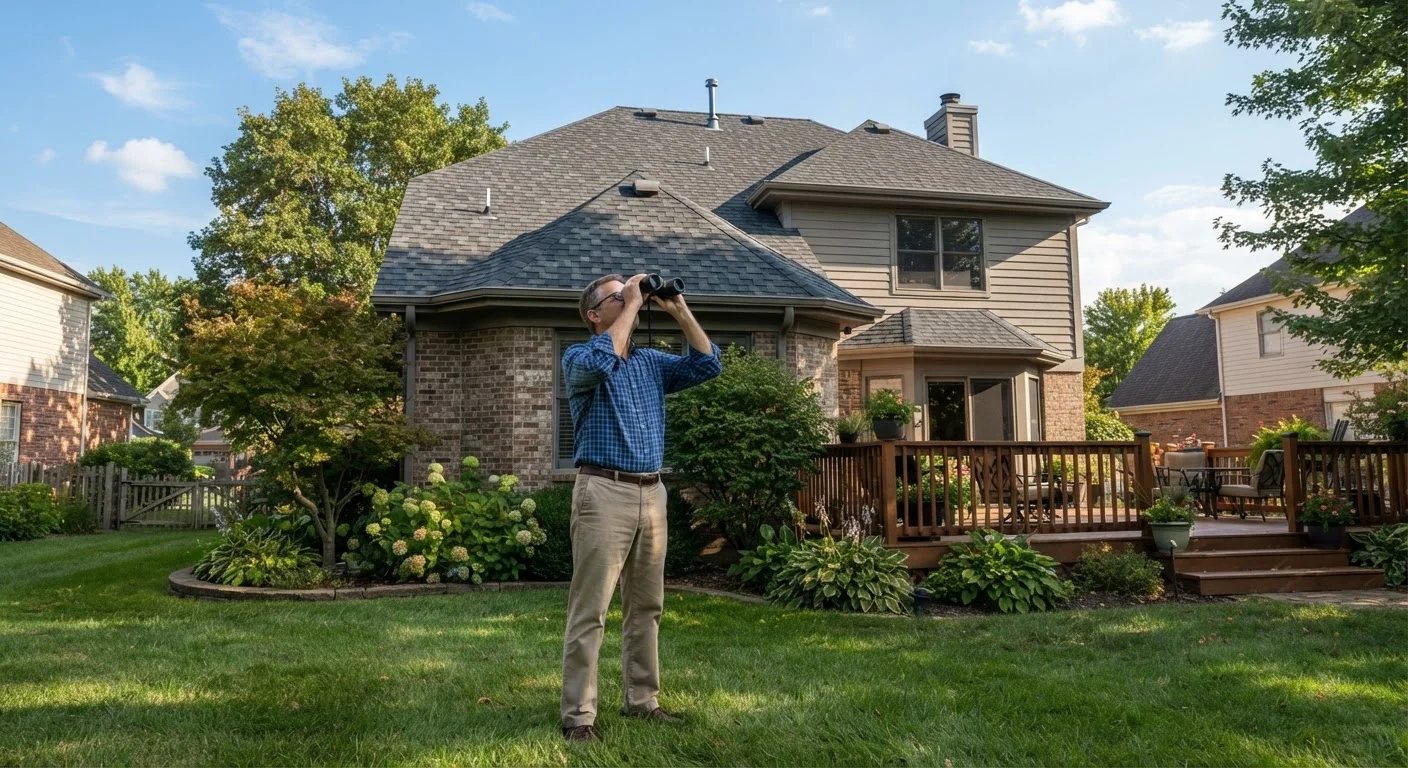
After winter's freeze-thaw cycles, walk the perimeter of your home and scan the roof surface with binoculars. Look for shingles that are buckled, curled at the edges, or appear darker in patches (a sign of moisture retention). Check for granule accumulation in your gutters - a heavy layer suggests shingle surfaces are deteriorating. Spring is also when ice-dam damage becomes visible. Our spring home inspection checklist covers the full post-winter review.
Summer
After any significant wind or hail event, scan for lifted shingles, exposed nail heads, or debris lodged near roof valleys (the V-shaped channels where two roof planes meet). High heat can accelerate shingle brittleness, so note any areas where shingles look cracked or dry.
Fall
Clear leaves and debris from the roof surface if you can reach it safely from a ladder at the eaves - but do not step onto the roof surface itself. Ensure all gutters and downspouts are clear before the first freeze. Blocked drainage forces water under shingles. For a deeper dive, see why gutters deserve more attention than they get.
Winter
Monitor your attic temperature. If it's much warmer than outside, heat is escaping through the roof deck - a condition that promotes ice dams. After heavy snowfall, watch for icicles along the eave line, which signal heat loss and poor ventilation rather than normal cold-weather behavior.
Use binoculars for all ground-level roof inspections - never climb the roof surface yourself.
Roof surfaces are sloped, often slippery, and cause serious falls even for experienced homeowners. A good pair of binoculars lets you examine shingle condition, ridge lines, and flashing from the safety of your yard. The detail you can gather is often sufficient to identify problems worth flagging for a professional.
Document every observation with dated photographs stored in a dedicated folder.
Roof deterioration is gradual, and it can be hard to notice change without a baseline. A dated photo log lets you compare conditions season to season and gives a roofing professional concrete evidence to work from. It can also be useful when filing insurance claims after storm damage.
Keep gutters and downspouts clear at least twice a year, and after major storms.
Clogged gutters force water to pool against the roof's edge and fascia board, accelerating rot and increasing the risk of water infiltrating under shingles. This is one of the most preventable causes of roof and soffit damage, and clearing gutters is a task most homeowners can handle safely from a stable ladder at eave height.
After any severe weather event, do a complete visual check within 48 hours.
Wind, hail, and heavy ice can cause damage that isn't obvious but worsens quickly once the next rain arrives. A prompt inspection - even just a walk around the house with binoculars - means you can catch lifted shingles or displaced flashing before water finds its way inside.
Monitor your attic's temperature and moisture levels as a proxy for roof health.
An attic that's significantly warmer than outdoor temperatures in winter, or that smells musty in summer, signals ventilation or moisture problems that often originate at the roof. Catching these conditions early prevents insulation damage, mold growth, and structural rot in the roof deck.
Attic Checks: Your Best Early-Warning Tool
Your attic is where roof problems announce themselves before they become visible inside your living space. Schedule a brief attic check at least twice a year - ideally in fall and spring.
Bring a flashlight and look for:
- Water stains or dark streaks on the underside of the roof deck (the boards directly under your shingles)
- Daylight visible through the decking - any pinhole of light means there's a gap
- Damp or compressed insulation, which loses effectiveness and can harbor mold
- Rust on metal straps or fasteners, a sign of recurring moisture
If you find any of these, note the location, photograph it with your phone, and contact a licensed roofing professional. Do not attempt to seal gaps in the roof deck from inside the attic - this is work that must be done from the roof surface by someone qualified to do it safely.
When to Call a Professional Immediately
Some findings shouldn't wait for your next scheduled inspection. Contact a licensed roofing professional promptly if you find active water staining in the attic after rain, daylight visible through the roof deck, multiple missing or severely damaged shingles, or any sign that flashing has separated from a chimney, vent, or skylight. These conditions allow water infiltration to accelerate rapidly. Always verify that any contractor you hire is licensed and insured in your state.
What's Safely in Your Hands - and What Isn't
Knowing where the line is between DIY monitoring and professional repair protects both you and your roof.
Safe for most homeowners: ground-level visual checks, attic inspections, cleaning gutters from a ladder at eave height, removing lightweight debris from accessible low slopes, and photographing problem areas to share with a pro.
Requires a licensed professional: walking on the roof surface, replacing or re-sealing flashing (the metal strips around chimneys, vents, and skylights), repairing or replacing shingles, and any work involving the roof's structural decking. These tasks involve fall risk, permit requirements in many jurisdictions, and technical knowledge that goes beyond typical DIY capability. If you're unsure whether a repair calls for professional help, the framework in DIY vs. hiring a pro can guide your decision.
This article is part of a larger system for staying ahead of home maintenance. The full seasonal framework - covering roofing, HVAC, plumbing, and more - is organized in Home Maintenance from the Ground Up.
This article provides general home maintenance information for educational purposes only. For work involving structural components, electrical systems, or tasks requiring permits, always consult a licensed, qualified professional and verify local code requirements before proceeding.