

Key Takeaways
Why Gutters Cause Bigger Problems Than They Get Credit For
Gutters sit at the exact intersection of roof and foundation - two of the most expensive systems in your home. Their job sounds simple: move rainwater from the roof to a safe distance from the house. When they do that job well, you never think about them. When they fail, the consequences work their way silently into your walls, basement, and soil for months before the damage becomes obvious.
If you're building your seasonal maintenance habits from the ground up, understanding what can go wrong with gutters is a practical starting point. As part of a complete seasonal home maintenance system, gutters deserve a spot on your checklist every spring and fall - not as an afterthought, but as genuine prevention.
Foundation Damage Is the Costliest Outcome
When gutters consistently overflow near the foundation, water saturates the soil around your home's base. Over time, this hydrostatic pressure can cause foundation cracks, basement leaks, and settling - repairs that often run into the tens of thousands of dollars. Addressing gutter problems early is one of the most cost-effective forms of home protection available.
The Most Common Gutter Mistakes - and How to Correct Them
Most gutter problems don't start with a single dramatic event. They accumulate through small, repeated oversights. The errors below are among the most common ones home inspectors encounter - and the good news is that nearly all of them are correctable before permanent damage sets in.
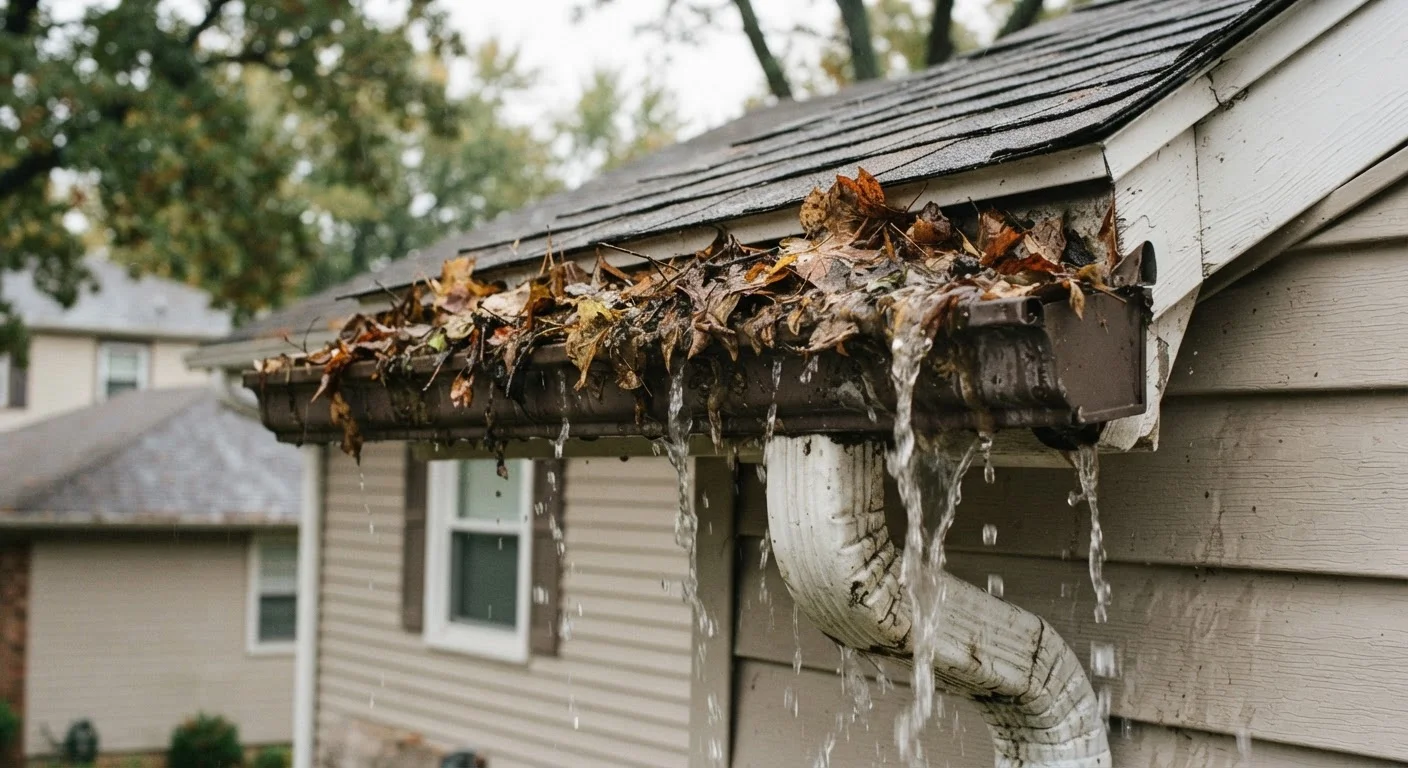
Cleaning gutters only once a year, typically in spring.
Why it happens: Spring cleaning feels intuitive because everything else in the yard gets attention then. Homeowners often forget that fall leaf drop is the heaviest loading event gutters face all year.
Ignoring downspout drainage, focusing only on the gutter channel itself.
Why it happens: The gutter trough is visible and easy to inspect; downspouts are less obvious and their outlet locations are easy to overlook once the immediate debris is cleared.
Letting gutters sag or pull away from the fascia without reattaching them promptly.
Why it happens: Minor sagging looks cosmetic and easy to defer. In reality, even a small pitch change causes standing water, accelerating rust in metal gutters and allowing overflow at low spots.
Assuming gutter guards eliminate the need for any further maintenance.
Why it happens: Gutter guards are marketed as a long-term solution, and many homeowners install them and never look up again. Fine debris - shingle grit, seeds, pine needles - still accumulates on top of or inside most guard systems.
Overlooking the fascia and soffit behind the gutter for signs of rot or moisture damage.
Why it happens: When attention is on clearing debris, the wood underneath rarely gets examined. Rot can develop gradually and go unnoticed until gutters begin pulling away from the roofline structurally.
Skipping gutter inspection after major storms, wind events, or ice dam episodes.
Why it happens: Post-storm inspections feel like extra work when no visible interior damage occurred. But gutters take direct hits from branches and debris, and ice dams can bend or crack sections that look fine from a distance.
For a broader look at the kinds of signals your home sends when something is quietly going wrong, see our guide to reading your home's warning signs before they become emergencies.
Seasonal Timing: When to Inspect and What to Look For
Timing your gutter attention to the right seasons makes the work more effective and easier to sustain as a habit.
~$10,000
Average cost of foundation repair
The Foundation Repair Association notes that water-related foundation damage is among the most common and expensive home repairs homeowners face.
2x/year
Minimum recommended gutter cleaning frequency
Most home maintenance authorities, including the American Society of Home Inspectors, recommend at least two cleanings annually as a baseline.
4 feet
Minimum downspout discharge distance from foundation
Building science guidelines widely recommend directing downspout water at least four feet away from the structure to prevent soil saturation near the foundation.
- Late spring: Clear out pollen, seed pods, and debris left from winter. Check for joints that may have shifted during freeze-thaw cycles.
- After fall leaf drop: This is the most important cleaning of the year. Leaves that sit wet through winter can compress into a dam that holds moisture against fascia wood for months.
- Post-storm: A quick ground-level visual check after significant wind or ice events takes minutes and can catch bent sections or disconnected downspouts before they cause overflow damage.
Fall is also the right moment to address any gaps in weatherproofing more broadly. Our fall weatherproofing guide covers what else to tackle before temperatures drop.
Ladder Safety Around Gutters Is Non-Negotiable
Most gutter-related falls happen when homeowners use the wrong ladder type or lean too far to one side. Always use a four-legged stepladder or a ladder stabilizer rather than leaning an extension ladder against the gutter itself. If your roofline is more than one story or the pitch is steep, hire a professional - no cleaning task is worth a serious fall.
From the ground, watch for: water stains or mildew streaks on siding below gutters, soil erosion near downspout outlets, paint peeling on fascia boards, and any visible sag in the gutter line. You don't need to climb a ladder to spot most early warning signs - a ground-level inspection approach works here just as well as it does for roof monitoring.