

Key Takeaways
Your House Is Always Communicating
Homes don't fail overnight. Behind most expensive repair bills is a warning that showed up weeks or months earlier - a faint stain, an unfamiliar smell, a sound that wasn't there last season. The challenge isn't that these signals are invisible; it's that homeowners often don't know what they mean.
Learning to read your home's physical cues is one of the highest-value habits you can develop. It costs nothing, requires no special tools for the basics, and can prevent minor issues from graduating into major structural or safety problems. If you're newer to homeownership, our guide on understanding home upkeep fundamentals is a strong complement to what follows here.
The seven warning signs below cover the most common - and most misread - signals your house sends. Each one points to a specific system, a likely cause, and a clear next step.
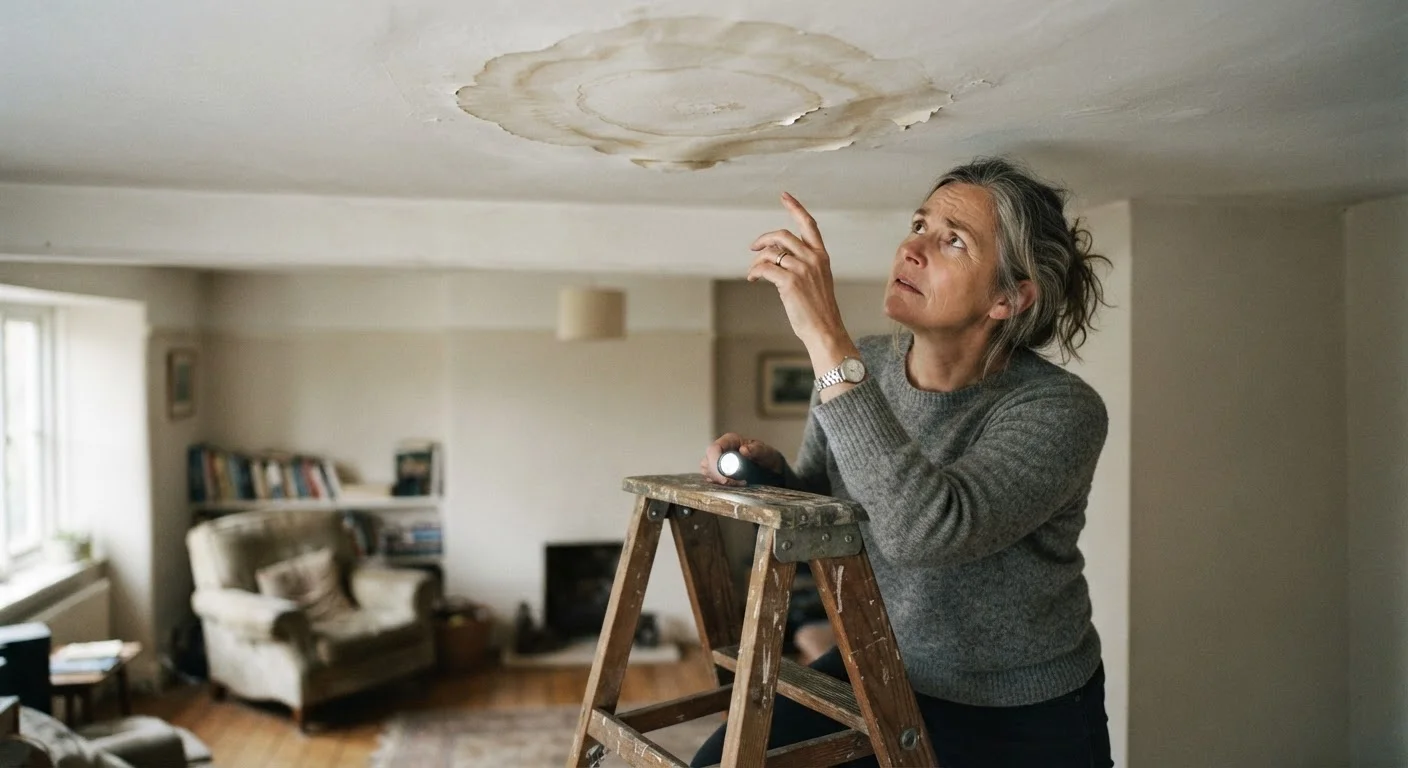
Brown or yellow ceiling stains
A discolored patch on your ceiling almost always means water has been present - either from a slow roof leak, a plumbing drip above, or condensation from an HVAC component. The stain itself is dried residue; the active problem is usually still happening.
Don't paint over it and move on. First, identify the floor above or the roof section overhead and look for the source. Check for soft or sagging drywall around the stain, which indicates ongoing moisture. For roof-related leaks, our article on safe roof monitoring between inspections walks through what you can assess without climbing up.
Painting over a ceiling stain hides the symptom while the underlying problem continues unaddressed.
Musty or sulfur odors
A persistent musty smell - especially in basements, crawl spaces, or behind walls - typically signals mold or mildew growth driven by hidden moisture. This isn't a cosmetic issue; mold can affect indoor air quality and, over time, degrade building materials.
A rotten-egg or sulfur smell is a different matter entirely. That odor is added to natural gas specifically so people can detect leaks. If you smell it, do not use light switches, open flames, or any electrical device. Leave the building immediately and call your gas utility from outside. This is not a situation for investigation or DIY troubleshooting.
A sulfur smell indoors is a gas-leak signal - leave the building immediately and call your utility.
Doors and windows that suddenly stick or gap
Wood naturally expands and contracts with humidity, so some seasonal sticking is normal. But if a door that always latched cleanly now requires force, or a window that fit snugly now shows a visible gap at the frame, that's worth investigating further.
Sudden changes in how doors and windows operate can point to foundation settling, soil movement, or moisture damage to framing. Diagonal cracks radiating from door or window corners - especially in drywall - often appear alongside this symptom and reinforce the concern. A structural engineer or experienced contractor can assess whether the movement is cosmetic or load-bearing.
Diagonal cracks at door corners, paired with sticking, may signal foundation movement rather than simple settling.
Running or gurgling water sounds with no fixture in use
If you can hear water moving through pipes when no faucet, toilet, or appliance is running, that's a flag for a potential leak somewhere in the supply or drain system. A continuously running toilet is the most common culprit and wastes a significant amount of water over time, but in-wall pipe leaks are also possible.
A useful check: locate your water meter, record the reading, don't use any water for 30 minutes, then read it again. If the number changed, water is flowing somewhere it shouldn't be. A licensed plumber can isolate the source. For water heater-specific sounds like popping or rumbling, those often indicate sediment buildup - see our guide on water heater maintenance and inspection for more detail.
A simple meter test - no water use for 30 minutes - can confirm whether a hidden leak is present.
Peeling paint or bubbling wallpaper on interior walls
Paint or wallpaper that blisters, peels, or bubbles on an interior wall almost always indicates moisture behind the surface. On exterior walls, this can mean water is infiltrating through siding, windows, or flashing. On interior walls, it often points to a plumbing leak or high humidity without adequate ventilation.
This symptom is common in bathrooms and kitchens where steam is frequent and ventilation may be inadequate. Check that exhaust fans are actually venting to the outside - some older installations vent into the attic, which creates its own moisture problems. If the bubbling appears near an exterior wall after rain, inspect the outside for gaps in caulking, damaged siding, or failed window seals. Completing fall weatherproofing tasks each year helps prevent many of these infiltration points from developing.
Bubbling paint on exterior-facing walls after rain is a reliable sign of water infiltration from outside.
Flickering lights or frequently tripping breakers
Occasional breaker trips are normal when a circuit is genuinely overloaded - running too many high-draw appliances at once, for instance. But a breaker that trips repeatedly under normal use, or lights that flicker without an obvious cause, can indicate loose connections, an overloaded circuit, or wiring that's deteriorating.
Electrical issues carry fire and shock risk and are not appropriate for DIY diagnosis beyond identifying the pattern and affected circuits. A licensed electrician should evaluate any persistent flickering, breakers that trip without clear cause, or outlets that feel warm to the touch. Check that your smoke detectors are functional and properly placed - electrical fires often start slowly, and early detection matters.
Warm outlets and repeated breaker trips under normal load are electrical warning signs that warrant a licensed electrician.
Cracks in the foundation, exterior walls, or driveway
Not all cracks are equal. Hairline cracks in concrete or stucco are common as materials cure and settle, and many are purely cosmetic. The cracks that warrant closer attention are those that are wider than about 1/4 inch, horizontal (especially in basement walls), or showing displacement - where one side of the crack is higher than the other.
Horizontal cracks in basement or foundation walls can indicate lateral pressure from soil, which is a structural concern. Stair-step cracks in brick or block work often follow mortar joints and may signal differential settling. If you notice any of these patterns expanding over time, have a structural engineer or foundation specialist evaluate them. Document cracks with photos and dates so you can track whether they're active or stable.
Horizontal or displaced foundation cracks are more serious than vertical hairline ones - document and monitor any you find.
Building the Habit of Regular Observation
Reading warning signs isn't about living in a state of anxiety about your home - it's about building a simple, seasonal rhythm of observation. A deliberate walk-through each spring and fall, checking the areas covered above, puts you in front of most problems before they escalate. Pay particular attention after heavy rain, the first hard freeze, or any period of unusual heat.
Make Seasonal Walk-Throughs a Routine
Set a recurring reminder each spring and fall to spend 20-30 minutes walking your home's interior and exterior with fresh eyes. Bring a flashlight for attic and crawl space checks and a phone to photograph anything unusual. Comparing photos from one season to the next makes it much easier to spot gradual changes - a slowly widening crack or a new stain - that might otherwise go unnoticed.
Keep a basic log - even a phone note - of anything that looks, sounds, or smells different. Patterns across seasons are often more telling than a single observation. When you do spot something concerning, having repair funds set aside means you can respond quickly rather than waiting and letting the problem worsen.
For issues involving electrical systems, gas lines, structural elements, or roofing, always consult a licensed professional. Many warning signs are safe to monitor and investigate yourself - but some cross into territory where DIY action creates more risk than it resolves. When in doubt, get a qualified opinion before proceeding.