

Key Takeaways
Our Verdict
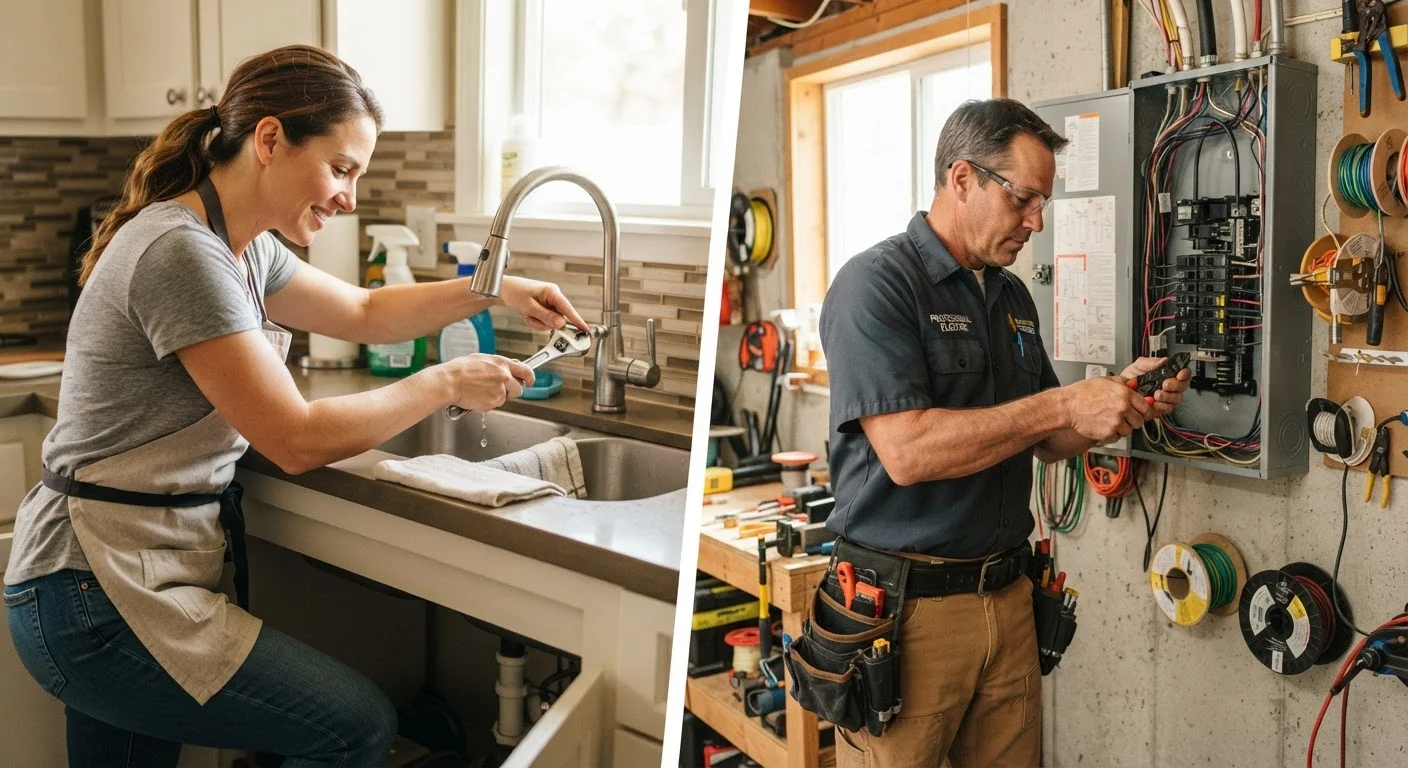
DIY makes sense for low-risk, low-complexity repairs where the cost of a mistake is manageable and no permit is required. Hiring a licensed professional is the right call whenever safety, building codes, or structural integrity are on the line. Matching the job to the right approach protects both your home and your wallet.
| Best for | Recommended |
|---|---|
| Confident, hands-on homeowners tackling routine maintenance | DIY |
| Anyone dealing with electrical, gas, structural, or roofing systems | Hiring a Pro |
| Projects requiring building permits or inspections | Hiring a Pro |
| Cosmetic updates and minor repairs with low failure risk | DIY |
The Four Questions That Drive Every Decision
Before picking up a tool or dialing a contractor, run any repair through four core questions. Your answers will point you toward the right path almost every time.
- What's the safety risk? Work involving electricity, natural gas, load-bearing structures, or heights introduces hazards that can injure or kill. These categories default to professional territory.
- Is a permit required? Many jurisdictions require permits for electrical work, plumbing changes, HVAC modifications, and structural alterations. Unpermitted work can void homeowner's insurance, delay or kill a home sale, and expose you to fines. Always verify with your local building department before starting.
- What's the cost of getting it wrong? A poorly patched drywall hole costs a few dollars to redo. A mishandled pipe repair can flood a finished basement. Weigh the worst-case scenario honestly.
- Do you have the skill and tools? Watching a tutorial is not the same as having practiced technique. Honest self-assessment here prevents the most common DIY regret: starting a job you can't finish correctly.
This framework applies equally whether you're weighing a weekend project or an urgent repair-and it's the same logic behind deciding when professional help is warranted in almost any domain. See how a similar approach plays out in self-care vs. professional support decisions.
Jobs That Belong in the DIY Column
A wide range of common home repairs are well within reach for homeowners with basic tools and patience. These tasks share a few traits: low safety risk, no permit requirement, and a forgiving margin for error.
- Patching drywall - Small holes from nails or doorknobs can be filled with spackle; larger holes up to about six inches are manageable with a patch kit and some practice with joint compound.
- Caulking and weatherstripping - Sealing gaps around windows, doors, and tubs is straightforward and has a meaningful payoff in energy efficiency and moisture prevention.
- Unclogging drains - A drain snake or a simple baking soda-and-vinegar flush handles most slow drains without touching supply lines or drain traps.
- Replacing faucet aerators and showerheads - These swap out with a wrench and plumber's tape, no soldering required.
- Painting interior walls - Preparation (patching, priming, taping) is the hard part; the application itself is approachable for most people.
- Replacing outlet covers and light switch plates - Purely cosmetic swaps that involve no wiring.
- Basic landscaping and gutter cleaning - Ground-level gutter clearing and garden bed maintenance are safe weekend tasks.
Start Small to Build Confidence
If you're new to DIY repairs, pick a low-stakes project first-replacing a showerhead, caulking a tub surround, or patching a small drywall hole. Completing a successful small repair builds the judgment and technique you'll need for more involved work. Document what you did so you can repeat it or hand off accurate information to a pro later.
Having an emergency fund specifically for home repairs changes how confidently you can approach both categories. See our look at building a home maintenance emergency fund to think through that side of the equation.
When You Should Always Hire a Licensed Professional
Certain categories of home repair are not about skill level-they're about safety, liability, and legal compliance. No amount of YouTube research changes these fundamentals.
Don't Let Cost Alone Drive the Decision
It's tempting to attempt a complex repair to avoid a contractor bill, but the math can backfire quickly. A DIY electrical or plumbing mistake can cause water damage, fire, or failed inspections that cost far more to remediate than the original job. Factor in the full downside scenario, not just the upfront savings.
- Electrical panel work, new circuits, or wiring - Improper wiring is a leading cause of residential fires. Licensed electricians are required for most panel and circuit work in virtually every U.S. jurisdiction.
- Gas line repairs or appliance connections - A small gas leak can cause an explosion or carbon monoxide poisoning. This is non-negotiable professional territory.
- Structural modifications - Removing or altering walls (especially load-bearing ones), adding rooms, or modifying foundations all require engineering review and permits.
- Roof replacement or significant repair - Working at roof height carries serious fall risk, and improper installation can void manufacturer warranties and create moisture pathways. For safe, ground-level monitoring between professional visits, see our guide on roof care between professional inspections.
- HVAC system repair or replacement - Refrigerant handling is federally regulated and requires EPA certification.
- Main plumbing line work - Connecting to or modifying supply mains or sewer lines requires permits and licensed plumbers in most states.
When evaluating contractors, ask for proof of licensure and insurance, get at least two written estimates, and verify that any required permits will be pulled before work begins. Keep your focus on credentials and process rather than price alone.
The Gray Zone: Jobs That Depend on Your Situation
Some repairs sit in the middle-manageable for an experienced DIYer but reasonably handed off to a pro if your confidence or time is limited.
| Repair Type | DIY-Friendly | Hire a Pro | |
|---|---|---|---|
| Safety risk | Low - cosmetic or minor plumbing | High - electrical, gas, structural | |
| Permit typically required | No | Yes - verify locally | |
| Cost of a mistake | Low to moderate | Potentially severe | |
| Skill needed | Basic tools and patience | Licensed trade certification | |
| Example tasks | Caulking, patching drywall, painting | Panel wiring, gas lines, roof replacement | |
| Insurance / code implications | Minimal | Significant if done incorrectly |
Tile replacement, for example, is physically demanding and requires careful waterproofing in wet areas, but a patient homeowner who preps properly can get good results. Similarly, installing a ceiling fan in an existing ceiling box is within many DIYers' comfort zone, but adding a new circuit for it is not. Know where your project falls.
Interior design updates-flooring installation, cabinet hardware swaps, built-in shelving-often fall here too. Our interior design hub covers many of these projects in depth, with guidance calibrated to realistic skill levels.
When in doubt, a consultation call with a licensed contractor costs little or nothing and gives you a professional read on complexity and risk before you commit either way.