

Key Takeaways
Option A
Added Sugar
The sugar deliberately introduced during food manufacturing or preparation.
Best for: Understanding when sugar contributes calories without accompanying nutrients.
Option B
Natural Sugar
Sugar that occurs intrinsically within whole or minimally processed foods.
Best for: Recognizing sugar that arrives packaged with fiber, vitamins, and other nutrients.
If you're trying to reduce sugar intake for general wellness
Focus on Added Sugar
Cutting added sugars is the evidence-backed approach recommended by major health organizations, while naturally occurring sugars in whole foods rarely need limiting for most healthy adults.
If you're reading a nutrition label and see high total sugar
Natural Sugar
High total sugar in plain yogurt or 100% fruit juice reflects naturally occurring sugars, not necessarily a concern - check the added sugars line to get the real picture.
If you're managing blood sugar or metabolic health
Consult a Healthcare Professional
Both added and natural sugars affect blood glucose. Individual needs vary significantly, and a registered dietitian or physician can give guidance tailored to your health status.
What Makes a Sugar "Added" or "Natural"?
The distinction isn't about chemistry - a glucose molecule doesn't change depending on whether it came from a ripe banana or a factory. What differs is context: where the sugar originated and what came along with it.
Natural sugars are present in foods as they grow or are produced. Lactose in milk, fructose in an apple, and glucose in a beet are all examples. These sugars exist inside a broader nutritional matrix - fiber, water, protein, vitamins, and minerals - that shapes how your body absorbs and uses them.
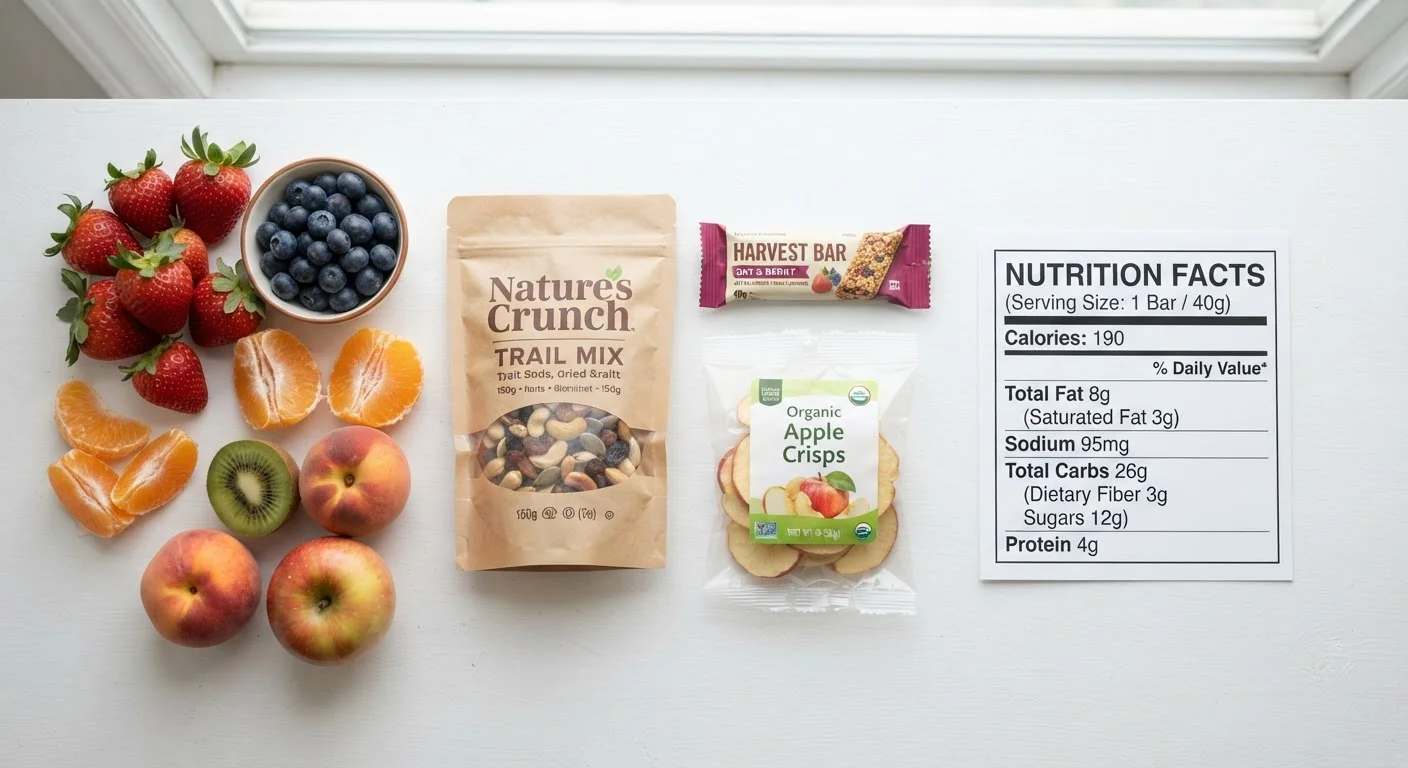
Added sugars, by contrast, are introduced at some point during processing, preparation, or packaging. This category is broad: it includes obvious additions like table sugar stirred into a recipe, but also honey drizzled over granola, high-fructose corn syrup in a soft drink, agave syrup in a protein bar, and concentrated fruit juice used as a sweetener. The U.S. Food and Drug Administration (FDA) defines added sugars as sugars that are either added during processing or are sugars from syrups, honey, and concentrated fruit or vegetable juices. For a fuller picture of how that definition appears on packaging, see reading a nutrition facts label.
| Criterion | Added Sugar | Natural Sugar |
|---|---|---|
| Origin | Added during manufacturing or preparation | Present in whole food as grown or produced |
| Common examples | Table sugar, corn syrup, honey (added), agave | Lactose in milk, fructose in fruit, glucose in vegetables |
| Nutrient packaging | Typically delivered with few or no other nutrients | Comes with fiber, vitamins, minerals, and water |
| FDA label requirement | Must be listed separately on Nutrition Facts | Included in total sugars; no separate line required |
| Dietary guideline target | Limit to <10% of daily calories (U.S. guidelines) | No specific government limit for most healthy adults |
| Digestion context | Often absorbed quickly without dietary buffers | Fiber and matrix typically slow absorption |
Why the Label Distinction Matters
Since 2020, updated FDA regulations require most food manufacturers to list added sugars as a separate line item beneath total sugars on the Nutrition Facts panel. This was a significant shift - previously, consumers had no reliable way to distinguish between a food that was naturally sweet and one that had been heavily sweetened during manufacturing.
17 tsp
Average daily added sugar intake for U.S. adults
The CDC estimates U.S. adults consume roughly 17 teaspoons of added sugar per day, well above the recommended limit of about 6-12 teaspoons depending on caloric needs.
10%
Recommended daily calorie limit for added sugars
The 2020-2025 Dietary Guidelines for Americans advise that added sugars make up less than 10% of total daily calories for individuals aged 2 and older.
~36%
Share of added sugars from beverages in U.S. diet
According to CDC data, sugar-sweetened beverages - including sodas, energy drinks, and sweetened coffees - account for a substantial portion of added sugar consumption among American adults.
The practical value: two foods can show identical total sugar counts yet tell completely different stories. Plain whole-milk yogurt with 12 grams of total sugar and 0 grams added sugar is nutritionally very different from a flavored yogurt with 12 grams of total sugar that includes 8 grams of added sugar. The former gets its sweetness from naturally occurring lactose; the latter has been sweetened to taste.
This matters because the package deal around natural sugars changes how the body responds. An apple delivers its fructose alongside pectin (a soluble fiber), water, and micronutrients that slow digestion and blunt blood glucose response. A comparable amount of fructose in a sweetened beverage arrives without those buffers. For a deeper look at how fiber interacts with digestion, soluble vs. insoluble fiber explains the mechanisms clearly.
What the Research and Guidelines Actually Say
Major health bodies - including the American Heart Association, the World Health Organization, and the U.S. Dietary Guidelines Advisory Committee - focus their sugar-reduction recommendations specifically on added sugars, not on naturally occurring sugars in whole foods. The 2020-2025 Dietary Guidelines for Americans recommend keeping added sugars below 10% of total daily caloric intake.
Research consistently links high added-sugar consumption to increased risk factors for metabolic conditions, cardiovascular disease, and dental caries, according to reviews published in journals including JAMA Internal Medicine and BMJ. The association with whole-food natural sugars is far less clear-cut and often confounded by the overall dietary pattern.
That said, this distinction is not a green light to eat unlimited quantities of naturally sweet foods. Fruit juice, even 100% juice with no added sugar, has had its fiber removed, making it more comparable to a sweetened beverage than to whole fruit. Context remains important. The relationship between processing and nutrition is broader than sugar alone - the whole foods vs. processed foods spectrum provides useful framing for that wider conversation.
A Note on "Natural" Sweeteners
Honey, maple syrup, and coconut sugar are often marketed as natural alternatives to white sugar. From a regulatory standpoint, these are classified as added sugars when used in food manufacturing or cooking - not as naturally occurring sugars. They contribute similar caloric and metabolic effects to other added sugars, and current evidence does not support treating them as nutritionally superior in meaningful quantities.
This article is for general informational and educational purposes only and is not a substitute for personalized medical or dietary advice. Consult a qualified healthcare professional or registered dietitian for guidance specific to your health needs.