

Key Takeaways
Option A
Soluble Fiber
The gel-forming, blood-sugar-moderating fiber type.
Best for: Supporting cholesterol management, blood sugar balance, and feeding beneficial gut bacteria.
Option B
Insoluble Fiber
The bulk-building, digestive-transit fiber type.
Best for: Promoting regular bowel movements and reducing the risk of constipation.
If you're focused on supporting healthy cholesterol and blood sugar levels
Soluble Fiber
Soluble fiber forms a viscous gel in the gut that can slow glucose absorption and help reduce LDL cholesterol, according to well-established nutrition research.
If you struggle with constipation or irregular bowel movements
Insoluble Fiber
Insoluble fiber adds physical bulk to stool and accelerates transit time, which helps prevent and relieve constipation.
If you want to support a healthy gut microbiome
Soluble Fiber
Many soluble fibers are fermented by beneficial gut bacteria, producing short-chain fatty acids that support colon health.
If you simply want to improve your overall digestive health
Soluble Fiber
A mixed intake of both types from whole plant foods covers the full range of digestive benefits - no need to single out one over the other.
What Makes These Two Fiber Types Different
Dietary fiber is a broad term for the parts of plant foods your body cannot fully digest. But not all fiber behaves the same way once it reaches your digestive system. The key distinction comes down to one property: whether fiber dissolves in water.
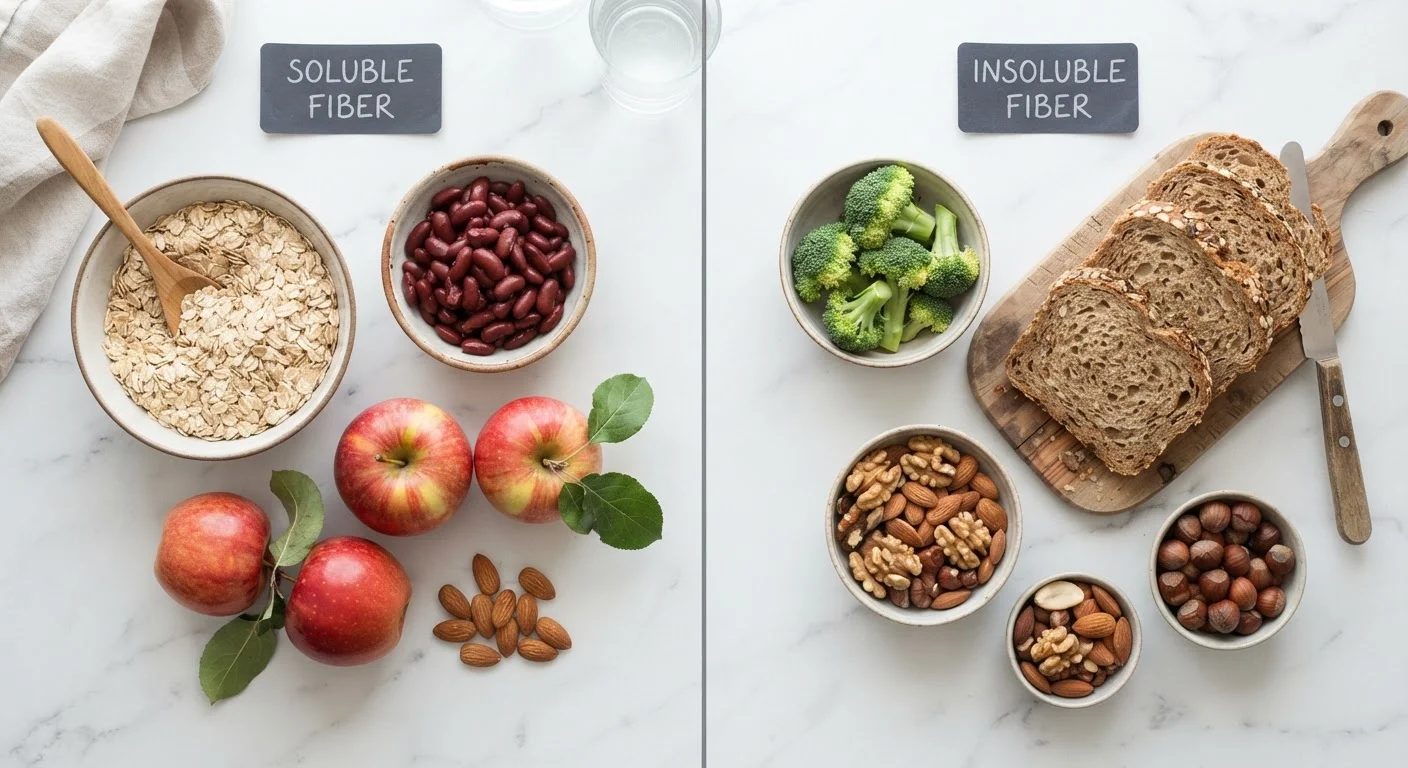
Soluble fiber dissolves in water to form a thick, gel-like substance in the digestive tract. This gel slows the rate at which food leaves the stomach, which in turn moderates how quickly glucose enters the bloodstream. Common soluble fiber sources include oats, barley, legumes (beans, lentils), apples, and citrus fruits.
Insoluble fiber does not dissolve in water. Instead, it absorbs water and adds bulk and texture to stool, helping food move more efficiently through the intestines. Whole wheat products, bran, nuts, seeds, and most vegetables are rich in insoluble fiber.
It's worth noting that most fiber-containing foods provide both types in varying ratios - the distinction is about which type predominates, not an either/or situation. For a broader look at how food processing can affect fiber content, see our guide to whole grains vs. refined grains.
| Criterion | Soluble Fiber | Insoluble Fiber |
|---|---|---|
| Behavior in water | Dissolves; forms a gel | Does not dissolve; absorbs water |
| Primary digestive effect | Slows digestion and nutrient absorption | Adds bulk; speeds intestinal transit |
| Key health associations | Blood sugar moderation, LDL cholesterol | Regularity, constipation prevention |
| Gut microbiome role | Fermented by beneficial bacteria (prebiotic) | Largely passes through unfermented |
| Common food sources | Oats, beans, apples, citrus, barley | Wheat bran, vegetables, nuts, seeds |
| Satiety contribution | High - gel slows stomach emptying | Moderate - adds meal volume and bulk |
What Each Type Actually Does in Your Body
Understanding the physiological role of each fiber type helps clarify why nutrition guidance encourages intake of both, rather than favoring one over the other.
Soluble Fiber's Role
The gel formed by soluble fiber in the small intestine does several things. It slows digestion, which blunts post-meal blood sugar rises - a property that is particularly relevant for people managing blood sugar. It can also bind to bile acids (which contain cholesterol), causing the body to use more cholesterol to produce new bile, effectively lowering circulating LDL cholesterol levels. Additionally, many forms of soluble fiber - particularly those classified as prebiotics, such as inulin and fructooligosaccharides - serve as fuel for beneficial gut bacteria, supporting a diverse microbiome.
Insoluble Fiber's Role
Insoluble fiber works primarily by adding physical bulk to stool and stimulating the muscular contractions of the intestinal walls. This reduces transit time - how long waste spends moving through the colon - which supports regularity and may reduce the risk of constipation. Some research also associates adequate insoluble fiber intake with a reduced risk of diverticular disease, though the relationship is complex and ongoing.
95%
Americans not meeting fiber recommendations
According to data cited by the American Society for Nutrition, approximately 95% of U.S. adults and children fall short of recommended daily fiber intake.
10-15g
Average daily fiber intake in the U.S.
Most Americans consume roughly 10-15 grams of fiber per day, well below the general guidance of around 25-38 grams depending on age and sex.
~10%
LDL cholesterol reduction linked to soluble fiber
Research published in the American Journal of Clinical Nutrition has associated regular soluble fiber intake with LDL cholesterol reductions in the range of 5-10%.
Both fiber types also contribute to satiety - the feeling of fullness after eating - which is a factor in overall energy balance. Because fiber adds volume to meals without adding calories, fiber-rich diets are frequently studied in the context of appetite regulation.
Practical Ways to Get Both Types
The Dietary Guidelines for Americans suggest an intake of around 14 grams of fiber per 1,000 calories consumed - most adults fall well short of this. The good news is that a varied, plant-forward eating pattern naturally delivers both fiber types without requiring close tracking.
Focus on eating a range of whole plant foods: legumes, vegetables, fruits, whole grains, nuts, and seeds. If you're curious about how food processing affects the fiber and nutrient content of your staples, our article on whole foods vs. processed foods provides useful context.
A few practical approaches that nutrition educators commonly recommend:
- Start the day with oats or a high-fiber whole-grain cereal (good soluble fiber source).
- Include beans or lentils in soups, salads, or main dishes several times a week.
- Choose whole grain bread and pasta over their refined counterparts.
- Eat vegetables at most meals, including the skins of vegetables like potatoes and zucchini where edible.
- Snack on fruit rather than fruit juice - juicing removes most of the fiber.
If you're significantly increasing fiber intake, doing so gradually and drinking adequate water helps your digestive system adjust without discomfort. Anyone with a digestive condition - such as irritable bowel syndrome or inflammatory bowel disease - should speak with a healthcare provider before making major dietary changes, as individual tolerance to fiber types can vary considerably.
Fiber Supplements vs. Whole Food Sources
Fiber supplements - such as psyllium husk, which is primarily soluble - can be a useful tool for some people, but they don't replicate the full nutritional package of whole foods, which also provide vitamins, minerals, and phytonutrients. Whole food sources are generally considered the preferred approach by nutrition professionals. If you're considering a fiber supplement, consult a healthcare provider or registered dietitian first, particularly if you take medications, as some fiber supplements can affect drug absorption.
This article is for general informational and educational purposes only and is not a substitute for professional medical or dietary advice. Consult a qualified healthcare provider or registered dietitian for guidance tailored to your individual health needs.