

Key Takeaways
Ultraprocessed Food
Ultraprocessed foods are industrial formulations made largely or entirely from substances extracted or derived from foods - such as refined starches, oils, sugars, and proteins - combined with additives like emulsifiers, artificial flavors, and colorings. They typically contain little or no whole food. Common examples include packaged snacks, ready-to-eat meals, soft drinks, flavored yogurts, and mass-produced breads.
The term comes from the NOVA classification system, developed by researchers at the University of São Paulo, which groups foods into four categories based on the extent and purpose of processing rather than nutrient content alone.
Where the Term Comes From
The word "ultraprocessed" didn't emerge from a government agency or a food company. It was coined in 2010 by a research team led by Carlos Monteiro at the University of São Paulo, who argued that nutrition science had focused too narrowly on individual nutrients - fat, sugar, sodium - and missed something important about how food is made.
Their response was the NOVA classification system, which groups foods into four categories based on the nature, extent, and purpose of the processing applied to them. NOVA is not a nutrient scoring system; two foods with identical macronutrient profiles can land in different NOVA groups depending on how they were produced.
NOVA Group 4 - ultraprocessed foods - is defined by industrial formulation: products manufactured using ingredients and techniques not typically found in home cooking, including hydrogenated oils, modified starches, protein isolates, and a range of additives that serve functional roles like extending shelf life, improving texture, or enhancing palatability. Not all processing is created equal, and NOVA's four-group structure tries to capture those meaningful distinctions.
What Qualifies - and What Doesn't
The boundary between NOVA Group 3 (processed foods) and Group 4 (ultraprocessed) is one that researchers debate and refine. In general, the distinguishing markers of ultraprocessed foods include:
- Use of ingredients rarely found in home kitchens - high-fructose corn syrup, interesterified fats, hydrolyzed proteins
- Presence of additives whose purpose is cosmetic or to increase palatability beyond what basic preservation requires - artificial colors, flavor enhancers, emulsifiers
- Industrial processes like extrusion, molding, or pre-frying that cannot be replicated with standard cooking equipment
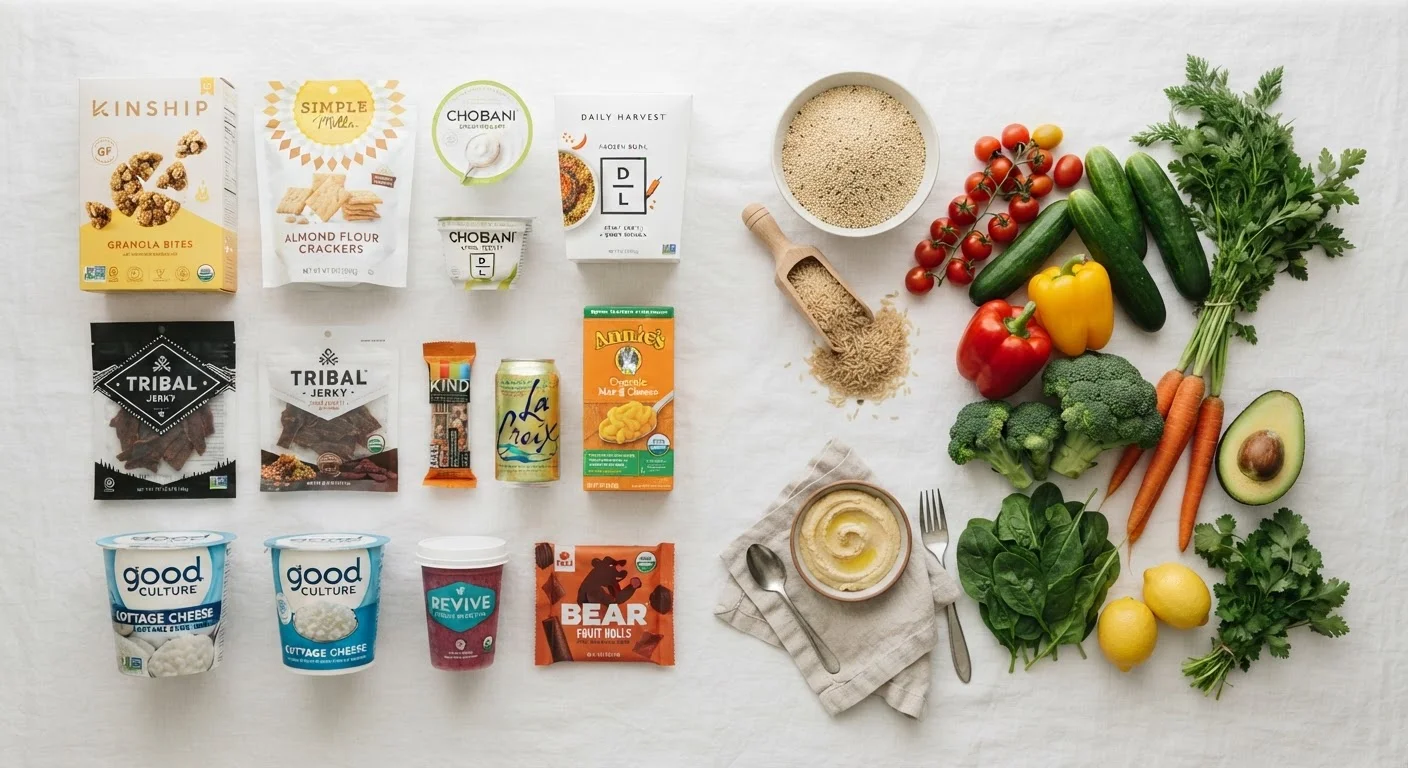
Typical NOVA Group 4 examples: packaged chips and cookies, carbonated soft drinks, flavored instant noodles, some breakfast cereals, mass-produced packaged breads, and many ready-to-eat meals. By contrast, plain canned tomatoes, natural cheese, and frozen vegetables without additives generally fall into Groups 1 through 3. Understanding what changes when grains are processed offers a useful window into how processing affects nutritional composition at a more granular level.
~57%
Share of U.S. calories from ultraprocessed foods
A study published in BMJ Open (Martínez Steele et al., 2017) estimated that ultraprocessed foods contributed roughly 57% of energy intake in a nationally representative U.S. dietary sample.
4
NOVA food processing groups
The NOVA framework, developed at the University of São Paulo, categorizes all foods into four groups based on the nature and extent of industrial processing.
10%
Associated cardiovascular risk increase per serving increment
A 2019 cohort study in The BMJ (Rico-Campà et al.) found a 10% increase in cardiovascular disease risk associated with each 10-percentage-point rise in ultraprocessed food share of diet, though researchers note these are associations, not proven causes.
Why Scientists Keep Studying This Category
The scientific interest in ultraprocessed foods is largely driven by epidemiological data. Large cohort studies - including research published in journals such as The BMJ and JAMA Internal Medicine - have found statistical associations between higher ultraprocessed food intake and increased rates of cardiovascular disease, obesity, certain cancers, and all-cause mortality.
These findings matter, but they come with important caveats. Observational studies can identify associations, not causal relationships. People who eat more ultraprocessed foods may also differ from comparison groups in income, physical activity, stress levels, and overall dietary patterns - all factors that influence health independently. Researchers continue to study the category partly to untangle whether something specific about ultraprocessed formulation drives these associations, or whether they primarily reflect broader lifestyle and socioeconomic patterns.
Several proposed mechanisms are under investigation: displacement of nutrient-dense foods, disruption of appetite-regulating signals due to hyperpalatability, effects of specific additives on the gut microbiome, and faster eating rates linked to the texture of highly processed products. None of these mechanisms is conclusively established as the driver. Research on broader dietary patterns provides helpful context for how scientists study food and health at the population level.
“The NOVA classification is not a judgment about individual foods but a research tool - one that helps scientists ask whether the industrial transformation of food, as a whole, has consequences beyond what we can measure by counting grams of fat or sugar.”
— Carlos Monteiro, Professor of Nutrition and Public Health, University of São Paulo; lead developer of the NOVA classification system
This article is for general informational and educational purposes only and does not constitute medical or dietary advice. Consult a qualified healthcare professional or registered dietitian for guidance specific to your health situation.