

Key Takeaways
Start here
What the Mediterranean Pattern Actually Is
Next
What Goes on the Plate
Go deeper
What Research Has Found
Compare
How It Differs from Typical American Eating
Apply it
Practical Takeaways for Everyday Meals
What the Mediterranean Pattern Actually Is
The Mediterranean eating pattern is not a brand-name diet with a defined rulebook. It is an eating style drawn from the traditional food habits of populations living along the Mediterranean coast - including parts of Greece, southern Italy, Spain, and North Africa - as they were observed in mid-20th-century research.
Nutrition scientists began studying these populations after noticing differences in chronic disease rates compared to northern European and American counterparts. What emerged was less a prescription and more a profile: a consistent emphasis on whole, minimally processed foods, a specific mix of food groups, and a cultural relationship with eating that includes shared meals and varied preparation methods.
It is covered among eating patterns that research has consistently studied because of its unusually large and long-running body of evidence. Understanding it well requires separating the underlying food pattern from the commercial versions often marketed under its name.
Eating pattern
A broad description of the overall combination and frequency of foods someone regularly consumes - as opposed to a specific diet plan with rules and restrictions.
Unsaturated fat
A type of dietary fat - found in olive oil, nuts, and fish - that remains liquid at room temperature and is generally associated with neutral or favorable effects on blood lipids compared to saturated fats.
Legumes
A family of plants that produce seeds in pods, including lentils, chickpeas, black beans, and peas. They are a key protein and fiber source in the Mediterranean pattern.
Observational study
A type of research that watches what people eat and tracks health outcomes over time, without assigning people to specific diets. It can identify associations but cannot prove that one thing directly causes another.
Randomized controlled trial (RCT)
A study design where participants are randomly assigned to different groups - such as different diets - and outcomes are compared. Generally considered stronger evidence than observational studies.
Whole grains
Grains that retain their outer bran and germ layers rather than being stripped down to white flour. Examples include oats, barley, farro, and whole wheat - all of which provide more fiber and nutrients than refined grains.
What Goes on the Plate
The core of the Mediterranean pattern can be broken into tiers by frequency of consumption:
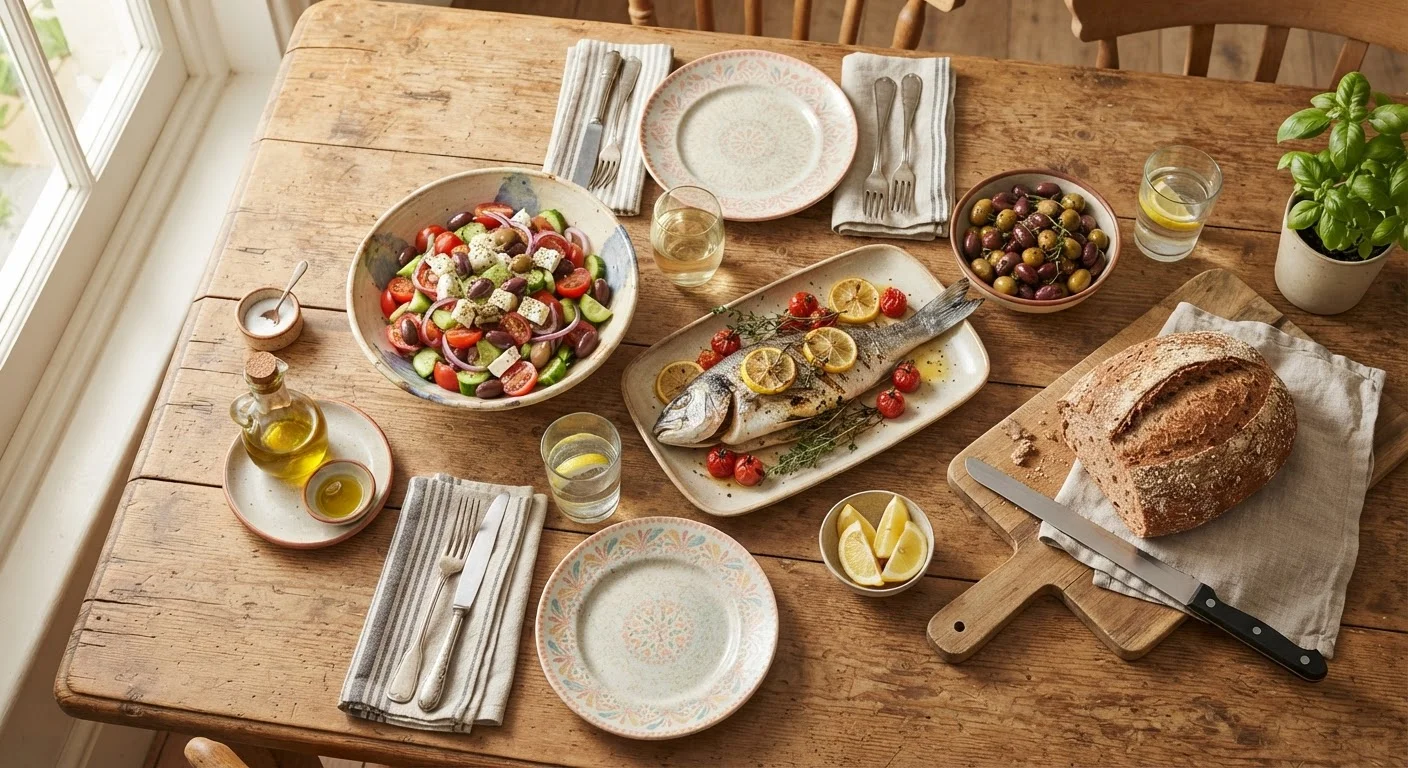
- Daily foundations: Vegetables (in abundance), fruits, whole grains, legumes, nuts, seeds, and extra-virgin olive oil as the primary fat. Herbs and spices replace heavy use of salt.
- Several times per week: Fish and seafood - particularly oily fish such as sardines, mackerel, and salmon - which are valued for their unsaturated fat profile.
- In moderation: Poultry, eggs, and dairy - especially fermented forms like yogurt and aged cheese, consumed in smaller portions than in typical American eating.
- Rarely: Red meat and sweets, treated as occasional rather than daily foods.
Olive oil deserves special mention. It replaces butter and other saturated fats across cooking, dressing, and dipping - a substitution that nutritionally distinguishes this pattern from many Western diets.
For practical guidance on how to structure meals around these principles, see our practical framework for building a more balanced plate.
What Research Has Found
The Mediterranean pattern has been associated in observational and clinical studies with lower rates of cardiovascular disease, improved blood lipid profiles, and better metabolic markers. The PREDIMED trial - a large Spanish randomized controlled study - is frequently cited for finding that participants assigned to a Mediterranean diet supplemented with olive oil or nuts showed reduced rates of major cardiovascular events compared to a low-fat control group.
It is important to be precise about what this research does and does not establish. Observational studies show associations, not causation. Controlled trials show effects in specific study populations under specific conditions. No eating pattern - including this one - has been proven to prevent or cure any disease in any individual.
Association Is Not the Same as Causation
When researchers say the Mediterranean pattern is 'associated with' better health outcomes, they mean the two things tend to appear together in study populations - not that one directly causes the other. Lifestyle factors, socioeconomic conditions, and measurement limitations all shape what studies can and cannot conclude. Keep this distinction in mind when evaluating nutrition headlines.
Researchers also acknowledge that many Mediterranean populations had lifestyle factors beyond diet - physical activity, social cohesion, lower stress - that may have contributed to outcomes. Diet alone is rarely the single explanatory variable.
For a fuller picture of how this and similar patterns have been examined scientifically, the Nutrition Basics hub is a useful starting point.
How It Differs from Typical American Eating
The U.S. dietary landscape - shaped by convenience, processed food availability, and shifting cultural norms - contrasts with the Mediterranean pattern in several concrete ways:
| Food Category | Mediterranean Pattern | Typical American Eating |
|---|---|---|
| Primary fat source | Olive oil (unsaturated) | Butter, processed oils (often saturated or trans) |
| Protein emphasis | Fish, legumes, modest poultry | Red meat, processed meats |
| Grain type | Whole grains (minimally processed) | Refined grains predominate |
| Vegetable intake | Abundant, varied, central to meals | Often a side or afterthought |
| Added sugar | Low; sweets occasional | High; present in many packaged foods |
These differences are structural, not moral. The goal of this comparison is understanding, not judgment - American food culture has its own rich traditions, as explored throughout the Food Culture hub.
Practical Takeaways for Everyday Meals
Adopting elements of the Mediterranean pattern does not require a wholesale overhaul of how you eat. Small, durable shifts tend to be more sustainable than dramatic resets. A few concrete starting points:
- Swap butter for olive oil when sautéing vegetables or making salad dressings.
- Add a serving of legumes - lentils, chickpeas, or white beans - to one or two meals each week.
- Include fish on the menu at least once a week, whether fresh, frozen, or canned.
- Build meals around vegetables first, then add protein and grains rather than the reverse.
- Reduce ultra-processed snacks and packaged foods gradually, replacing them with nuts, fruit, or whole-grain options.
Start with One Swap, Not a Full Reset
Research on habit formation consistently shows that small, specific changes are more likely to stick than sweeping overhauls. Choosing just one Mediterranean-aligned swap - like using olive oil instead of butter this week - is a more realistic entry point than trying to change every meal at once. Build from there at your own pace.
This pattern is also highly adaptable across cultural food traditions. Mediterranean-style eating is a template, not a prescription for any one cuisine. For broader ideas on thoughtful, non-obsessive meal construction, see our guide to building a balanced plate without obsessing over numbers.
And if you want to bring more awareness to how you eat - not just what - mindful eating practices pair naturally with this kind of approach.
This article is for general informational and educational purposes only and is not medical or dietary advice. Consult a qualified healthcare professional before making significant changes to your diet, especially if you have a health condition or specific nutritional needs.