

Key Takeaways
Start here
Why Spending Smarter Isn't About Spending Less
Next
The Budgeting Basics Every Beginner Needs
Then
How to Evaluate Whether a Price Is Actually Fair
Watch out
Common Money Traps and How to Sidestep Them
Finally
Building Habits That Stick
Why Spending Smarter Isn't About Spending Less
The phrase "spend less" sounds like advice but doesn't actually tell you much. Cutting spending indiscriminately - skipping essentials, buying lower-quality items that break faster, or avoiding purchases that would genuinely save money later - can make your financial situation worse, not better.
Smarter spending is a different goal: getting the most durable, appropriate value for every dollar you commit. That might mean spending more in some categories and cutting aggressively in others. The pressures shaping household budgets today make this distinction especially important - cost-cutting without strategy often just shifts financial stress rather than reducing it.
This guide is for readers who are starting from scratch or resetting their approach. No prior financial expertise required.
The Budgeting Basics Every Beginner Needs
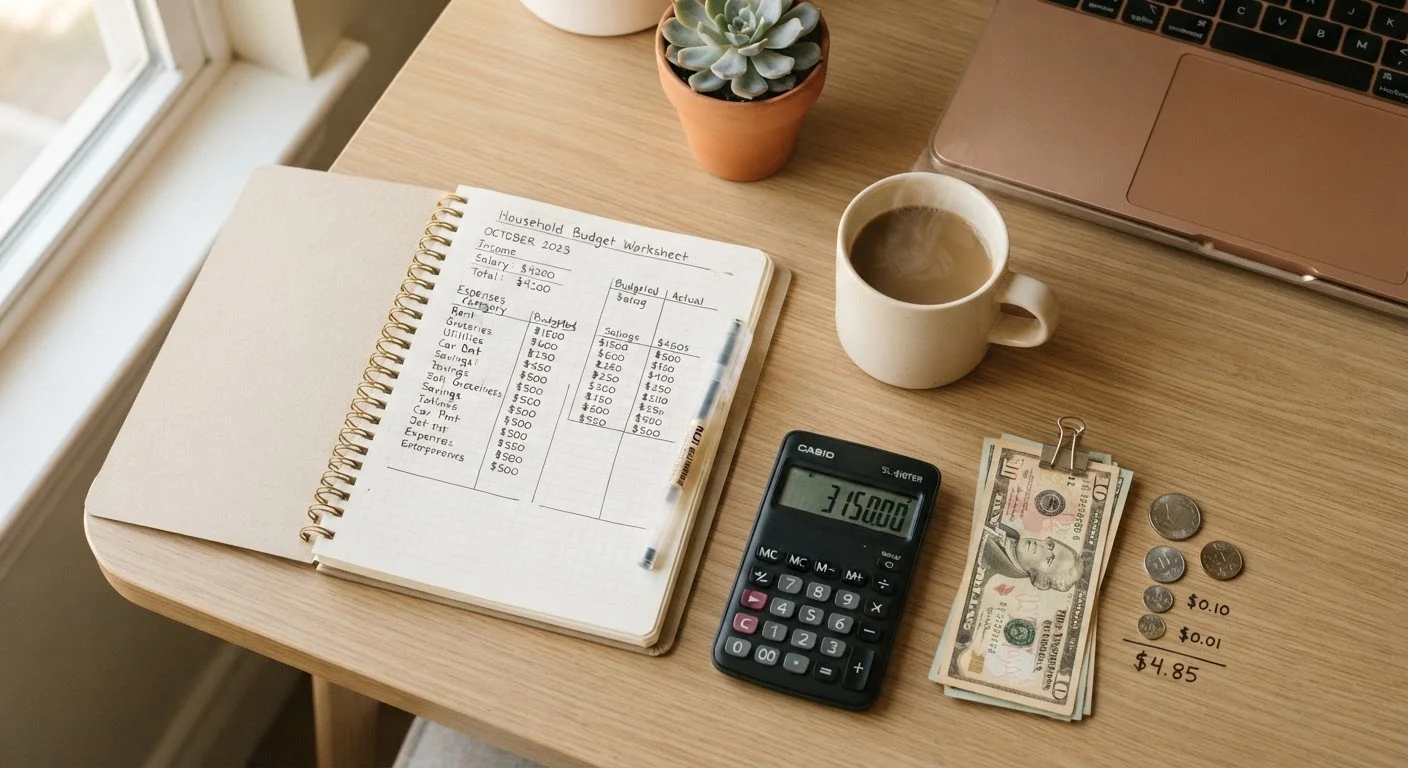
A budget is simply a plan for how you'll use your money before you spend it. Without one, most people operate on a rough mental estimate - and research consistently shows those estimates are optimistic.
After-tax income
The money you actually take home after federal, state, and payroll taxes are deducted. This is the figure your budget should be based on, not your gross salary.
Unit price
The cost of a product broken down to a standard measure - such as per ounce, per sheet, or per serving. It allows fair comparison between differently sized packages or products.
Lifestyle inflation
The tendency to increase spending as income grows, often on upgrades that feel normal but aren't necessary. It can prevent financial progress even when earnings rise.
Total cost of ownership
The complete cost of buying and using a product over its lifetime, including purchase price, maintenance, consumables, and eventual replacement - not just the upfront price.
Fixed vs. variable expenses
Fixed expenses stay the same each month (like rent or a car payment); variable expenses change (like groceries or entertainment). Identifying each type helps you find where you have flexibility.
Start with one month of real data. Pull together bank statements or card records and categorize every transaction. Most budgeting apps automate this, or you can use a simple spreadsheet. The goal isn't judgment - it's visibility.
From there, map your spending against your after-tax income. A widely used starting framework is the 50/30/20 split: approximately half of income toward needs (housing, food, utilities), 30% toward wants, and 20% toward savings or debt. Treat this as a diagnostic tool, not a prescription - your numbers will vary based on your location, income, and obligations.
The one non-negotiable: write it down or track it digitally. Budgets that exist only in your head don't work.
How to Evaluate Whether a Price Is Actually Fair
Sticker price is one data point, rarely the most useful one. To evaluate whether a purchase is genuinely good value, you need to think in terms of cost per use and total cost over time.
For example: a $40 item used 200 times costs $0.20 per use. A $15 version that lasts 30 uses costs $0.50 per use - and ultimately more over a year. This logic applies to everything from kitchen tools to footwear to appliances.
A deeper version of this thinking is total cost of ownership - the full financial picture including maintenance, consumables, repairs, and eventual replacement. Our guide on total cost of ownership walks through how to model these numbers before committing to a purchase.
Use the 24-Hour Rule for Impulse Purchases
Before buying any non-essential item above a threshold you set yourself (many people use $30-$50), wait 24 hours. Most impulse purchases lose their appeal by the next day. This single habit can meaningfully reduce unplanned spending without requiring a rigid budget category for every scenario.
When comparing prices across retailers, check unit pricing on packaged goods (often shown on the shelf tag) and verify return policies before buying - both are underused tools that are freely available to every consumer.
Common Money Traps and How to Sidestep Them
Several spending patterns reliably drain budgets without feeling like they do. The most common ones share a key feature: they're structured to feel small or even beneficial in the moment.
- Convenience fees: Expedited delivery, ATM surcharges, and last-minute booking fees add up quickly. Planning ahead eliminates most of them.
- Auto-renewing subscriptions: Services that charge monthly are easy to forget. Auditing recurring charges once per quarter typically surfaces at least one or two that are no longer used.
- Lifestyle inflation: When income rises, spending tends to follow - often on upgrades that don't meaningfully improve daily life. Intentional decisions about when to upgrade (and when not to) preserve the financial benefit of earning more.
- Anchoring to original price: A discount only saves money if you would have bought the item anyway. Buying something you didn't need because it was marked down is a net cost, not a saving.
Discounts Aren't Savings Unless You'd Have Bought It Anyway
Retailers and marketing materials are designed to make discounted prices feel like found money. A 40% markdown on something you don't need is still a 60% expenditure you wouldn't have made otherwise. Before any sale purchase, ask: "Would I buy this at full price?" If the answer is no, the discount isn't saving you anything.
Building Habits That Stick
Most budgeting efforts fail not because the math is wrong but because the system requires too much friction to maintain. Effective habits tend to share a few characteristics: they're simple enough to execute automatically, they provide regular feedback, and they don't demand perfection.
A practical starting point: schedule a 15-minute weekly check-in to review your spending against your plan. Catching drift early is far easier than correcting a full month of off-track spending.
Automation helps. Setting up automatic transfers to savings on payday means the money is allocated before discretionary spending decisions happen. This is a behavioral design choice - it removes the decision from the equation.
Finally, recognize that budgeting is a skill that improves with practice. The first month will be imperfect; that's expected. The goal is a clearer, more intentional relationship with your money over time - not a flawless spreadsheet. For broader context on what's driving the economic environment your household operates in, the Economy & Cost of Living hub provides useful background.
This article is for general informational and educational purposes only. It is not personalized financial advice. For guidance specific to your financial situation, consult a licensed financial professional.