

Key Takeaways
Food Desert
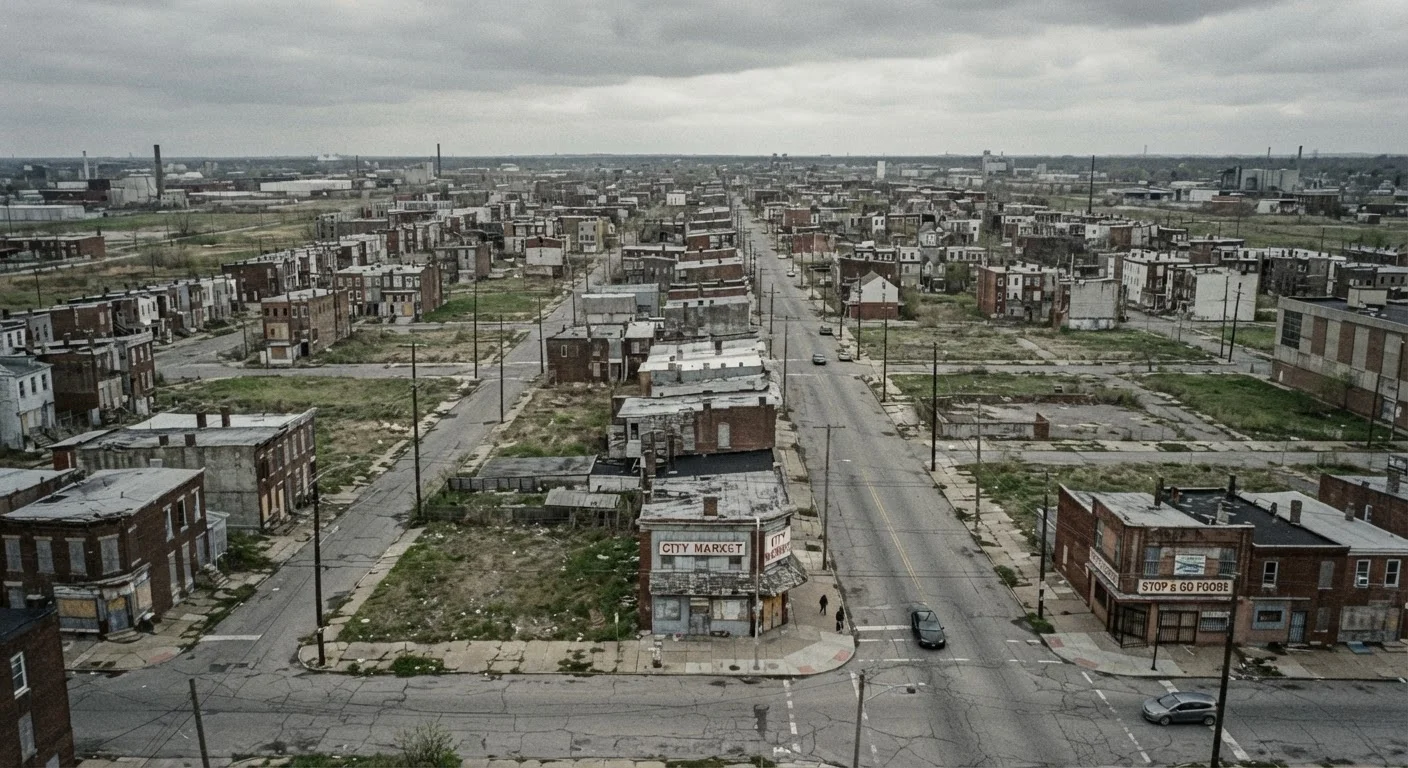
A food desert is a geographic area - often a low-income urban neighborhood or rural community - where residents have limited or no convenient access to affordable, nutritious food. Supermarkets and fresh produce are scarce, while fast food outlets and convenience stores are plentiful. The result is that many people struggle to maintain a balanced diet not because of personal choice, but because of where they live.
The USDA defines a food desert using specific distance thresholds: urban areas where at least 500 people or 33% of residents live more than one mile from a supermarket, and rural areas where the threshold is more than 10 miles.
More Than a Geographic Label
The phrase "food desert" might sound like geography jargon, but it describes something deeply human: the experience of living in a place where feeding your family well is genuinely difficult. It's not about willpower or food knowledge. It's about what's within reach - and what isn't.
In many low-income urban neighborhoods, the nearest full-service grocery store may require a bus ride, a car, or a significant walk. In rural stretches of the South, Midwest, and Appalachia, the nearest supermarket might be a 30-minute drive. For families without reliable transportation or with limited time due to multiple jobs, these distances are real barriers.
Meanwhile, corner stores and fast-food outlets are often close, convenient, and the only consistent option. The irony is that processed and packaged food in these outlets frequently costs more per nutritional value than fresh produce from a well-stocked supermarket - making healthy eating both logistically and financially harder. This has direct consequences for diet quality and, in turn, for long-term health outcomes. For more on one nutrient that suffers most in these conditions, see our article on dietary fiber and why most Americans don't get enough.
How Food Deserts Form: A History of Disinvestment
Food deserts don't appear randomly. They are shaped by decades of policy decisions, economic shifts, and racial inequity. Understanding how they form requires looking back at the mid-20th century, when many American cities experienced a process sometimes called "supermarket redlining" - the systematic withdrawal of grocery chains from predominantly Black and low-income neighborhoods.
As suburban expansion accelerated after World War II, grocery chains followed white middle-class populations to the suburbs, leaving urban neighborhoods behind. The practice of redlining - in which banks and federal agencies effectively denied investment in minority communities - compounded this by limiting the capital available for local businesses to fill the gap.
~54 million
Americans with low grocery store access
The USDA Economic Research Service has estimated that tens of millions of Americans live in low-income areas with limited supermarket access, with figures varying based on measurement criteria used.
10+ miles
USDA rural food desert distance threshold
The USDA uses a 10-mile distance from the nearest supermarket as a key criterion for classifying rural food deserts, reflecting the outsized impact of distance in car-dependent communities.
3x
Higher fast-food density in low-income areas
Multiple public health studies have found that low-income neighborhoods tend to have significantly higher concentrations of fast-food outlets relative to full-service grocery stores compared to wealthier areas.
Rural communities faced parallel pressures. As small-town economies contracted and populations declined, independent grocers closed without replacement. National chains had little incentive to open in low-density areas with thinner profit margins.
These are structural wounds, not accidents. That history is deeply intertwined with broader stories of how race and class shape American life - including how communities eat and what foods define their culture. Our piece on soul food's origins and cultural significance explores how African American communities have long created nourishment and identity under conditions of scarcity and exclusion.
Who Is Most Affected
Food insecurity does not distribute evenly across the American population. Low-income households, Black and Latino communities, Indigenous communities, and rural populations are consistently overrepresented in areas classified as food deserts. Research from the USDA and public health institutions has documented these disparities across regions, though specific numbers shift as methodology evolves.
Renters in dense urban areas may live blocks from bodegas and dollar stores but miles from a produce aisle. Elderly residents in car-dependent suburbs may be near a grocery store they can no longer drive to. Single parents working multiple jobs may have the knowledge and desire to cook fresh meals but not the time to travel far for ingredients. These are not individual failings - they are the cumulative effects of systems that were not designed with these communities in mind.
“The fundamental problem isn't that people in low-income communities don't want to eat well - it's that the environment makes eating well unnecessarily hard and expensive. We've built communities where the unhealthy choice is the easy choice.”
— Dr. Wendell Watkins, Public health researcher specializing in food access and community nutrition
What Communities Are Doing About It
Despite the scale of the problem, communities across the country have built creative responses that reflect local culture, need, and resilience. These solutions don't eliminate food deserts on their own, but they extend what's possible for families navigating real constraints.
- Urban farming and community gardens have taken root in vacant lots in cities like Detroit, Philadelphia, and Chicago, turning disinvestment into growing space and creating neighborhood anchors that reflect local food traditions.
- Mobile markets and produce vans bring fresh food directly into neighborhoods without brick-and-mortar options, often accepting SNAP benefits and stocking culturally relevant produce.
- Food co-ops allow community members to collectively own and operate grocery stores, removing the profit-motive barrier that keeps chains away.
- Policy interventions, including SNAP incentive programs that double the value of benefits at farmers markets, have shown measurable impact in increasing fresh food consumption in low-income households.
None of these is a silver bullet. Researchers and advocates generally agree that lasting change requires sustained investment, policy reform, and centering the voices of affected communities. The immigrant food traditions that shaped American eating remind us that food access has always been bound up with belonging - and that communities have always found ways to feed themselves even when the broader system falls short.
This article is intended for general informational and educational purposes only. It is not medical or nutritional advice. Consult a qualified healthcare professional for guidance specific to your health needs.