

Key Takeaways
Properly Cooked Pasta
Properly cooked pasta is pasta that has been boiled in well-salted water to a texture that is tender but still firm when bitten - a state commonly called al dente. Achieving it also means managing water starch content and finishing the pasta in the sauce so the two become a unified dish rather than separate components.
During cooking, pasta starch granules absorb water and swell through a process called gelatinization; stopping heat at the right moment preserves a slightly resistant core, which is the structural basis of al dente texture.
Why the Water Itself Matters
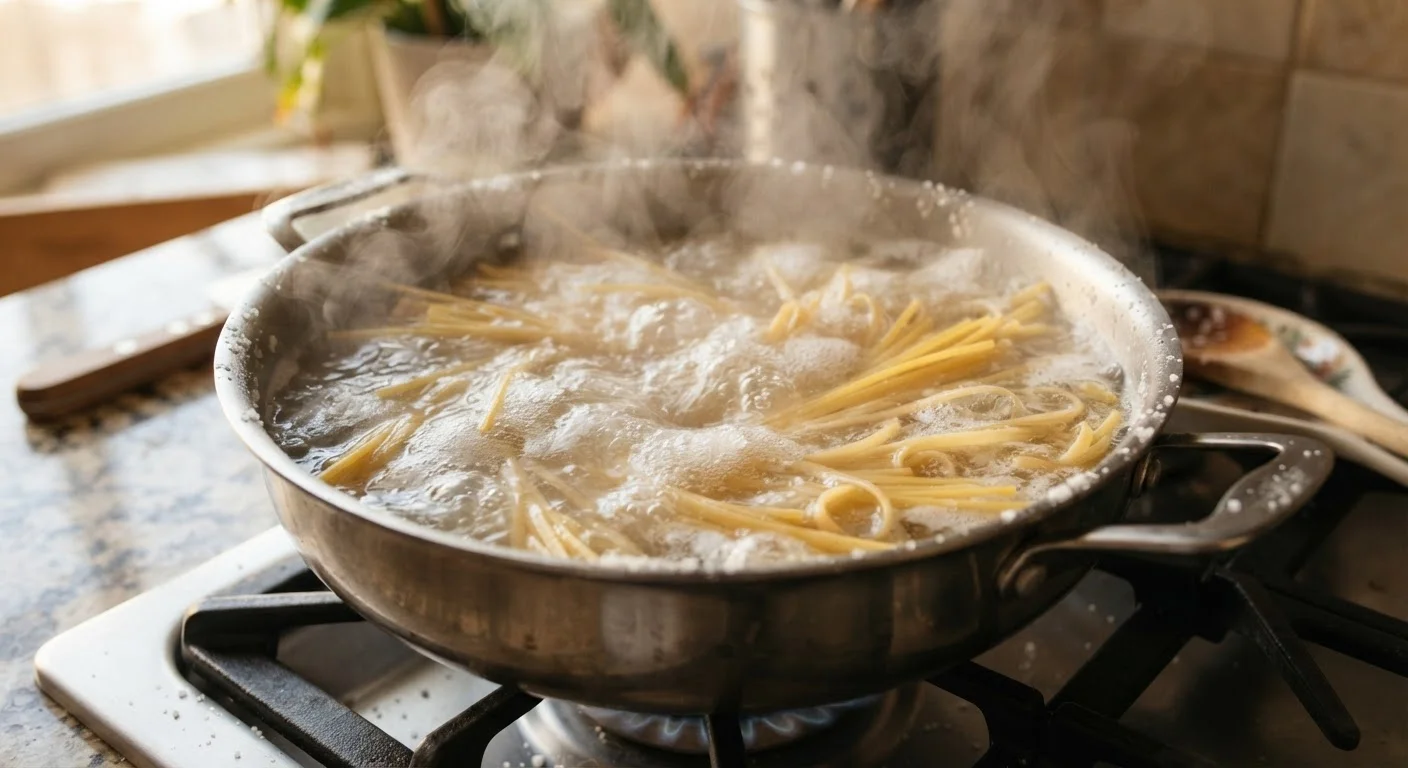
Most home cooks treat the pot of boiling water as a formality - something to get through before the real cooking begins. In reality, the water is your first active ingredient. Pasta needs room to move: a full pound of dry pasta should be cooked in no less than four quarts of water. Too little water means the released starch concentrates quickly, making the pasta gummy and causing pieces to clump and stick.
Temperature matters just as much as volume. The water should be at a full, rolling boil before pasta goes in. Adding pasta to water that is merely simmering drops the temperature sharply, and pasta sitting in warm - rather than truly boiling - water begins to absorb water before its outer starch layer has set properly, leading to a soft exterior and uneven texture throughout.
For more on how salt interacts with other core cooking elements, see what salt, fat, acid, and heat each actually do in a recipe - the principles apply directly here.
A Note on Different Pasta Types
Fresh pasta and dried pasta behave quite differently. Fresh pasta cooks in as little as two to four minutes because it contains moisture already. Dried pasta, made from semolina and water, needs longer to fully hydrate and gelatinize its starch. Whole-wheat and legume-based pastas often require additional time and may need a larger tasting window to assess doneness accurately.
Salt Concentration and What It Actually Does
Salting pasta water is one of the most repeated pieces of cooking advice, and also one of the most misunderstood. Salt does not raise the boiling point of water in any meaningful way at home-cooking quantities. What it does do is season the pasta from within. As pasta absorbs water while cooking, it also absorbs dissolved salt, which means the starch itself carries flavor - something no amount of sauce added afterward can fully replicate.
A well-seasoned pot of pasta water should taste clearly salty but not overwhelming - similar to a light broth. The Italian phrase often used is acqua di mare, meaning seawater, though most cooks aim for something milder than the actual ocean. In practice, one to two teaspoons of kosher salt per quart of water is a practical starting range for most palates and sauce styles.
~1-2 tsp
Kosher salt per quart of pasta water
This range is widely recommended by culinary educators as a baseline for pasta water seasoning, adjusted to taste and sauce saltiness.
4 quarts
Minimum water for one pound of pasta
Culinary guidelines consistently recommend this ratio to ensure adequate starch dilution and free movement during cooking.
~1 minute
Early drain window before target doneness
Pasta continues cooking in hot sauce after draining; removing it slightly early prevents overcooking during the finishing step.
Timing, Al Dente, and What's Happening Inside the Pasta
Package instructions give a useful range, but they are not a substitute for tasting. The al dente window - the moment when pasta is cooked through but retains a firm bite - is often narrower than people expect, sometimes only a minute or two wide. Factors like pasta shape, thickness, brand, and even altitude affect how quickly pasta cooks.
Begin tasting two minutes before the lower end of the package time. A properly al dente piece should have no visible white or chalky core when bitten but should still push back slightly against the tooth. The key is to remove pasta from the water about one minute before it reaches your target texture, because it will continue cooking in the sauce.
Before you drain, reserve at least a full cup of pasta water. This cloudy, starch-laden liquid is one of the most useful tools in a home cook's kitchen and costs nothing to keep. Before your next cooking session, it also pays to review a pre-cook checklist so the pasta water, timing, and sauce are all ready simultaneously.
Sauce Ratio and the Art of Finishing in the Pan
The most common pasta mistake made after draining is to plate the pasta and spoon sauce on top. This approach keeps the two components separate in flavor and texture. Finishing pasta in the sauce - transferring it directly from the pot into a pan where the sauce is waiting - allows starch on the pasta's surface to bind with the fat and liquid in the sauce through emulsification.
As the pasta and sauce are tossed together over medium heat, the surface starch dissolves slightly into the sauce, thickening it and helping it cling to every curve and ridge. Splashes of reserved pasta water loosen the mixture as needed without diluting flavor, because the starch they carry continues to emulsify rather than thin the sauce.
The right ratio is more intuitive than mathematical. The sauce should coat the pasta in a glossy, unified layer. If it looks dry and separated, add a splash of pasta water and toss again. If it pools at the bottom of the bowl, the sauce was too abundant or too thin and needed further reduction before pasta was added. Watching for these visual cues - rather than following a rigid measurement - is what moves a home cook toward genuine fluency in the kitchen.