

Key Takeaways
Why Measuring Precision Matters More in Baking
Baking is often described as a science, and that comparison exists for good reason. Successful baked goods depend on the right ratios of fat, sugar, flour, and leavening working together through heat and chemistry. Even small measurement errors shift those ratios, leading to cookies that spread too thin, breads that won't rise, or cakes with a gummy center.
Before you tackle any recipe, it helps to review your ingredients and tools in advance so you're not making substitutions or rushing mid-mix. Understanding why precision matters makes it easier to build accurate habits from the start - rather than troubleshooting a disappointing result after the fact.
Measuring Errors Can Ruin Results
In baking, small measurement errors compound. Too much flour can make cookies dry and crumbly; too little can cause cakes to collapse. Unlike cooking, where seasoning can be adjusted mid-process, baked goods are largely committed once they go in the oven. Getting measurements right from the start is not optional - it is the recipe.
The Most Common Measuring Mistakes - and How to Fix Them
The good news is that nearly every measuring mistake is easy to correct once you know what to look for. The mistakes below account for a large share of the reasons home-baked goods don't turn out as expected. Each one is fixable with a small adjustment in technique or equipment.
Scooping flour directly from the bag or container with a measuring cup.
Why it happens: It seems like the fastest approach, and many new bakers assume a cup of flour is simply however much fits in the cup when scooped.
Using a dry measuring cup to measure liquids like milk, oil, or water.
Why it happens: Many kitchens only stock one set of measuring cups, and new bakers don't realize there's a functional difference between the two types.
Packing brown sugar loosely or not packing it at all.
Why it happens: Bakers accustomed to measuring flour loosely carry that habit to brown sugar, not realizing the recipe assumes it will be firmly packed.
Ignoring ingredient temperature instructions such as "room temperature butter" or "eggs at room temperature."
Why it happens: It feels like a minor detail, and reaching for cold ingredients straight from the refrigerator is simply more convenient.
Eyeballing small measurements like teaspoons of baking powder or salt.
Why it happens: Small quantities can feel inconsequential, and new bakers may assume approximate amounts are fine for leaveners and seasonings.
20-30g
Extra flour from scooping vs. spooning
Kitchen tests consistently show that scooping flour directly can add 20 to 30 grams per cup compared to the spoon-and-level method - enough to noticeably toughen baked goods.
120-125g
Target weight per cup of all-purpose flour
Most professional baking recipes calibrate to approximately 120-125 grams per cup of all-purpose flour, making a kitchen scale the most reliable measurement tool.
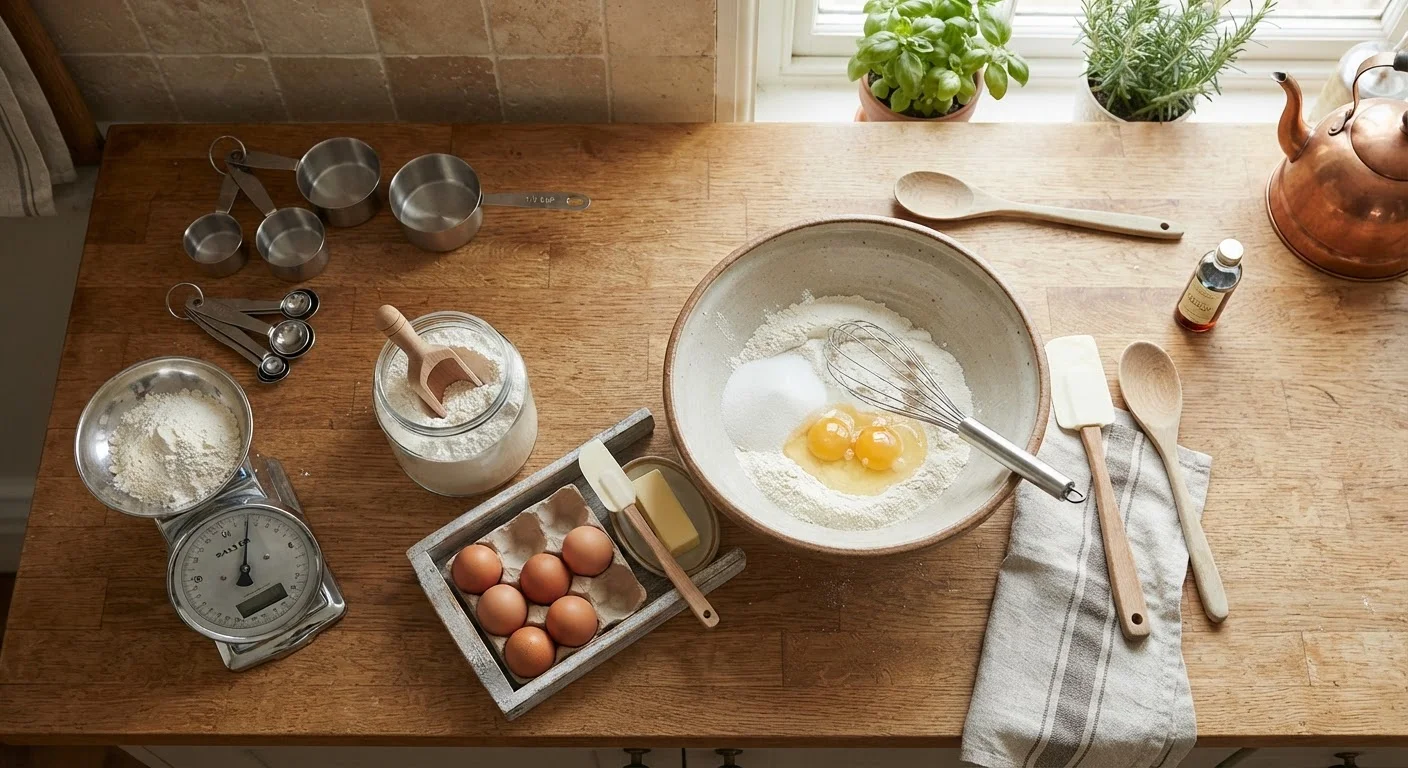
Weight vs. Volume: The Case for a Kitchen Scale
Most American recipes list ingredients by volume - cups, tablespoons, teaspoons. But volume measurements for dry ingredients are inherently imprecise because density varies. The same cup of flour can weigh anywhere from 100 to 150 grams depending on how it's measured, which is a meaningful difference in a delicate recipe.
A digital kitchen scale removes that variability entirely. Many contemporary recipes, especially those drawing from professional baking, already list ingredients by weight. If you bake regularly, a scale is one of the most practical investments you can make in your kitchen results. In the meantime, consistently using the spoon-and-level method for flour and leveling all dry measuring spoons will keep your volume measurements as accurate as possible.
Thoughtful measuring is one piece of building good kitchen habits overall. The same care that improves your baking translates to a more confident approach to all kinds of cooking - including building more balanced, nourishing meals without overthinking the details.