

Key Takeaways
Why Warranty Myths Are Expensive
Warranties are one of the most misunderstood areas of consumer protection in the United States. When shoppers believe myths about how warranties work, they either skip repairs they're entitled to or spend money on services they didn't need to pay for. The financial stakes are real: a single appliance repair or electronics replacement can run hundreds of dollars.
Much of the confusion traces back to warranty documents themselves, which are often dense, jargon-heavy, and written to protect the seller rather than educate the buyer. Our guide to decoding warranty terms breaks down what phrases like "limited warranty" and "as-is" actually mean in practice. Before assuming you're not covered, it pays to understand what the law actually says.
Myth
If you have a third-party technician repair your product, the manufacturer can void your entire warranty.
Fact
Under the Magnuson-Moss Warranty Act, manufacturers generally cannot void a warranty simply because you used an independent repair shop, unless they can prove the third-party service caused the specific defect.
This is one of the most financially damaging myths in consumer electronics and appliances. The Federal Trade Commission has stated clearly that tying warranty coverage to the use of a manufacturer's own service centers - without offering that service for free - is typically illegal. The burden of proof falls on the manufacturer to show that an independent repair caused the problem in question, not merely that a repair occurred.
Keep records of any third-party repair: receipts, a description of the work performed, and the technician's contact information. This documentation protects you if a manufacturer attempts to deny a later, unrelated claim.
Myth
If a product doesn't come with a written warranty, you have no warranty protection at all.
Fact
Implied warranties arise automatically under state law regardless of whether the seller provides any written documentation.
The most common implied warranty is the "implied warranty of merchantability" - essentially, a legal guarantee that a product will do what it's reasonably supposed to do. A blender that won't blend, or a jacket zipper that fails after two uses, may be covered even if the seller handed you no warranty card whatsoever.
Sellers can disclaim implied warranties, but only in specific ways - typically by selling a product "as-is" with clear written disclosure. A retailer cannot verbally tell you there's "no warranty" and expect that to hold up in a dispute without proper written notice. State laws vary, so it's worth checking your state attorney general's consumer protection resources.
Myth
You must register your product within a few weeks of purchase or your warranty becomes invalid.
Fact
Warranty registration is almost never legally required to activate or preserve coverage under a written warranty.
Manufacturers encourage registration because it gives them valuable consumer data - but they generally cannot make registration a legal condition of warranty coverage for products already sold. The Magnuson-Moss Warranty Act restricts companies from requiring registration as a prerequisite for warranty protection on consumer goods.
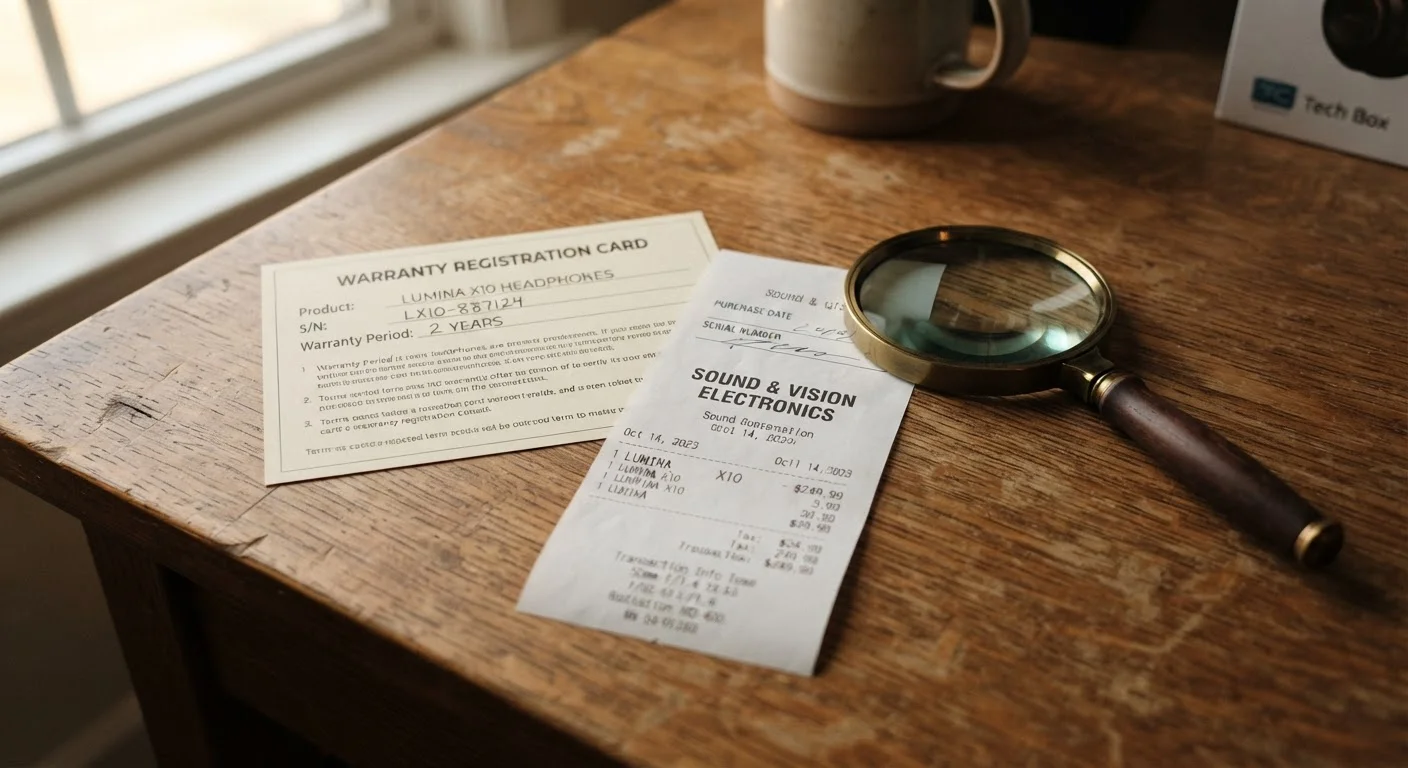
Your proof of purchase - typically a receipt or order confirmation - is what actually matters for establishing when and where you bought the product. Hold on to that documentation instead of worrying about registration deadlines.
Myth
An extended warranty sold at checkout is just more of the same manufacturer's coverage.
Fact
Extended warranties - also called service contracts - are entirely separate agreements, usually sold by a retailer or third-party administrator, not the manufacturer.
These contracts have their own terms, exclusions, and claims processes that are distinct from the original manufacturer's warranty. In some cases, the manufacturer's warranty and the extended service contract may overlap for a period, meaning you could be paying for duplicate coverage during that window.
Before purchasing an extended warranty, read what it actually covers and compare it explicitly against the manufacturer's warranty. Common exclusions in service contracts include accidental damage, cosmetic issues, and consumable parts - the very failures many buyers assume are covered.
Myth
You must use the manufacturer's official replacement parts or the warranty is void.
Fact
Requiring the exclusive use of branded parts as a warranty condition is generally prohibited under federal law unless those parts are provided free of charge.
This restriction is enforced under the same Magnuson-Moss framework. A company can recommend its own parts, but making them a warranty requirement while charging full retail prices for them crosses a legal line. The FTC has specifically warned manufacturers about this practice.
There are narrow exceptions - for instance, in cases where a non-branded part is demonstrably defective and caused the failure. But blanket "voids warranty if non-OEM parts are used" stickers or clauses, standing alone, are not enforceable in most situations.
Myth
Once the stated warranty period ends, the manufacturer has zero further obligation.
Fact
Implied warranties may still apply after a written warranty expires, and some defects discovered during the warranty period can remain the manufacturer's responsibility even if the repair extends beyond it.
Implied warranty duration is governed by state law and in some states can extend well beyond the written warranty period. Additionally, if you reported a defect and the manufacturer failed to fix it before the warranty expired, you generally retain your right to have that specific issue addressed.
Some states, such as California, have stronger implied warranty protections than the federal baseline. Consumers who feel a manufacturer is stonewalling a legitimate claim can file complaints with their state attorney general's office or the FTC's consumer complaint system.
Your Rights Don't Disappear as Easily as You Think
A recurring theme across these myths is that many shoppers underestimate how much legal protection they already have - and manufacturers sometimes rely on that uncertainty. The Magnuson-Moss Warranty Act, a federal law governing written warranties on consumer products, places meaningful restrictions on what companies can and cannot require as warranty conditions. State-level implied warranty laws add another layer of protection that doesn't depend on any paperwork at all.
Understanding where your rights come from - and when they can legitimately be waived - puts you in a much stronger position when something breaks. See also our article on express vs. implied warranties for a deeper look at the two distinct frameworks that may protect you simultaneously.
Don't Discard Packaging or Receipts Too Soon
Many shoppers throw away receipts and original packaging within days of a purchase, not realizing these are the primary evidence needed to file a warranty claim. A receipt or order confirmation establishes the purchase date and seller, which are both typically required. Store digital copies of receipts in a dedicated folder and photograph product serial numbers before setup, so you have documentation regardless of what happens to the physical packaging.
If you've ever lost a dispute because you weren't sure of your rights, you're not alone. Our article on consumer rights pitfalls covers the procedural missteps - like missing dispute windows - that quietly cost shoppers their recourse.