

| Primary reason cats hide pain | Evolutionary survival instinct from wild ancestry |
| Most easily overlooked sign | Subtle reduction in activity or play interest |
| Posture indicator | Hunched back with lowered head - a recognized clinical pain sign (Feline Grimace Scale research, veterinary consensus) |
| Grooming changes | Either over-grooming a site or marked under-grooming |
| Age factor | Older cats are more prone to chronic pain from arthritis and dental disease |
| When to call a vet | Two or more signs persisting beyond 24-48 hours, or any sudden pronounced change |
Why Cats Hide Pain So Effectively
Cats are instinctive concealment artists. As solitary hunters in the wild, showing weakness could attract predators or rivals - so masking discomfort became a deeply wired survival strategy. That same instinct persists in domestic cats today, meaning a cat can be in significant pain while appearing outwardly calm or simply "quieter than usual."
This makes pain recognition genuinely difficult. Unlike dogs, who often whimper or favor a limb conspicuously, cats tend to withdraw, adapt their behavior, and carry on - at least until the pain becomes severe. By the time obvious signs appear, an underlying condition may be well advanced.
Understanding what subtle pain looks like in cats is one of the most practical skills a pet owner can develop. It can meaningfully reduce the time between injury or illness onset and veterinary care. For more on how feline body signals work more broadly, see our guide to reading your pet's body language.
| Primary reason cats hide pain | Evolutionary survival instinct from wild ancestry |
| Most easily overlooked sign | Subtle reduction in activity or play interest |
| Posture indicator | Hunched back with lowered head - a recognized clinical pain sign (Feline Grimace Scale research, veterinary consensus) |
| Grooming changes | Either over-grooming a site or marked under-grooming |
| Age factor | Older cats are more prone to chronic pain from arthritis and dental disease |
| When to call a vet | Two or more signs persisting beyond 24-48 hours, or any sudden pronounced change |
Behavioral and Physical Signs to Watch For
Pain in cats rarely arrives with obvious fanfare. Instead, it surfaces as small behavioral shifts - changes you might dismiss as "just a phase" or attribute to mood. The following categories capture the most commonly observed signals.
Changes in Social Behavior
A cat that normally seeks contact may begin avoiding touch, especially around a painful area. Conversely, a typically independent cat may become unusually clingy. Hiding in unusual spots or refusing to come out for meals are particularly telling. Aggression toward familiar people - hissing or swatting without obvious provocation - can also signal that contact is causing discomfort. Our article on what cat aggression is actually telling you explores this connection in depth.
Changes in Movement and Posture
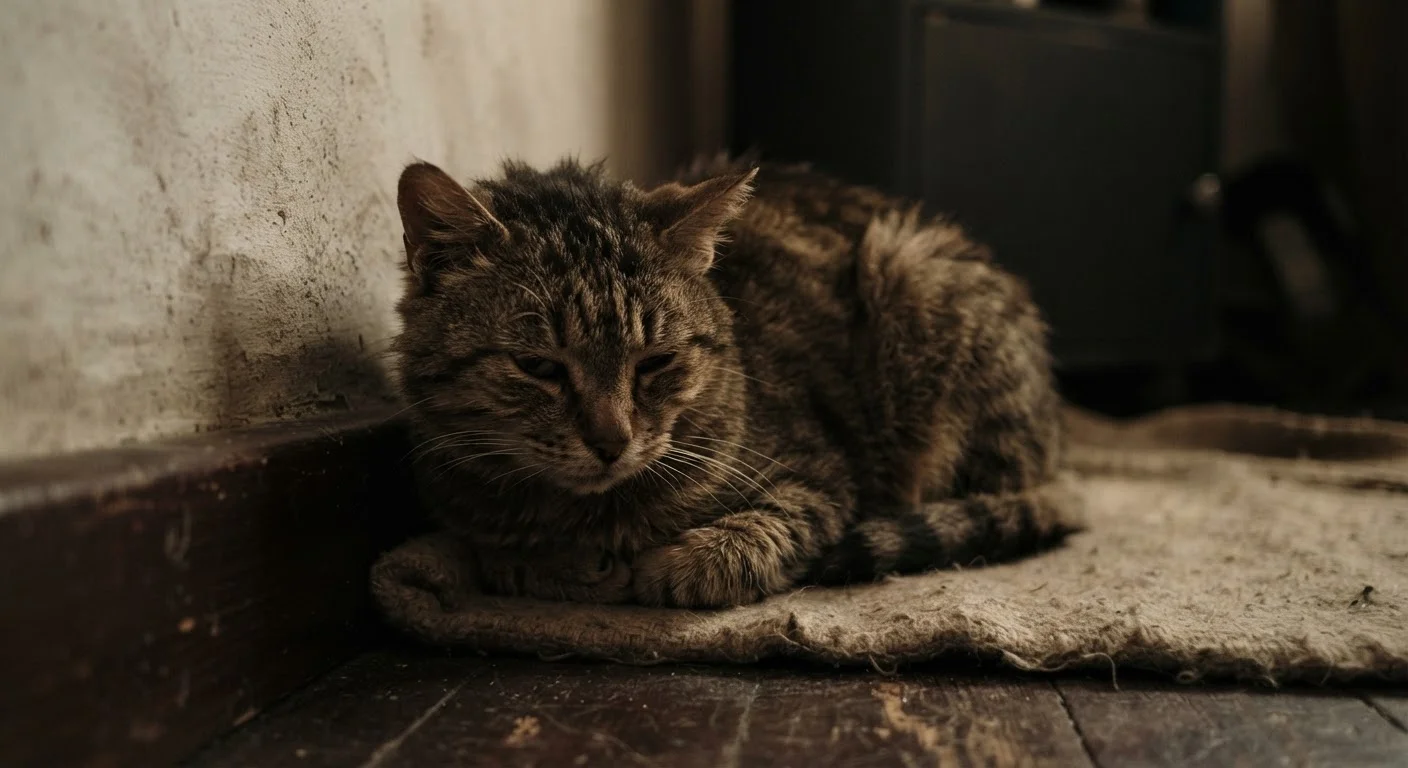
Watch for reluctance to jump onto surfaces the cat previously used without hesitation. A hunched or tucked posture - particularly with the back arched and head lowered - is a recognized pain indicator in veterinary assessment. Stiffness when rising, altered gait, or repeated weight shifting when sitting are worth noting.
Grooming Abnormalities
Pain often disrupts grooming patterns in two opposing ways: over-grooming a specific site (licking at a wound, joint, or area of internal discomfort) or under-grooming, leading to a dull, unkempt coat. A cat that previously maintained a sleek coat and suddenly looks matted or greasy may be struggling to reach certain areas due to pain.
Changes in Appetite, Elimination, and Vocalization
Reduced appetite or disinterest in food can reflect oral pain, nausea from internal illness, or general malaise. Difficulty or visible straining in the litter box, or avoiding it altogether, can point to urinary, gastrointestinal, or musculoskeletal pain. Increased vocalization - particularly low, repetitive vocalizing at night - sometimes accompanies chronic pain, especially in older cats. Notably, some cats become completely silent rather than vocal.
Feline Grimace Scale
A validated veterinary tool that assesses pain in cats by scoring facial muscle changes - including ear position, orbital tightening, and whisker tension. It helps clinicians objectively evaluate pain that owners may not detect.
Hyperesthesia
Abnormal sensitivity to touch, sometimes seen as skin rippling, sudden biting at the tail, or aggressive reaction to being petted along the back. It can be associated with pain, neurological issues, or stress.
Guarding behavior
When an animal protects a specific body area by positioning itself to avoid contact with it, or reacting defensively when that area is approached or touched.
Analgesic
A medication used to relieve pain. In cats, analgesic selection and dosing require veterinary guidance because cats metabolize many drugs differently from dogs or humans.
Because stress and pain can share overlapping signs, it helps to also review signs your pet is stressed to distinguish between the two.
When to Contact Your Veterinarian
No single sign on this list is definitive proof of pain - context and pattern matter. A cat sleeping more after an active day is not the same as one that has slept in the same hidden spot for 36 hours and skipped two meals. What you're looking for is a change from your individual cat's established baseline.
If you observe two or more of the signs described above persisting for more than 24-48 hours, or any single sign that is sudden and pronounced, contact your veterinarian. Cats can deteriorate quickly when pain goes unaddressed, particularly when it reflects an underlying condition like dental disease, arthritis, urinary obstruction, or injury. A veterinarian can perform a thorough physical examination and, when appropriate, pursue diagnostics that simply aren't possible through observation alone.
For a broader look at when behavioral shifts cross into medical urgency, see when a pet's behavior change is a medical red flag.
This article is for general informational purposes only and does not constitute veterinary or medical advice. Always consult a licensed veterinarian regarding your cat's health, symptoms, or care needs.