

Key Takeaways
Why Stress Looks Like Something Else
Animals cannot describe what they're feeling, so they communicate distress through behavior and body language. The challenge for pet owners is that many stress signals overlap with ordinary behavior - a yawn looks like tiredness, a tucked tail might seem like shyness, and hiding reads as a personality quirk. But when these signals appear in clusters, in new contexts, or alongside changes in appetite and routine, they become meaningful data.
Behavioral scientists use the term calming signals - a concept developed within canine ethology - to describe the self-soothing and social-communication behaviors animals display when they feel threatened or overwhelmed. Recognizing these signals is one of the most practical skills a pet owner can develop. It prevents misattribution (thinking the animal is being stubborn or defiant) and allows for earlier, more effective intervention.
The signals below span dogs, cats, and some small mammals. For a broader foundation, see our guide on reading your pet's body language. Keep in mind that stress and illness can produce nearly identical signs - our companion article on behavior changes as medical red flags explains when to prioritize a vet visit over a behavioral explanation.
Excessive yawning outside of tiredness
Yawning in dogs (and to a lesser extent cats) is well-documented as a displacement behavior - a way of releasing tension or signaling discomfort to others. A dog that yawns repeatedly during training, at the vet, or when a stranger approaches is not bored; it is communicating low-level anxiety. The signal is often paired with slow blinking or looking away.
What it means: The animal is feeling pressured or uncertain and is attempting to self-soothe. Reducing the pace of an interaction or giving the animal a moment to decompress is usually the appropriate response.
Repeated yawning during interactions is a recognized displacement behavior, not a sign of boredom.
Lip-licking and nose-licking not related to food
A quick tongue flick across the lips or nose - especially when no food is present - is one of the more reliable early stress indicators in dogs. It tends to appear before more obvious signals like growling or cowering, making it a valuable early-warning cue.
What it means: The animal is experiencing mild to moderate stress and is attempting to appease or de-escalate a perceived social threat. Repeated lip-licking during handling, grooming, or close contact with unfamiliar people warrants a slower, less invasive approach.
Lip-licking without food nearby is one of the earliest stress signals dogs display.
Hiding or withdrawing from social interaction
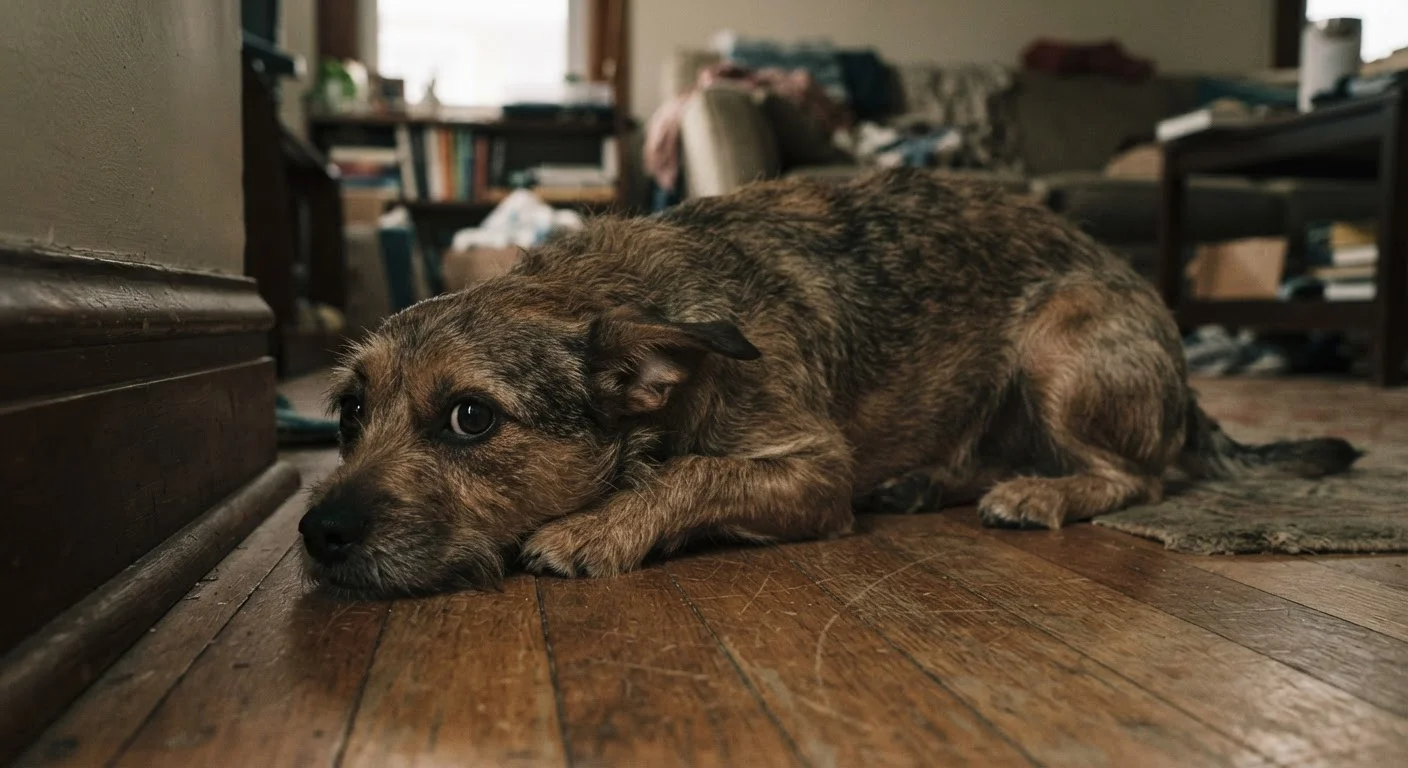
Cats are particularly prone to hiding as a stress response - retreating under beds, into closets, or behind furniture when their environment changes. Dogs may similarly withdraw to quiet corners or avoid family members they usually seek out. In small mammals like rabbits and guinea pigs, freezing in place or pressing flat against the ground serves a similar function.
What it means: The animal is seeking safety and reducing sensory input. Forcing social interaction during a hiding episode typically intensifies stress rather than relieving it. Providing consistent, accessible hiding spots - especially for cats - is considered a core environmental enrichment strategy. For cats specifically, hiding can also mask pain; see subtle signs your cat may be in pain for how to distinguish the two.
Forcing interaction when a pet is hiding typically makes stress worse, not better.
Destructive behavior or restless pacing
Chewing furniture, scratching at doors, pacing in repetitive patterns, or vocalizing excessively (particularly when left alone) can all signal a pet is struggling emotionally. In dogs, these behaviors are frequently associated with separation-related distress. However, under-stimulation can produce nearly identical symptoms, which is why context matters.
What it means: The animal's arousal level is elevated and is not being discharged through normal outlets. Before pursuing behavioral interventions, ruling out medical causes is advisable - our checklist on ruling out medical causes before behavioral intervention is a useful starting point. For dogs specifically, distinguishing separation anxiety from boredom can clarify the right approach.
Destructive behavior is a symptom of an emotional state, not a character flaw.
Flattened ears and tucked tail
These postural signals are among the most widely recognized stress indicators in dogs - and among the most frequently misread. A wagging tail on a dog with a tucked or low carriage, flattened ears, and a lowered head is not a happy greeting; it reflects submission or apprehension. In cats, flattened ears rotated outward (sometimes called "airplane ears") indicate fear or defensive arousal.
What it means: The animal is signaling that it perceives a threat and is preparing either to flee or to defend itself. Approaching such an animal directly and quickly can trigger a defensive reaction. Understanding posture in combination - not just individual signals - is key; our guide to reading your dog's body language explains how signals cluster together.
A wagging tail paired with flattened ears and a lowered head signals fear, not friendliness.
Changes in appetite or elimination habits
A stressed pet may eat less, eat more compulsively, or experience gastrointestinal upset - including vomiting, diarrhea, or house soiling - that has no clear physical cause. The gut-brain connection is well-established in veterinary medicine; chronic stress can genuinely disrupt digestive function.
What it means: Prolonged appetite changes or elimination outside the litter box or normal habits - especially when paired with other behavioral shifts - indicate the animal's stress response is affecting physiological systems. This category of sign most urgently warrants veterinary assessment, since medical causes must always be ruled out before attributing symptoms to stress alone.
Chronic stress can disrupt digestion and elimination - signs that always warrant a vet check.
Responding Thoughtfully - Not Reactively
Spotting a stress signal is only useful if the response doesn't make things worse. Punishing a dog for growling, for example, removes a warning signal without addressing the underlying discomfort - an approach most veterinary behaviorists caution against. Instead, the goal is to identify and reduce the stressor where possible, give the animal space and predictability, and monitor whether the behavior resolves.
Keep a simple behavior log
When stress signals appear repeatedly, jot down the time, setting, and what happened just before. Even a week of informal notes can reveal patterns - a particular person, noise, time of day, or routine change - that are easy to overlook in the moment. This information is also genuinely useful if you consult a veterinarian or veterinary behaviorist.
Persistent stress, especially stress that appears without an obvious trigger or that doesn't ease when the environment improves, may reflect an anxiety disorder rather than situational distress. Our article on stress and anxiety in household pets covers how chronic anxiety is generally recognized and managed. Owners dealing with seemingly random or unprovoked signals should also review where owners most often misread pet signals - context matters enormously in accurate interpretation.
This article is for general informational and educational purposes only. It is not a substitute for professional veterinary advice, diagnosis, or treatment. If your pet's behavior changes suddenly or significantly, consult a licensed veterinarian.