

Key Takeaways
Cat Aggression
Cat aggression refers to threatening or harmful behaviors - such as hissing, swatting, biting, or scratching - that cats direct toward people, other animals, or objects. These behaviors are rarely random; they typically signal that a cat feels threatened, overstimulated, in pain, or is responding to an unmet instinctual need. Understanding the type and context of aggression is essential to addressing it appropriately.
Veterinary behaviorists classify feline aggression into distinct categories - fear-based, redirected, play, territorial, and pain-induced - each with different triggers and recommended management strategies.
Aggression Is Communication, Not Personality
Most cats that hiss, swat, or bite are not mean - they are communicating. Feline aggression is almost always a response to something in the cat's environment or internal state, not a fixed trait or sign of a broken relationship. The distinction matters, because treating aggression as a character flaw leads owners toward responses (punishment, forced interaction) that reliably make things worse.
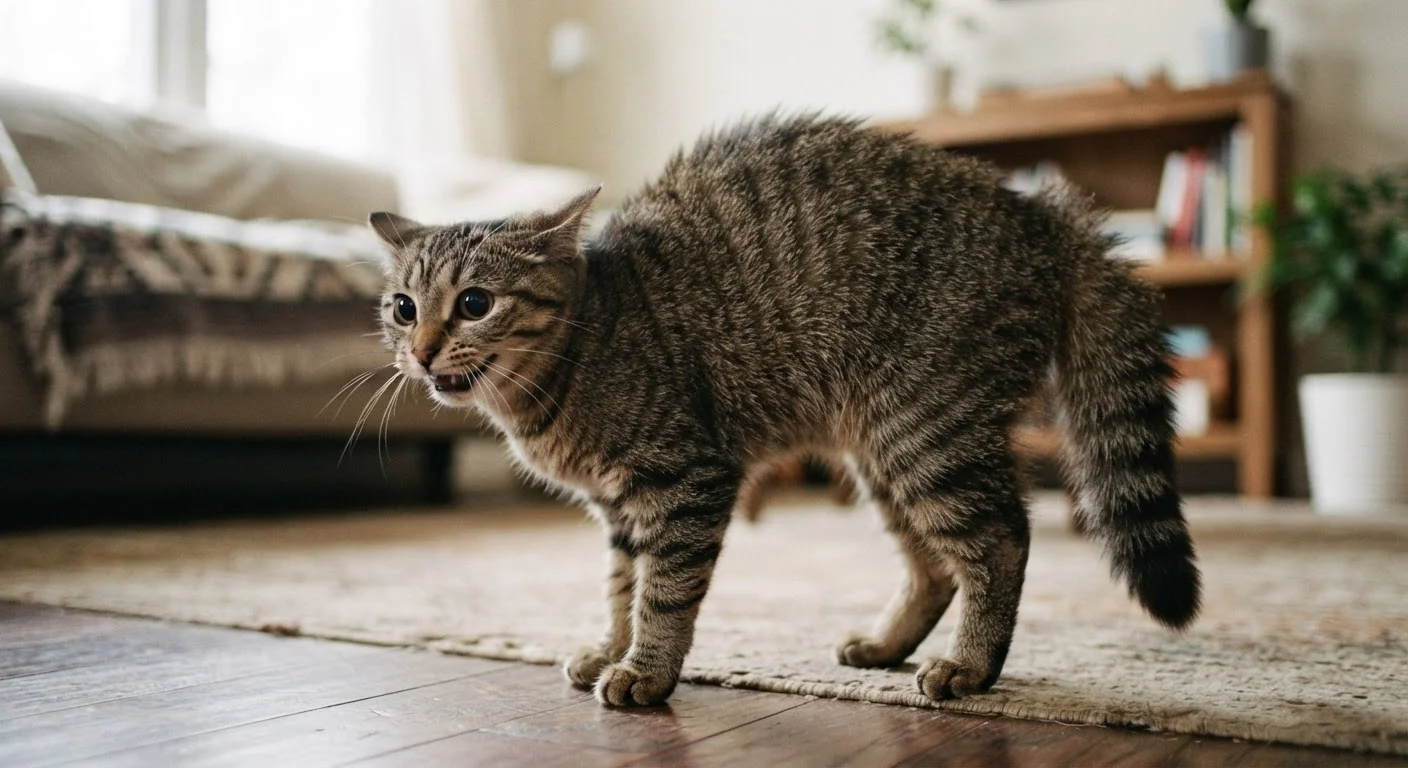
Cats evolved as both predators and prey animals. Their behavioral repertoire is built around managing threat, and aggression is one tool in that system. Before resorting to claws, most cats issue a layered series of warnings: dilated pupils, a low-held or lashing tail, skin rippling along the back, flattened ears, or a stiff posture. Owners who learn to read these signals can interrupt escalation before it reaches biting or scratching. As one foundational principle in veterinary behavioral medicine holds, the goal is to read the cat's language, not correct it into silence. For a broader look at how owners misinterpret these cues, see Misreading Your Pet's Signals.
The Main Types of Feline Aggression - and What Triggers Each
Veterinary behaviorists recognize several distinct categories of cat aggression, each driven by different circumstances:
- Fear aggression: The most common type. A cat that feels cornered, restrained, or unable to escape may attack defensively. The posture is typically crouched, with the cat trying to appear small before lashing out.
- Redirected aggression: A cat becomes highly aroused by a stimulus it cannot reach - an outdoor cat, a bird, a loud noise - then redirects that energy onto a nearby person or animal. This type can appear completely spontaneous and is often the most alarming.
- Overstimulation (petting-induced) aggression: A cat that was seemingly enjoying contact suddenly bites or swats. Repetitive touch builds arousal past a threshold the cat cannot comfortably manage. Warning signs typically precede the bite by several seconds.
- Play aggression: Common in young cats and kittens, this involves stalking, ambushing, and biting - behaviors that are normal predatory play but can be misdirected at people, especially when cats are raised without feline playmates.
- Pain-induced aggression: A cat in physical discomfort may react defensively to handling, especially around an affected area. Sudden aggression in a previously gentle cat is a medical flag until proven otherwise.
- Territorial aggression: Often directed at new animals introduced into the home, or occasionally at unfamiliar people. It typically involves stalking, blocking access to spaces, and sustained hostility rather than a single reactive event.
~27%
Cat owners reporting aggression toward people
A survey published in the journal Frontiers in Veterinary Science found that roughly one in four cat owners reported some form of human-directed aggression from their cat.
#2
Most common reason cats are surrendered to shelters
Behavioral problems, including aggression, are consistently cited as the second most common reason cats are relinquished, according to shelter intake data compiled by animal welfare researchers.
70%+
Aggression cases with identifiable triggers
Veterinary behaviorists estimate the large majority of feline aggression cases have identifiable environmental or medical triggers when assessed through a full behavioral history.
Medical Causes Come First
Before attributing aggression to behavior alone, a veterinary examination is essential - particularly when aggression appears suddenly or out of character. Conditions including dental pain, arthritis, hyperthyroidism, urinary tract infections, and neurological problems can all make a cat more reactive or irritable. A cat that was previously calm and becomes aggressive practically overnight should be seen by a veterinarian promptly.
This step is not optional. Behavioral interventions applied to a cat in pain will not work and may worsen the animal's distress. Use our related checklist for ruling out medical causes to help think through what to bring up at your veterinary appointment.
Track What Happened Just Before
When trying to identify an aggression trigger, work backwards from the incident: What was the cat doing in the previous 10-15 minutes? Was there any unusual noise, visitor, or outdoor animal nearby? Keeping a simple log of incidents, times, and context often reveals patterns that are not obvious in the moment. Share this log with your veterinarian or behaviorist.
How to Respond - and What to Avoid
The most important principle when a cat becomes aggressive is to avoid escalating the situation. Do not yell, swat back, restrain the cat, or chase it. These responses increase arousal and fear, making future aggression more likely. Instead, withdraw calmly, give the cat space, and allow it to settle in its own time.
For redirected and fear aggression specifically, separating animals or people involved and waiting at least an hour (sometimes longer) before re-engaging is the safest approach. For overstimulation, learning to recognize the cat's personal threshold - by watching for pre-bite signals and ending sessions before they escalate - is both effective and practical.
Play aggression in younger cats typically responds well to structured interactive play using wand or fishing-rod style toys, which channel predatory energy appropriately and keep hands and feet out of the equation. This instinct-driven behavior is discussed further in the context of natural feline drives in our article on why cats bring home prey.
For severe, persistent, or injury-causing aggression, consultation with a board-certified veterinary behaviorist or a certified applied animal behaviorist is strongly recommended. General advice has real limits when aggression is complex, and professional assessment protects both the cat and the people in the household.