

Key Takeaways
Our Verdict
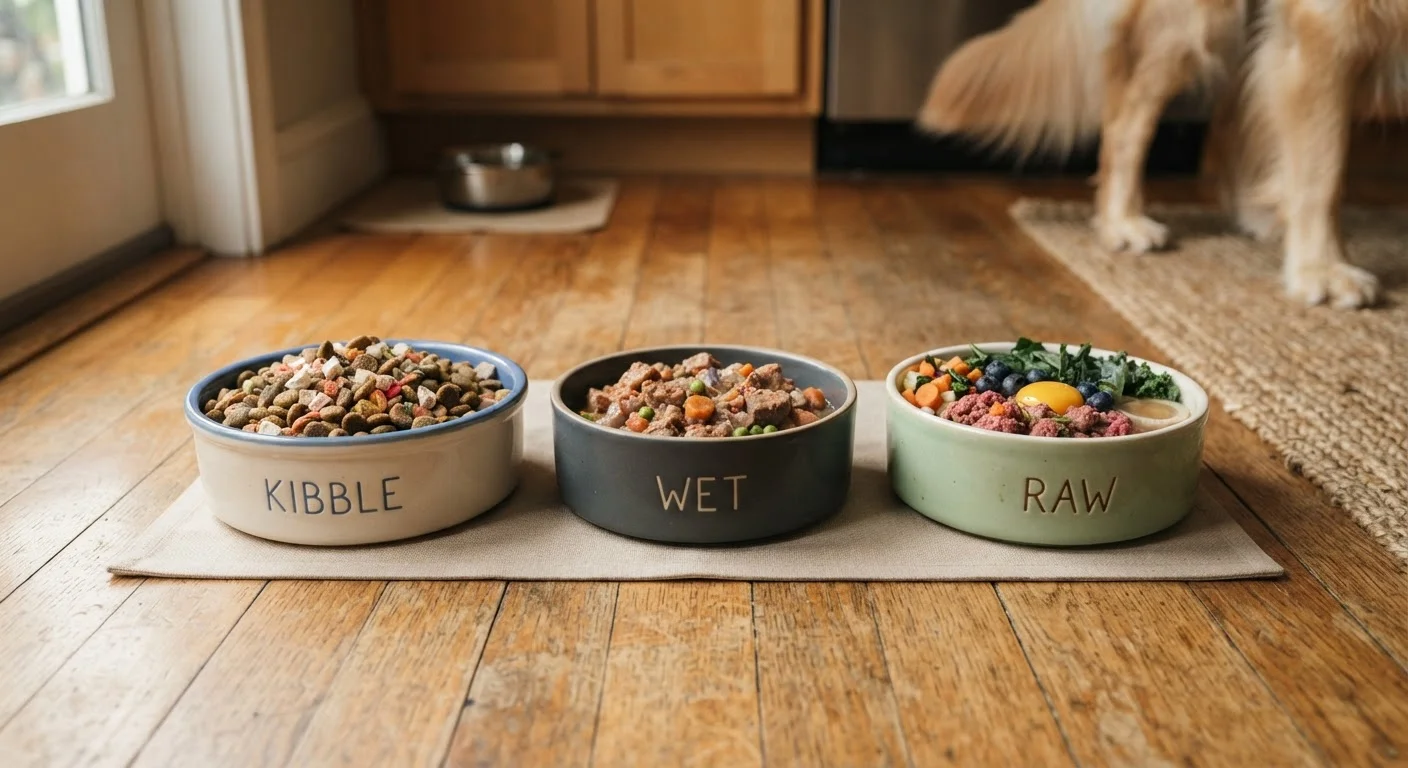
Each feeding approach has legitimate merits and real drawbacks. Dry food wins on convenience and cost-efficiency; wet food excels in palatability and moisture delivery; raw diets appeal to owners prioritizing minimally processed ingredients but require the most effort and carry the highest safety burden. The right choice depends on your dog's individual health needs, your household's capacity, and guidance from your veterinarian.
| Best for | Recommended |
|---|---|
| Busy owners seeking everyday convenience | Dry food (kibble) |
| Dogs with low thirst drive, dental issues, or reduced appetite | Wet food |
| Owners with time, budget, and veterinary support for careful planning | Raw diet |
| Dogs needing balanced nutrition across life stages | Mixed or rotational approach (vet-guided) |
Why the Diet Debate Matters
Walk into any pet supply store and the sheer volume of dog food options can feel paralyzing. Kibble, pâté, freeze-dried raw, home-cooked - each comes with passionate advocates and a distinct set of claims. What actually separates these feeding approaches, and how does a dog owner cut through the noise?
The honest answer is that no single format is right for every dog. Understanding how each diet differs - nutritionally, practically, and in terms of risk - puts you in a better position to make an informed choice alongside your veterinarian. For a deeper look at how to decode the packaging itself, see our guide on what pet food labels actually tell you.
Dry Food (Kibble): The Convenience Standard
Dry kibble dominates the U.S. dog food market for practical reasons. It stores easily at room temperature, measures simply by volume, and typically costs less per serving than wet or raw alternatives. Most commercial kibbles are formulated to meet AAFCO nutritional standards, meaning they're designed to be complete and balanced for a given life stage.
On the downside, the high-heat extrusion process used to manufacture kibble can degrade some heat-sensitive nutrients, which manufacturers often compensate for by adding synthetic vitamins and minerals back in. Kibble's moisture content typically sits around 10%, which means dogs relying solely on it need to drink adequate water to support kidney and urinary tract health. Some dogs - particularly older or smaller breeds - simply don't drink enough on their own.
Monitoring Your Dog's Health at Home
Signs that a dog's diet is supporting good health include a glossy coat, consistent energy levels, firm stools, and steady weight maintenance. Dull fur, chronic digestive upset, excessive shedding, or unexplained weight changes are worth discussing with your veterinarian - and may indicate the current diet isn't the right fit, regardless of format.
Signs that a dog's diet is supporting good health include a glossy coat, consistent energy, firm stools, and steady weight. Dull fur, lethargy, or frequent digestive upset are worth discussing with your vet regardless of which food format you use.
Wet Food: Palatability and Hydration
Canned or pouched wet food typically contains 70-80% moisture, making it a meaningful source of hydration. This can be especially beneficial for dogs with urinary tract concerns, kidney disease, or those recovering from illness. Wet food is also generally more aromatic and palatable, which matters for picky eaters, senior dogs with diminished senses, or animals with dental pain that makes crunching uncomfortable.
The tradeoffs are real: wet food costs more per calorie than kibble, has a short shelf life once opened, and can contribute to dental plaque buildup if it's the only food offered. Some owners use a mixed approach - kibble as a base with wet food added for palatability or additional hydration - which can balance the practical and nutritional benefits of both formats. For guidance on structuring meal timing around any diet, our article on establishing a feeding schedule covers portion timing and routine.
| Dry Food (Kibble) | Wet Food | Raw Diet | |
|---|---|---|---|
| Moisture Content | ~10% | 70-80% | Varies (60-70%+ fresh raw) |
| Typical Cost | Lower per serving | Moderate to higher | Highest, especially fresh |
| Shelf Life | Long (months, sealed) | Short once opened (1-2 days) | Short fresh; longer freeze-dried |
| Nutritional Completeness | Usually AAFCO-compliant | Usually AAFCO-compliant | Variable; risk of imbalance |
| Food Safety Risk | Low | Low | Higher (bacterial contamination) |
| Palatability | Moderate | High | High for most dogs |
| Convenience | High | Moderate | Low - requires planning |
Raw Diets: Appeal, Risk, and Reality
Raw feeding - including commercially prepared raw, freeze-dried raw, and home-assembled raw meals - has grown in popularity among owners drawn to minimally processed ingredients and the idea of feeding closer to an ancestral canine diet. Proponents often cite improvements in coat quality, stool volume, and energy, though robust, peer-reviewed evidence for these benefits remains limited.
What is well-documented is the food safety risk. Major veterinary organizations, including the American Veterinary Medical Association (AVMA), have raised concerns about raw diets due to the potential for bacterial contamination - particularly Salmonella and Listeria - which can affect not just dogs but the humans handling their food and shared surfaces. Dogs with compromised immune systems, puppies, and seniors are at elevated risk. Nutritional imbalance is another concern: home-assembled raw diets are frequently deficient in calcium, phosphorus, or key vitamins unless carefully formulated with veterinary or veterinary nutritionist input.
If you're considering raw feeding, consulting a board-certified veterinary nutritionist before starting is strongly advised. It's also worth understanding how highly processed and minimally processed foods differ broadly - our overview of the whole foods vs. processed foods spectrum provides useful context.
This article provides general educational information about dog feeding options and is not a substitute for personalized veterinary advice. Always consult your veterinarian before making significant changes to your dog's diet, especially if your dog has a health condition.