

Key Takeaways
Periodontal Disease in Pets
Periodontal disease is an infection and inflammation of the structures that support the teeth - including the gums, ligaments, and bone. It begins with plaque buildup and, if untreated, progresses to gum recession, tooth loss, and chronic pain. It is the most commonly diagnosed health condition in dogs and cats.
Periodontal disease is staged from Grade 1 (gingivitis only, reversible) to Grade 4 (severe bone loss and tooth destruction). Grades 2-4 are considered irreversible without professional intervention.
Why Dental Disease Goes Undetected for So Long
Most pet owners notice when a dog limps or a cat stops eating, but oral pain is different - animals are hardwired to conceal it. In the wild, showing vulnerability invites predation. That same instinct means a pet with severely inflamed gums and loose teeth may appear to eat, play, and behave normally until the disease is quite advanced.
This is compounded by how infrequently owners look inside their pet's mouth. Coats get brushed, ears get checked, but teeth remain out of sight and, for many households, out of mind. Dental care is also underrepresented in general pet care conversations, despite being one of the most common findings at veterinary checkups. The result is a widespread health problem that accumulates quietly over years.
Understanding what normal oral health looks like is an important first step. Our guide to signs of a healthy pet covers gum color and other oral indicators that owners can monitor between vet visits.
Bad Breath Is Not 'Normal' for Pets
A persistent, strong odor from a pet's mouth is one of the most reliable early indicators of bacterial buildup or active gum disease. While mild odor after eating is not unusual, chronic bad breath - sometimes described as fetid or fishy - warrants a veterinary evaluation. Dismissing it as an inevitable trait of pet ownership means missing an early intervention window.
How Dental Disease Progresses - and Why It Matters Beyond the Mouth
Dental disease begins with plaque - a sticky film of bacteria that forms on tooth surfaces within hours of eating. When plaque isn't removed, it mineralizes into tartar (also called calculus), which irritates the gum tissue and creates pockets where bacteria multiply below the gumline. This is gingivitis, the earliest and only reversible stage.
Left untreated, the infection deepens. The ligaments anchoring teeth to the jaw degrade, bone is resorbed, and teeth become loose and painful. At advanced stages, pets may have abscessed roots, oral fistulas, or jaw fractures in severe cases - all while appearing outwardly functional to their owners.
The systemic dimension is what makes dental disease particularly serious. Oral bacteria from infected tissue can enter the bloodstream. Veterinary research has associated chronic periodontal infection with structural changes in the kidneys, liver, and heart muscle. This doesn't mean every dental case leads to organ damage, but it does underscore why veterinarians treat oral disease as a whole-body concern rather than a cosmetic one.
~80%
Dogs showing dental disease by age 3
The American Veterinary Medical Association estimates that most dogs have some form of periodontal disease by their third birthday.
~70%
Cats with periodontal disease by age 3
Veterinary dental surveys consistently identify periodontal disease as the most frequently diagnosed condition in cats seen in clinical practice.
Grade 1-4
Standardized disease staging scale used by vets
The American Veterinary Dental College uses a four-grade staging system to classify severity, from reversible gingivitis to advanced bone loss.
What Veterinary Dental Care Actually Involves
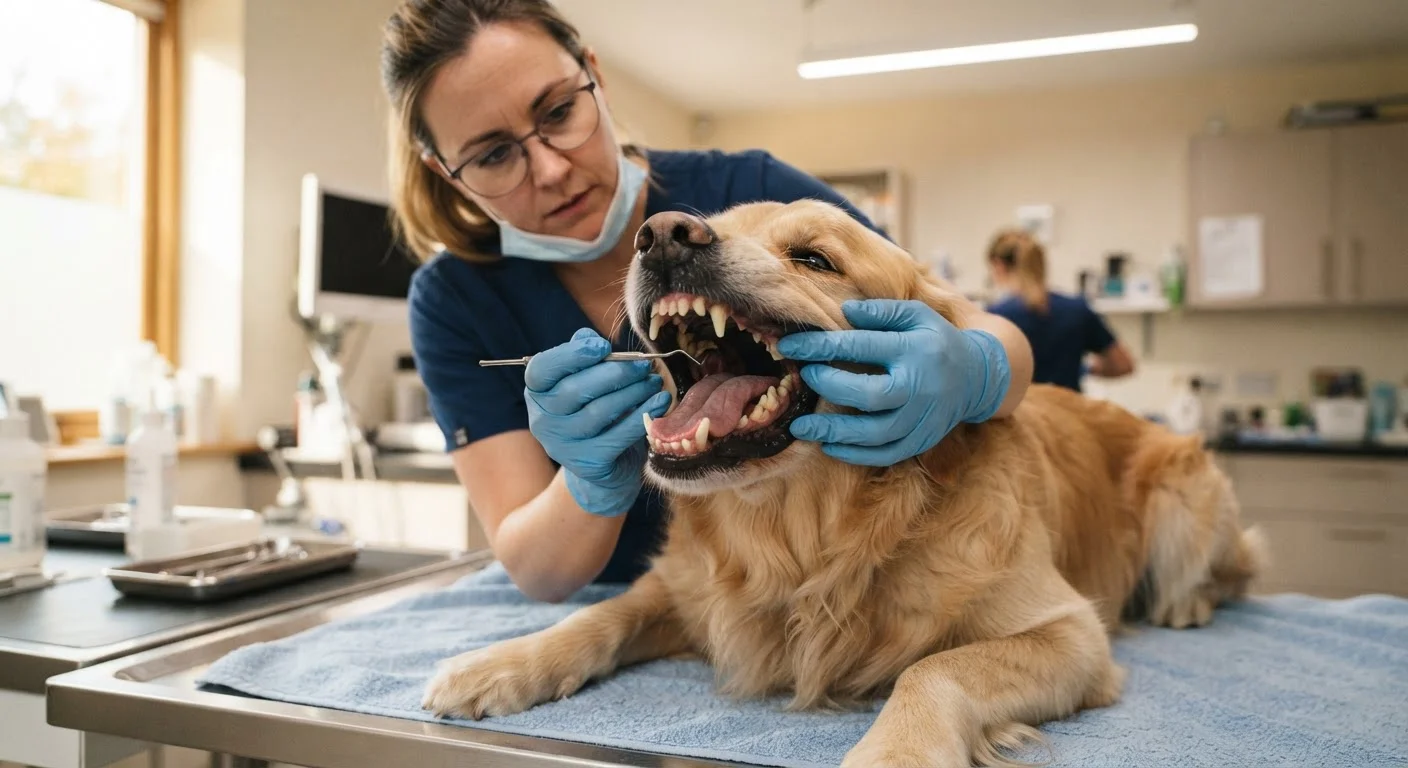
A professional veterinary dental cleaning is substantially different from a simple tooth polish. It requires general anesthesia - the only way a veterinarian can safely probe beneath the gumline, take dental X-rays, and treat disease in all areas of the mouth. "Anesthesia-free" dental cleanings, offered by some grooming or spa services, can remove surface tartar visually but cannot address subgingival disease where the real damage occurs.
During a proper dental procedure, a veterinarian will scale above and below the gumline, chart any pockets or lesions, take full-mouth radiographs to assess root and bone health, and extract teeth that are non-viable. The findings often surprise owners - dental X-rays routinely reveal disease invisible to the naked eye.
Frequency of professional cleaning varies by the individual animal. Small breeds, brachycephalic cats, and older pets often need more frequent care. Your veterinarian is the right source for a personalized recommendation based on your pet's oral health history.
Home Prevention: What Makes a Real Difference
Between veterinary appointments, daily toothbrushing is the most evidence-supported tool available to owners. Pet-specific toothpaste - formulated to be safe if swallowed, often in flavors pets accept - is essential. Human toothpaste contains xylitol and fluoride in concentrations toxic to pets and should never be used.
Introducing brushing gradually, using positive reinforcement, and starting young all improve compliance. Cats and some dogs resist the process initially, but most adapt with patient, consistent training. Even brushing three to four times per week provides meaningful plaque control compared to no brushing at all.
Dental care is also a natural extension of a broader daily care routine. Our article on daily grooming habits addresses how oral care fits alongside coat, ear, and nail maintenance in a practical everyday schedule. Additionally, what pets eat influences plaque accumulation - our piece on feeding habits that affect pet health explores the dietary factors that owners sometimes overlook.
This article is for general informational purposes only and does not constitute veterinary medical advice. Always consult a licensed veterinarian regarding your pet's individual health needs.