

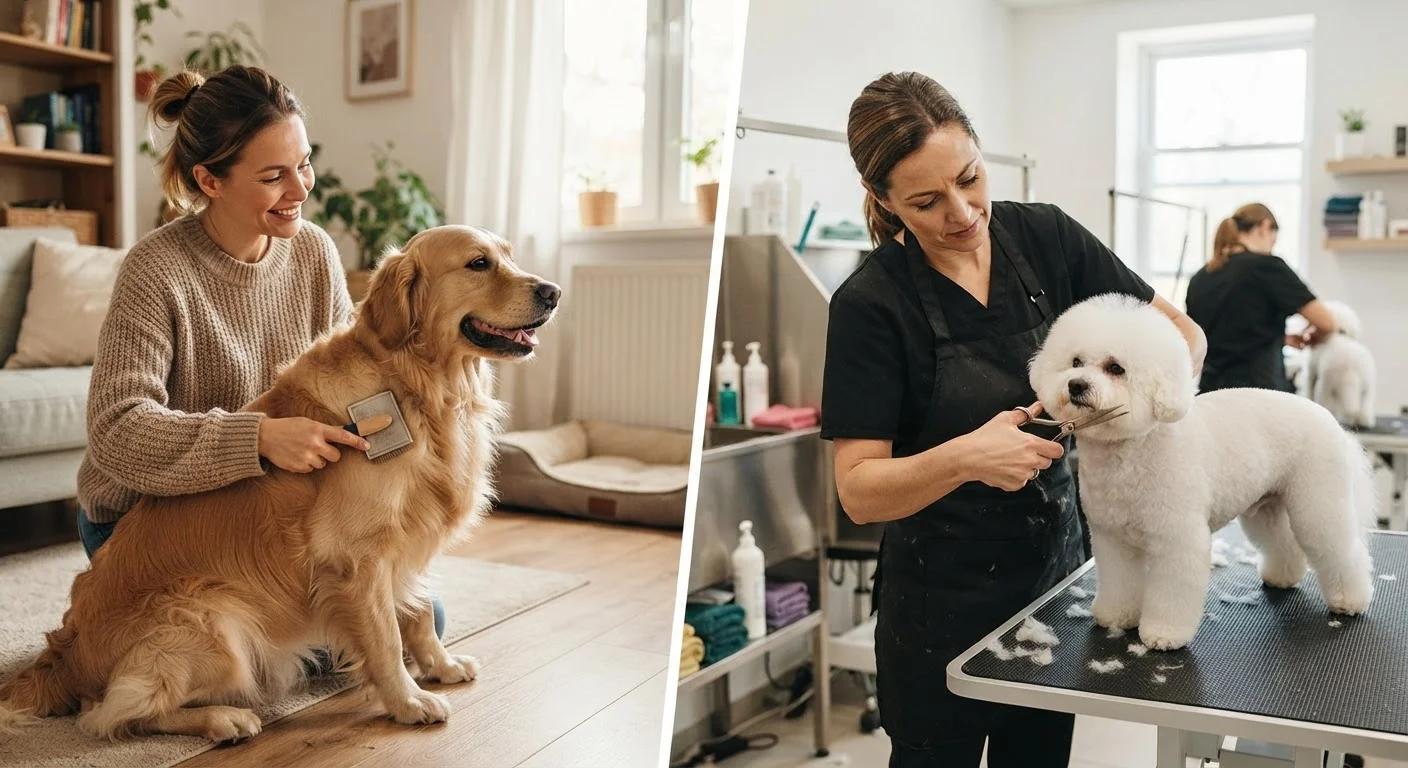
Key Takeaways
Lower ongoing cost than regular salon visits
Professional grooming can run anywhere from $40 to over $100 per session depending on breed and coat type. Doing the bulk of routine maintenance at home substantially reduces this expense over a pet's lifetime.
Strengthens the human-animal bond
Regular hands-on handling helps your pet become comfortable with touch, which has benefits that extend to vet visits, medication administration, and everyday handling.
Early detection of health changes
Owners who groom at home frequently are often the first to notice lumps, skin irritation, ticks, or coat changes - giving them a head start on seeking veterinary evaluation.
Flexible timing on your schedule
Home grooming can happen whenever it suits your pet's mood and your availability, rather than being constrained by salon hours or booking lead times.
Reduces grooming-related anxiety for some pets
Pets that find unfamiliar environments or strangers stressful often tolerate grooming better at home, particularly when introduced to the process gradually from a young age.
Upfront equipment costs can be significant
Quality brushes, clippers, nail grinders, and dryers add up quickly. Investing in inadequate tools often produces poor results and can even cause injury.
Complex coats require professional skill
Breeds requiring breed-standard haircuts - or those prone to severe matting - need techniques that take professional groomers months or years of practice to develop reliably.
Risk of accidental injury without training
Cutting nails too short, nicking skin with clippers, or mishandling a struggling pet are genuine risks for owners who lack formal instruction or hands-on experience.
Misses the professional health-check element
Experienced groomers are trained to identify signs of ear infections, skin problems, and other issues that untrained owners may not notice or may interpret incorrectly.
Time-intensive, especially for high-maintenance breeds
A thorough home grooming session for a long-coated or double-coated dog can take several hours, making the time investment significant for busy owners.
Our Verdict
Neither approach is universally superior. Home grooming is a practical, cost-effective choice for low-maintenance breeds and confident owners willing to invest time in learning. Professional grooming is often worth the cost for complex coats, anxious animals, or when health concerns require an experienced eye. For most pet owners, the smartest strategy combines both.
Best for pet owners who want to actively participate in their animal's care while knowing when to hand off to a professional.
What's Actually at Stake With Pet Grooming
Grooming is far more than an aesthetic exercise. Regular brushing, bathing, nail trimming, ear cleaning, and coat management all contribute directly to a pet's physical comfort and long-term health. Mats can trap moisture and cause skin infections. Overgrown nails affect a dog's gait and joint health. Ear debris left unchecked invites infection. These aren't cosmetic problems - they're medical ones.
The real question isn't whether to groom your pet, but how - and how much of that work you can do confidently at home. If you're new to pet ownership, establishing a grooming routine early makes the process easier for both you and your animal. For more established owners, the choice often comes down to cost, time, and your pet's specific needs.
The Case for Grooming at Home
Home grooming has genuine advantages that go beyond saving money. Handling your pet regularly builds trust, helps you spot physical changes - new lumps, skin irritation, parasites - and can reduce a pet's grooming anxiety over time through consistent, low-stress exposure.
Lower ongoing cost than regular salon visits
Professional grooming can run anywhere from $40 to over $100 per session depending on breed and coat type. Doing the bulk of routine maintenance at home substantially reduces this expense over a pet's lifetime.
Strengthens the human-animal bond
Regular hands-on handling helps your pet become comfortable with touch, which has benefits that extend to vet visits, medication administration, and everyday handling.
Early detection of health changes
Owners who groom at home frequently are often the first to notice lumps, skin irritation, ticks, or coat changes - giving them a head start on seeking veterinary evaluation.
Flexible timing on your schedule
Home grooming can happen whenever it suits your pet's mood and your availability, rather than being constrained by salon hours or booking lead times.
Reduces grooming-related anxiety for some pets
Pets that find unfamiliar environments or strangers stressful often tolerate grooming better at home, particularly when introduced to the process gradually from a young age.
That said, home grooming requires a real investment in learning. Brushing technique varies significantly by coat type, and tools like slicker brushes, dematting combs, and nail grinders each have a learning curve. Nail trimming is one of the tasks most owners find hardest to master, and a mistaken cut into the quick can cause pain and bleeding - discouraging future sessions for both pet and owner.
The Case for Professional Grooming
Professional groomers bring training, experience, and purpose-built equipment to every appointment. For breeds with continuously growing coats - poodles, doodles, shih tzus, and similar types - professional trimming isn't a luxury; it's a practical necessity for coat health and hygiene.
Upfront equipment costs can be significant
Quality brushes, clippers, nail grinders, and dryers add up quickly. Investing in inadequate tools often produces poor results and can even cause injury.
Complex coats require professional skill
Breeds requiring breed-standard haircuts - or those prone to severe matting - need techniques that take professional groomers months or years of practice to develop reliably.
Risk of accidental injury without training
Cutting nails too short, nicking skin with clippers, or mishandling a struggling pet are genuine risks for owners who lack formal instruction or hands-on experience.
Misses the professional health-check element
Experienced groomers are trained to identify signs of ear infections, skin problems, and other issues that untrained owners may not notice or may interpret incorrectly.
Time-intensive, especially for high-maintenance breeds
A thorough home grooming session for a long-coated or double-coated dog can take several hours, making the time investment significant for busy owners.
Beyond technique, professional groomers often notice things owners miss. Skin conditions, ear inflammation, anal gland discomfort, and early signs of dental disease are frequently flagged during grooming appointments. In this sense, a groomer's visit can complement - not replace - the role of your veterinarian. For a broader perspective on proactive pet care, the Pet Health & Wellness hub covers the full scope of keeping your animal in good condition.
~$80
Average cost per professional grooming session
Industry surveys suggest the average full-service dog grooming appointment in the U.S. ranges from roughly $50 to $120, varying by breed size and coat complexity.
65%
Pet owners who perform some grooming at home
American Pet Products Association data consistently shows the majority of U.S. pet owners handle at least some routine grooming tasks themselves between professional appointments.
When to Choose One, When to Combine Both
The decision isn't binary. Many owners find a hybrid approach most practical: handling routine maintenance at home - daily brushing, ear checks, paw cleaning - while booking professional grooming every six to twelve weeks for bathing, trimming, and nail grinding.
Certain circumstances tip the scale decisively toward professional care:
- Breed coat type: Double-coated, curly, or very long-haired breeds typically need professional deshedding treatments or cuts that require skill and commercial-grade dryers.
- Behavioral challenges: A pet that becomes aggressive or severely stressed during grooming at home is safer in the hands of an experienced groomer trained in low-stress handling techniques.
- Health conditions: Pets with arthritis, skin conditions, or recent surgery need gentle, informed handling that a professional is better positioned to provide.
- Owner physical limitations: Grooming large dogs, in particular, is physically demanding. There's no shame in delegating when it's the right call.
Daily grooming habits you build at home between professional appointments are what truly keep your pet comfortable long-term - the two approaches reinforce each other.
Grooming Needs Vary Widely by Species and Breed
This article focuses primarily on dogs and cats, which represent the most common household pets in the U.S. Keep in mind that grooming requirements differ substantially not just between species, but between individual breeds. A short-coated Labrador and a high-maintenance Bichon Frise require very different levels of professional intervention. Always research the specific needs of your pet's breed, and consult your veterinarian if you're unsure what level of grooming is appropriate.