

Key Takeaways
Our Verdict
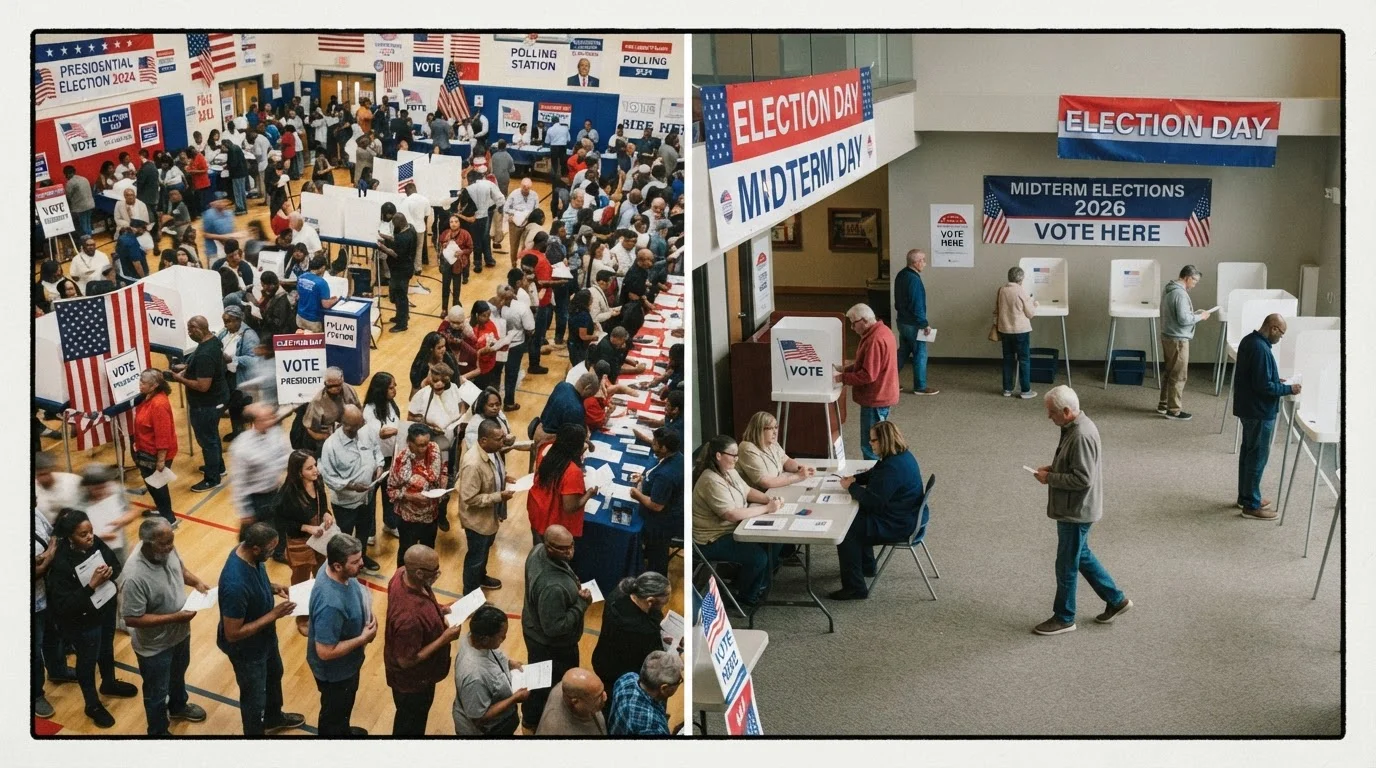
Presidential elections command more attention and set the country's top executive leadership, but midterm elections are where congressional power shifts - and where a sitting president's agenda can be advanced or blocked for years. Neither cycle is more important in an absolute sense; each plays a distinct constitutional role that shapes what Washington can and cannot do.
| Best for | Recommended |
|---|---|
| Readers wanting to understand broad national policy direction | Presidential Elections |
| Readers focused on congressional balance of power and legislative outcomes | Midterm Elections |
| Readers concerned with state laws, local services, and ballot measures | Both Cycles - state and local races appear in each |
The Basic Structure: What Each Election Covers
The United States holds federal elections on a two-year cycle. Every four years, a presidential election determines who occupies the White House. Exactly halfway between those contests - in years divisible by two but not four - midterm elections occur. The term "midterm" simply reflects their position at the midpoint of a presidential term.
In both cycles, all 435 seats in the U.S. House of Representatives are on the ballot; representatives serve two-year terms with no limit. The Senate operates differently: senators serve six-year terms, with roughly one-third of seats up for election every two years. Presidential elections also fill the executive branch - president, vice president - while midterms do not.
Beyond federal offices, both cycles include gubernatorial races, state legislative seats, judicial elections, and ballot measures that vary by state. In many ways, these down-ballot contests touch daily life more directly than federal outcomes, governing everything from public school funding to local zoning. For a plain-language guide to the terminology you'll encounter in both cycles, see our political glossary.
Turnout: The Most Visible Difference
Voter participation drops sharply in midterm years. According to the U.S. Census Bureau, approximately 67 percent of eligible citizens voted in the 2020 presidential election - a 50-year high. By contrast, the 2022 midterms drew roughly 47 percent, consistent with the historical midterm average.
~20 pts
Typical turnout gap between election types
U.S. Census Bureau data shows presidential elections consistently draw roughly 20 percentage points more eligible voters than midterm elections.
~26 seats
Average House seats lost by president's party in midterms
Data compiled by the U.S. House historian's office shows the president's party has lost an average of roughly 26 House seats in midterm elections since World War II.
Several factors drive the gap. Presidential races receive saturation-level media coverage, generate higher-profile advertising, and anchor a narrative - "who leads the country" - that resonates with casual voters. Midterms lack that singular focal point. Political scientists also point to mobilization asymmetry: the party out of power tends to be more energized, while supporters of the incumbent president may feel less urgency.
This turnout gap matters because the electorate that shows up in midterms tends to be older, more partisan, and more politically engaged than the broader presidential-year electorate. That composition can shift outcomes in competitive districts even when underlying public opinion hasn't changed dramatically.
Stakes: How Each Election Shapes Policy
Presidential elections determine executive leadership, Supreme Court appointment opportunities, regulatory agency direction, and foreign policy posture. Because the president nominates federal judges, cabinet secretaries, and agency heads, a single presidential outcome can shape policy for a decade or longer - well beyond any single term.
Midterm elections, by contrast, determine who controls Congress and therefore what legislation can reach the president's desk. A president whose party holds both chambers can push through major legislation; one facing a divided or opposition-controlled Congress typically negotiates, vetoes, or relies on executive actions with narrower reach.
| Feature | Presidential Election | Midterm Election | |
|---|---|---|---|
| Frequency | Every 4 years | Every 2 years (between presidential elections) | |
| Offices on the Federal Ballot | President, VP, all House seats, ~1/3 Senate seats | All House seats, ~1/3 Senate seats | |
| Typical Voter Turnout | 55-67% of eligible voters | 40-50% of eligible voters | |
| Primary Policy Impact | Executive branch direction, judicial appointments | Congressional control, legislative agenda | |
| State & Local Races | Yes - varies by state | Yes - often more governor races | |
| Historical Pattern | Incumbent party typically gains or holds seats | President's party typically loses House seats |
Historical patterns reinforce the midterm's significance as a check on presidential power. Since World War II, the president's party has lost House seats in nearly every midterm election, according to data compiled by the House historian's office. This "midterm penalty" reflects a documented tendency for voters to use the off-year election to balance or protest the party in power. The phenomenon contributes to the legislative gridlock many Americans find frustrating.
Understanding how district lines factor into these outcomes is equally important. How congressional districts are drawn can predetermine the competitiveness of dozens of House seats before a single vote is cast.
What Stays Consistent - and Why Both Elections Matter
Despite their differences, both election cycles share core features that shape American civic life. State and local races appear on ballots in both years, and those offices - attorneys general, state legislators, school board members - exercise real authority over education, criminal justice, healthcare access, and elections administration itself.
Ballot measures, another constant across both cycles, allow citizens to vote directly on policy questions: minimum wage changes, abortion access, marijuana legalization, and tax proposals have all been decided at the ballot box outside of presidential years. This direct-democracy layer exists independently of which federal offices are being contested.
The deeper consistency is structural: both midterms and presidential elections are expressions of the same constitutional framework, designed to give voters regular opportunities to hold elected officials accountable. For readers interested in how participation extends beyond casting a ballot, civic engagement takes many forms throughout the full election cycle. The divisions Americans experience during both cycles also reflect broader trends explored in an examination of political polarization and its structural drivers.